

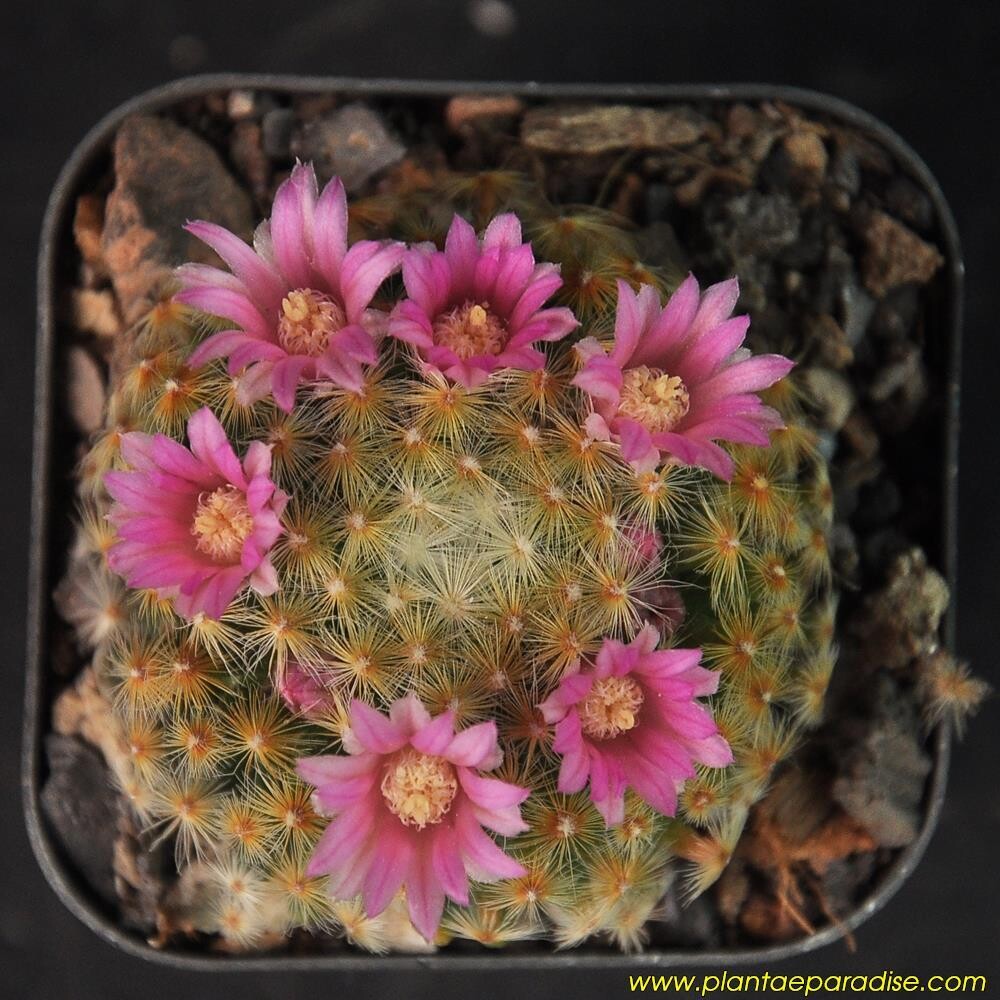
Mammillaria Carmenae
Product Details
Radiant Crown: Mammillaria carmenae
A rare, shimmering jewel of the cactus world, prized for its soft, feather-like spines and exquisite floral ring.
- Origin & History of Name: The genus name Mammillaria comes from the Latin mammilla, meaning "nipple" or "teat," referring to the tubercle-based structure of the plant.
This specific species was discovered in 1977 and named in honor of Carmen Glass, the wife of renowned American botanist Charles Glass, who co-described the species with Robert Foster. - Morphology: This globose cactus is characterized by its axils and tubercles being entirely obscured by a dense covering of up to 100 radiating, "plumose" (feather-like) spines. Unlike many cacti, these spines are soft to the touch. In spring, it produces a vertex crown of multi-petaled flowers, featuring a vivid pink perianth and contrasting yellow stamens.
- Habitat & Origin: Mammillaria carmenae is a wild species endemic to a very specific, limited range in the mountains of Tamaulipas, Mexico.
Once nearly extinct in the wild due to over-collection, it is now widely produced through sustainable nursery propagation, ensuring that your specimen does not contribute to the depletion of wild populations. - Cultivation Profile:
- Substrate: Use a strictly mineral-based mix (60% grit/pumice/perlite, 40% organic matter). In the humid Indian climate, high drainage is non-negotiable to prevent root rot.
- Light: Requires bright, filtered sunlight. In the Indian subcontinent, provide 4–6 hours of morning sun, but use 50% shade cloth during the extreme heat of April–June to prevent scorching the epidermis.
- Water/Dormancy: Water deeply only when the medium is completely dry.
During the monsoon, withhold water entirely if humidity is high. In winter (dormancy), keep the plant dry to trigger spring blooming.
- Scientific/Historical Anecdote: For nearly a decade after its discovery, only the gold-spined variant was known to science. It wasn't until later that the "rubrispina" (red-spined) and white-spined forms were stabilized, making the specific combination of white-feathered spines and deep pink flowers a highly sought-after aesthetic contrast in private collections.

New


Monsoon Guardian Kit (5 in 1)
Monsoon Guardian Kit (5 in 1)
Complete 5-in-1 biological protection kit for cacti & succulents
SKU MNS024
₹850.00

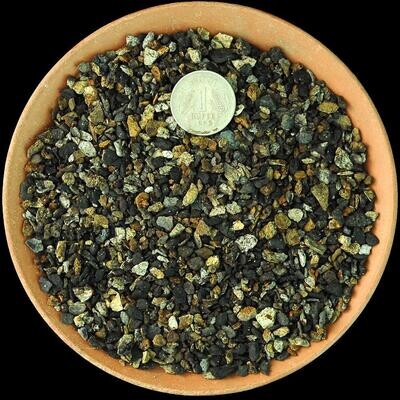
Cactus & Succulent Planting Mix COARSE (aka Cactus Soil Mix or Succulent Soil Mix)
Cactus & Succulent Planting Mix COARSE (aka Cactus Soil Mix or Succulent Soil Mix)
Washed, Free-Draining Mineral Mix for Cactus & Succulents
SKU MNS003
₹44.85