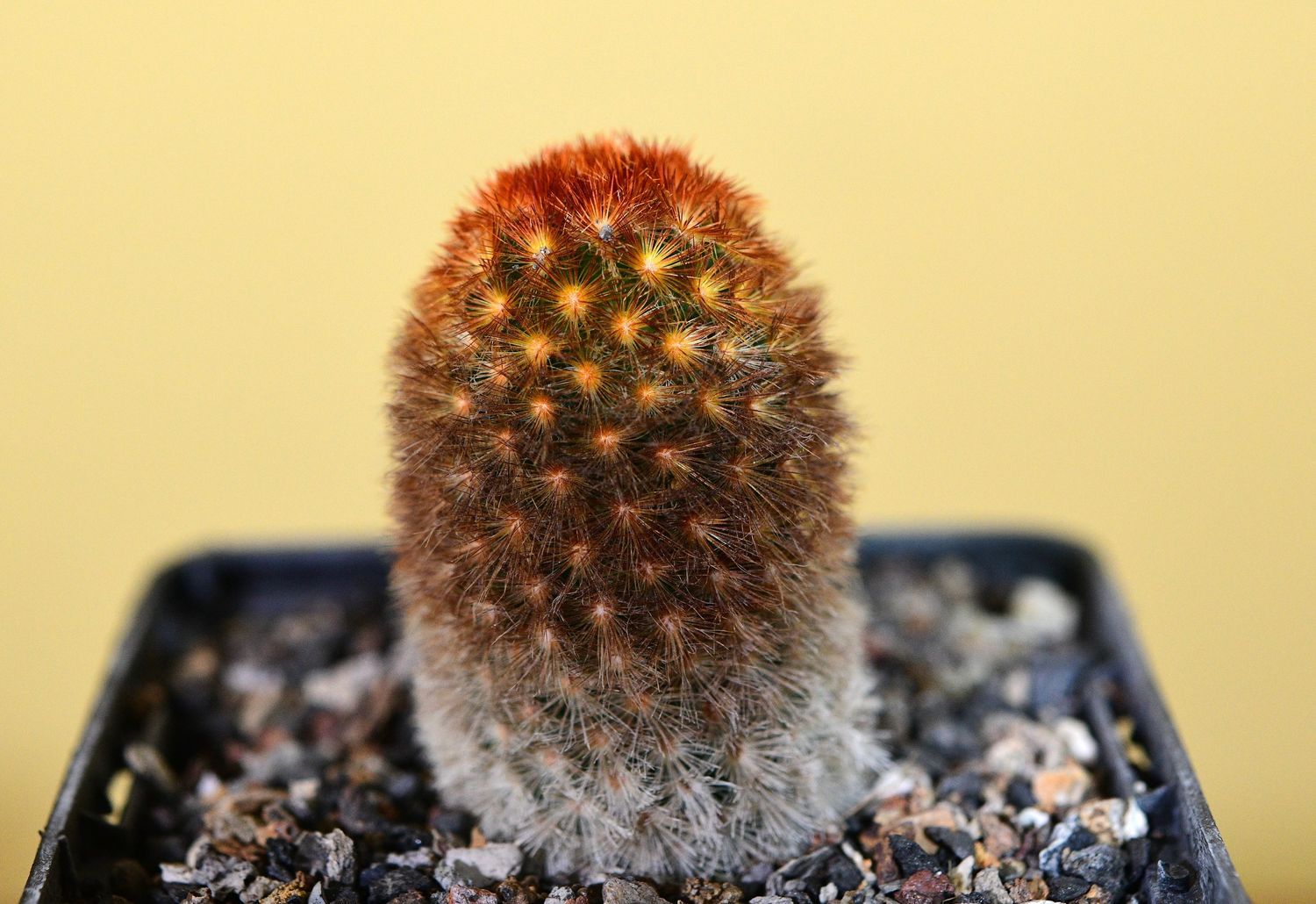
this cactus looks almost as if it's on fire — a crown of glowing copper-red spines blazing atop a body wrapped in soft white bristles, the kind of plant that stops collectors mid-scroll. Meet Mammillaria carmenae f. rubrispina, the red-spined form of the beloved Isla Carmen pincushion cactus.
Origin of Name
The species name carmenae honors a person rather than a place — a rare and touching departure from the usual Latin descriptors of cactus taxonomy. Mammillaria carmenae was named by Marcelino Castañeda y Núñez de Cáceres in 1953, after his second wife, Carmen Gonzales-Castañeda, making this one of the few Mammillaria species named as a personal tribute rather than for a discoverer, locality, or botanical feature. The genus name Mammillaria derives from the Latin mammilla, meaning "nipple," referring to the small tubercles that cover the stems of every species in the genus rather than true ribs. The varietal tag rubrispina is straightforward Latin: ruber ("red") and spina ("spine") — a purely descriptive horticultural name. This superb gold and bronze-red spined form was produced through selective breeding in Holland, where Dutch cactus nurseries have long specialized in refining spine colour in popular Mammillaria lines. The "hort." designation you'll often see attached (hort. being short for hortorum, "of gardens") signals that this is a cultivated selection recognized in horticultural trade rather than a botanically published variety — a plant bred for beauty, not discovered in the wild.
Origin of Plant
The species itself hails from Mexico. Mammillaria carmenae is native to Tamaulipas state in eastern central Mexico, growing among the arid scrub and thorn-forest terrain typical of that region's cactus flora — hence its common name, the Isla Carmen pincushion cactus. The rubrispina form seen here was not found in the wild but selected and stabilized in cultivation, prized specifically for spines that flush a much richer red-gold than the species' typical straw-yellow bristles.
Description
The species grows to about 8 cm tall and 15 cm broad, forming clustered, egg-shaped stems 3–4 cm thick that offset generously with age to build dense, mounding colonies. In this rubrispina selection, that clustering habit is dressed in spectacular colour: the crown emerges in fiery orange-red, deepening to a rich rust-bronze through the mid-body, before fading into a soft skirt of fine white bristles near the base — a striking gradient that makes every specimen look hand-painted. The tubercles beneath are densely packed and axillary wool adds a soft, felted texture between the areoles. Flowers are mostly creamy white to pink or pale pink with a pink tinge, up to about 11 mm long, and the plant blooms generously through summer, ringing the crown in a delicate halo that contrasts beautifully against the fiery spination.
Conservation Status
The genus Mammillaria is listed under CITES Appendix II, affording protection to wild populations against unregulated trade. Mammillaria carmenae itself is a naturally range-restricted species, occurring only in a limited area of Tamaulipas — a fact reflected in its RHS Award of Garden Merit recognition and its popularity in cultivation as an alternative to wild collection. The rubrispina form offered here is entirely artificially propagated, a nursery-bred selection multiplied in cultivation for generations. This specimen is exempt from wild-collection concerns and carries no impact on native populations.
Care
- Light: Full sun to bright light; some protection from the harshest midday summer sun helps prevent scorch, especially on young offsets
- Watering: Water generously through spring and summer once soil has dried out fully, then reduce sharply for a dry winter rest to encourage tight growth and strong spring flowering
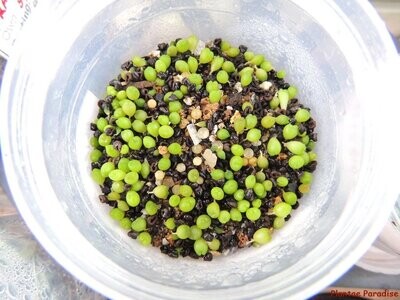
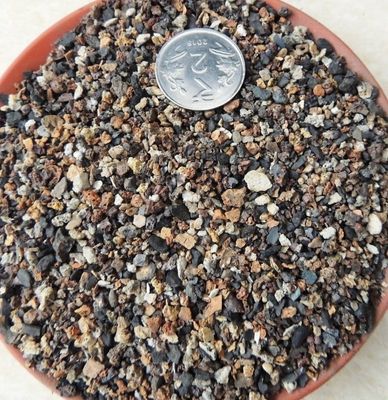
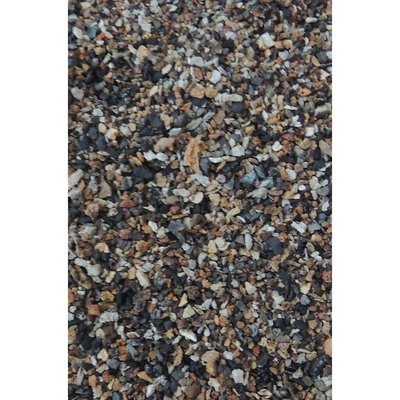
- Soil: Fast-draining, mineral-rich cactus mix with excellent aeration
- Pot: Terracotta preferred over plastic for better moisture regulation
- Temperature: Cool, dry winter rest is beneficial; protect from frost
- Feeding: Low-nitrogen, high-potassium fertilizer during the active growing season to support spine colour and flowering
A Story Worth Telling
There's something quietly romantic about a cactus named as a love letter. While most Mammillaria species carry names honoring explorers, botanists, or the mountains and deserts where they were first collected, carmenae stands apart as a name given not for prestige but for devotion — a botanist immortalizing his wife in one of the most enduring ways science allows. Decades later, Dutch breeders took that same species and coaxed from it an entirely new personality: spines glowing red instead of gold, as if the plant itself had been set alight. Today, the rubrispina form is a favourite among collectors precisely because it carries both stories at once — a name born of affection, and a colour born of careful, patient breeding.