

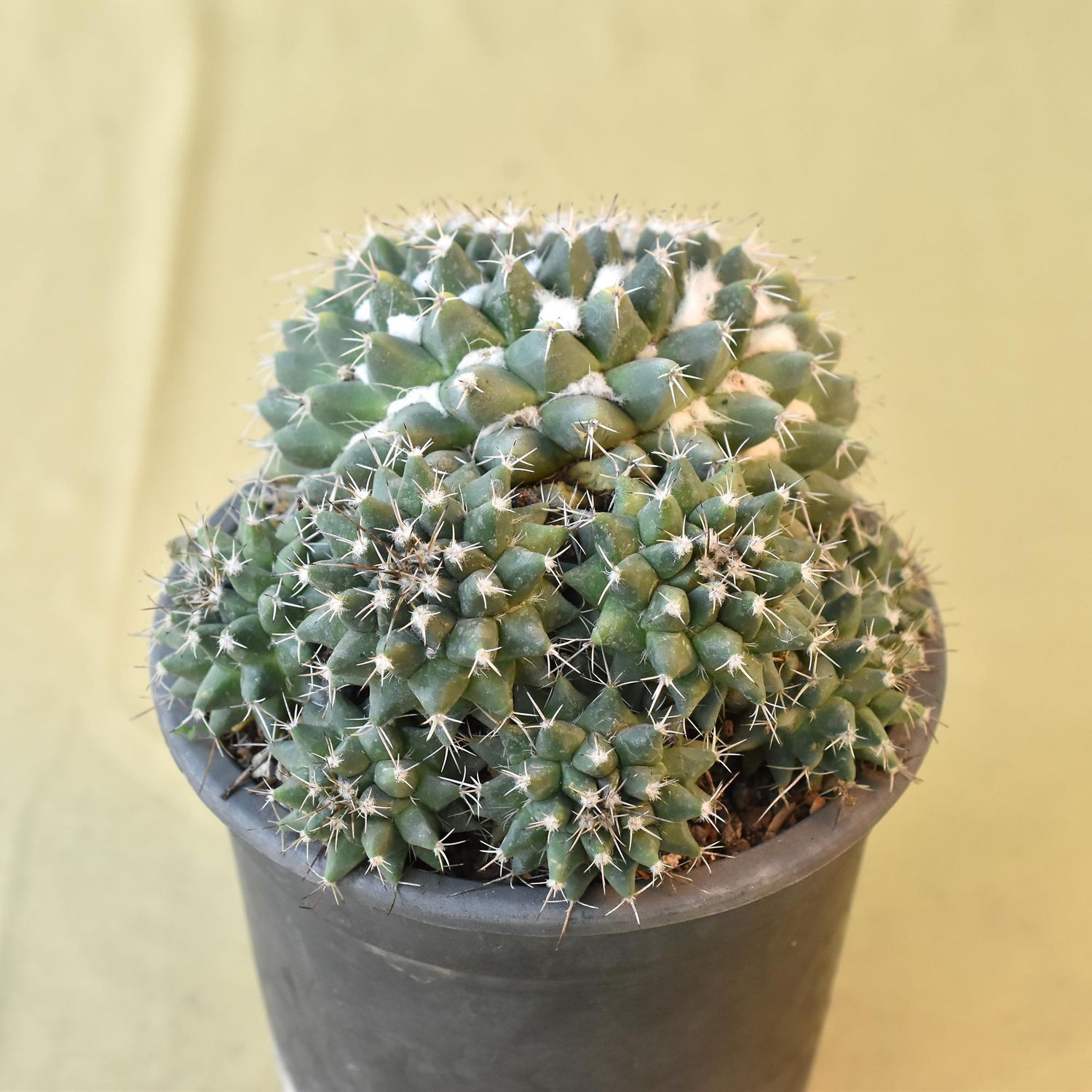
Mammillaria Compressap
Product Details
Architectural Symmetry: Mammillaria compressa
A sculptural masterpiece for the discerning collector, renowned for its geometric precision and resilient nature.
- Origin & History of Name The genus name Mammillaria is derived from the Latin mammilla, meaning "nipple" or "teat," referring to the distinct tubercle structures characteristic of the genus.
The specific epithet compressa translates to "compressed" or "squeezed together," a reference to the plant’s habit of forming dense, tightly packed mounded colonies over time. It was formally described by the Swiss botanist Augustin Pyramus de Candolle in 1828. - Morphology This species is characterized by its glaucous-green epidermis and prominent, four-sided tubercles (the raised nodules that replace traditional ribs).
Unlike many cacti with continuous costae, M. compressa relies on these individual tubercles to provide surface area for photosynthesis and water storage. The areoles at the tips of these tubercles produce woolly white fibers and sharp, needle-like central spines, often appearing in a stark white or light gray that contrasts against the dark body. - Habitat & Origin Mammillaria compressa is a wild species endemic to Central Mexico, specifically thriving in the limestone-rich soils of Hidalgo, Querétaro, and San Luis Potosí. Our specimens are nursery-grown via sustainable propagation methods to prevent the poaching of wild populations, ensuring the preservation of the species' natural limestone scrub habitat.
- Cultivation Profile (Indian Context)
- Substrate: Requires a gritty, strictly mineral-based mix. Use a ratio of 70% inorganic material (pumice, perlite, or crushed brick) to 30% organic matter to prevent root rot during high-humidity seasons.
- Light: Thrives in bright, indirect sunlight. In the intense Indian summer, provide 50% shade cloth protection to prevent epidermis scorching; during winter, full sun is recommended.
- Water/Dormancy: Follow a "soak and dry" method. Water sparingly during the monsoon to avoid fungal issues. Observe strict dormancy from November to February by withholding water entirely to mimic its natural cool-dry cycle.
- Scientific/Historical Anecdote The Mammillaria genus is one of the largest in the Cactaceae family, but M. compressa is scientifically notable for its "milky" sap (latex). When the epidermis is punctured, it exudes a white, sticky substance—a biological defense mechanism intended to seal wounds rapidly and deter herbivores in the arid Mexican wilderness.
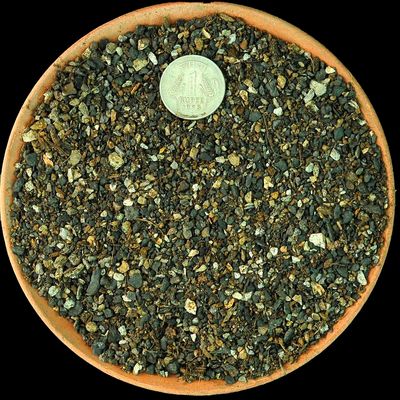

Cactus & Succulent Planting Mix COARSE (aka Cactus Soil Mix or Succulent Soil Mix)
Cactus & Succulent Planting Mix COARSE (aka Cactus Soil Mix or Succulent Soil Mix)
Washed, Free-Draining Mineral Mix for Cactus & Succulents
SKU MNS003
₹44.85
New
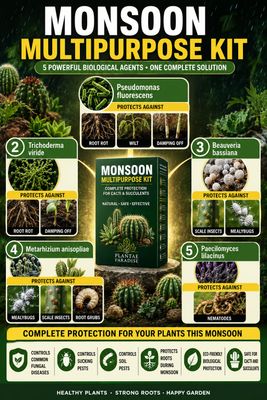
Monsoon Guardian Kit (5 in 1)
Monsoon Guardian Kit (5 in 1)
Complete 5-in-1 biological protection kit for cacti & succulents
SKU MNS024
₹850.00