Mammillaria elongata Bronze Spines Albiflora
1. Origin of Name:
The genus Mammillaria is derived from the Latin word "mamma," meaning "nipple," which refers to the plant's signature tubercles resembling small nipples. The species name elongata means "elongated" in Latin, highlighting its long, cylindrical stems. The variety Bronze Spines Albiflora is named for its distinctive bronze-colored spines and the pale or white flowers it produces (albi meaning "white" and flora meaning "flower"). Mammillaria elongata was first identified in the 19th century during the botanical explorations of central Mexico, becoming beloved for its unique spination and decorative appeal.
2. Origin of Plant:
Mammillaria elongata is native to the arid, rocky terrains of central Mexico, particularly found in the regions of Hidalgo and Guanajuato. These cacti thrive in gravelly and limestone-rich soils, deriving resilience from their exposure to intense sunlight and minimal rainfall. Discovered during 19th-century botanical expeditions, these plants captivated explorers with their charming forms and adaptability to various environments, quickly leading to their cultivation.
3. Description:
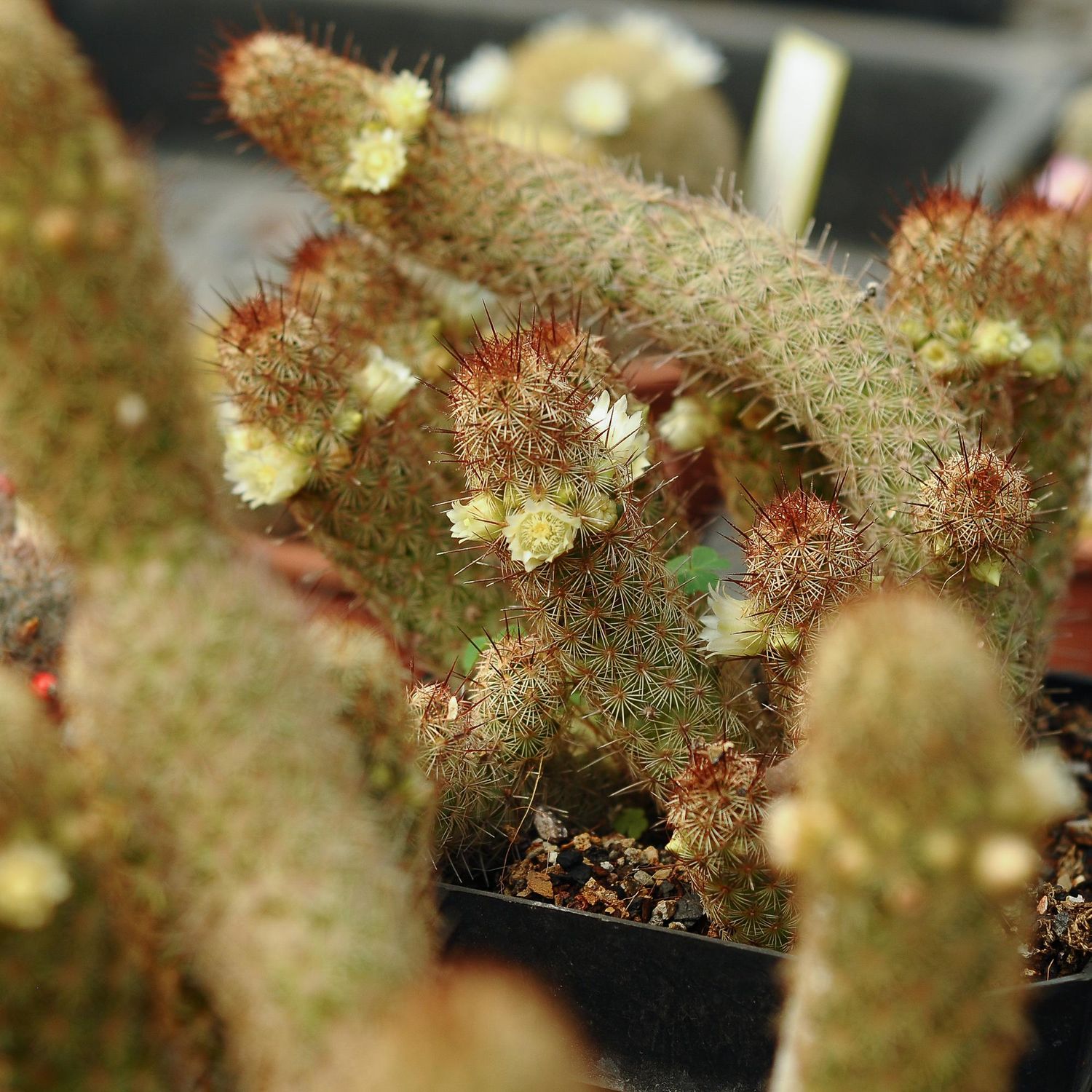
Mammillaria elongata Bronze Spines Albiflora showcases slender, cylindrical stems that can grow to a length of 6 inches (15 cm) and a diameter of about 1.5 inches (4 cm), forming dense, sprawling clumps. The stems are elegantly cloaked with dense bronze-colored spines, creating a warm, textured appearance. In spring, the plant blooms with delicate, creamy white flowers that circle the tops of the stems, offering a striking contrast to the bronze spines. This charming and visually appealing combination makes it a treasured choice for rock gardens, terrariums, and indoor plant collections, where the clumps can gracefully drape over edges or fill containers.
4. Conservation Status:
Mammillaria elongata and its varieties, including Bronze Spines Albiflora, are not listed as threatened or endangered. They are widespread in hobbyist collections and commercial cultivation, ensuring their availability and continued propagation.
5. Care:
This hardy cactus thrives in full sun, requiring about 4-6 hours of direct sunlight each day. Utilize a well-draining cactus or succulent soil mix to prevent waterlogging and root rot. Water sparingly, allowing the soil to completely dry out between waterings, particularly during its dormant winter phase. It flourishes in temperatures ranging from 50°F to 85°F (10°C-29°C) and should be shielded from frost. During the growing season, a monthly feeding with a diluted cactus fertilizer will support growth and blooming. Ensure adequate drainage and good airflow to maintain its health and vibrant appearance.
Interesting Anecdote:
Fondly referred to as the “Bronze Finger Cactus,” this variant captivates with its elegant bronze spines and delicate white flowers. Its resilience, combined with its charming aesthetics, makes it a favorite for adding a touch of desert elegance to any indoor or outdoor space.