

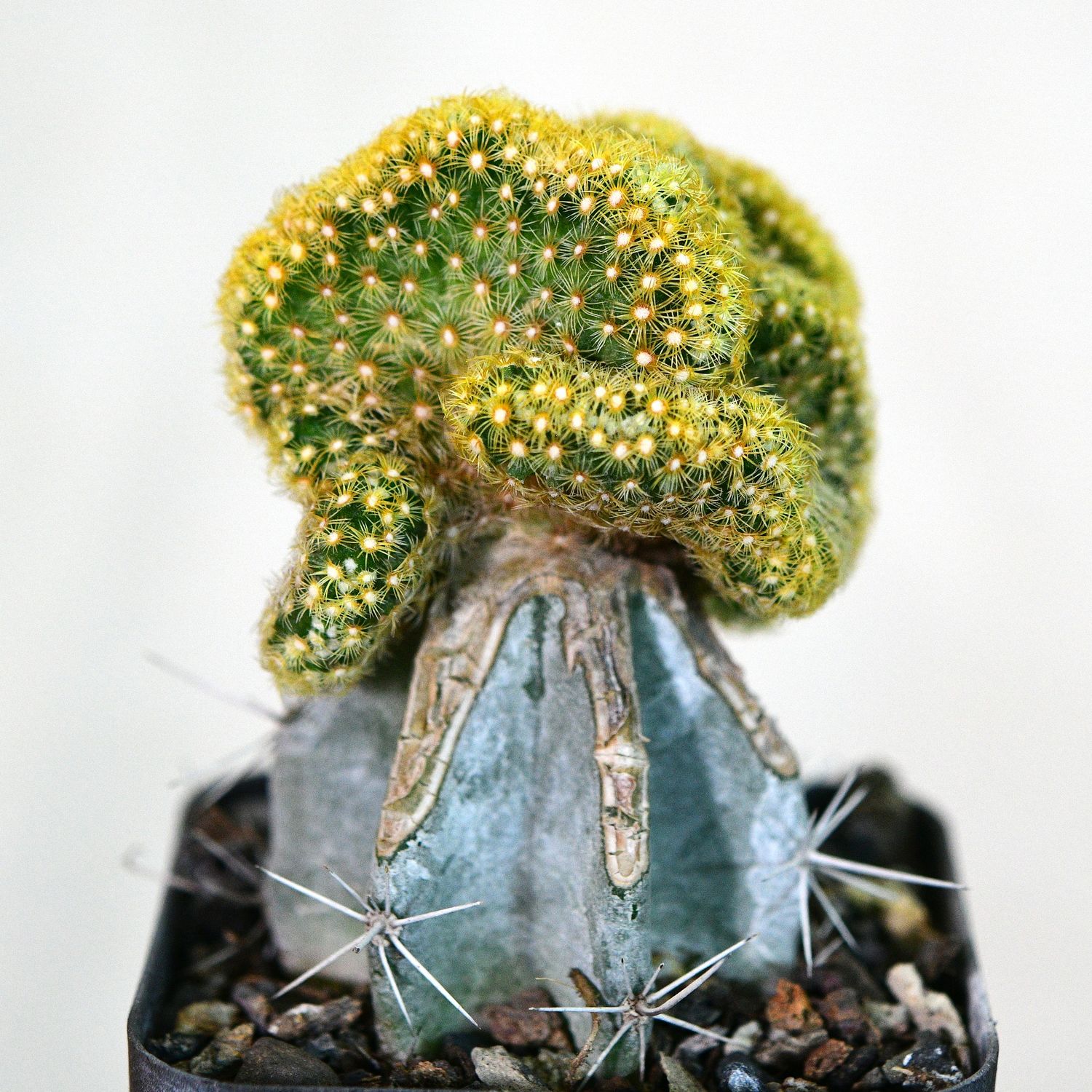
Mammillaria elongata crest
Product Details
Sculptural Marvel: Mammillaria elongata 'Cristata'
A rare, brain-like mutation that transforms the classic Gold Lace Cactus into a living work of contemporary art.
- Origin & History of Name: The genus name Mammillaria is derived from the Latin mammilla, meaning "nipple" or "teat," referring to the distinct tubercle structures common to these cacti.
The specific epithet elongata describes its naturally upright, elongated stems. The cultivar name 'Cristata' (or 'Crest') refers to the "cresting" mutation, where the apical meristem grows in a flattened, fan-like line rather than a single point, resulting in its convoluted shape. - Morphology: This plant is a "monstrose" form characterized by its undulating, sinuous epidermis.
Instead of cylindrical stems, it develops tight, winding folds covered in dense, interlocking radial spines that range from golden yellow to copper. These spines emerge from areoles located on the crowded tubercles, creating a texture that resembles coral or a brain. - Habitat & Origin: While the straight Mammillaria elongata is native to central Mexico (Hidalgo, Querétaro, and Guanajuato), the crested form is a cultivar that rarely occurs in the wild. Our specimens are propagated via sustainable nursery cuttings to preserve the unique genetic mutation without disturbing wild populations.
- Cultivation Profile:
- Substrate: Use a strictly mineral-based mix (50% coarse sand/pumice, 25% perlite, 25% organic compost). Avoid standard garden soil which retains too much moisture in humid Indian climates.
- Light: Requires bright, indirect sunlight.
In India, provide filtered morning sun but protect from the scorching overhead afternoon sun (12 PM – 4 PM) to prevent epidermal scorching. - Water/Dormancy: Water only when the substrate is bone-dry. During the monsoon and winter dormancy, reduce watering to once a month or less to prevent root rot.
- Scientific/Historical Anecdote: The Mammillaria genus was first established by Adrian Hardy Haworth in 1812. Interestingly, the crested mutation is essentially a "controlled" form of chaotic growth. While most plants prioritize vertical growth to compete for light, the crested elongata focuses all its energy on horizontal expansion, creating a dense, protective mass that is more resistant to certain environmental stressors than its upright counterparts.
New
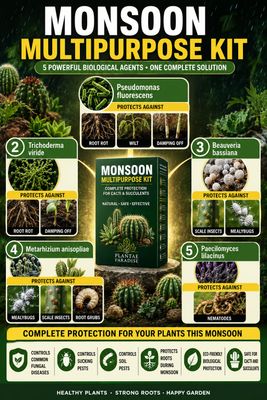
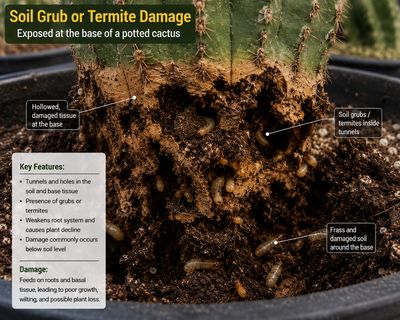
Monsoon Guardian Kit (5 in 1)
Monsoon Guardian Kit (5 in 1)
Complete 5-in-1 biological protection kit for cacti & succulents
SKU MNS024
₹850.00

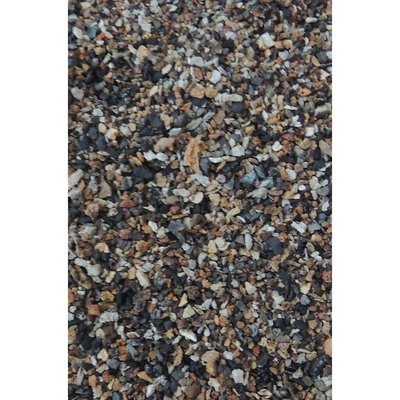
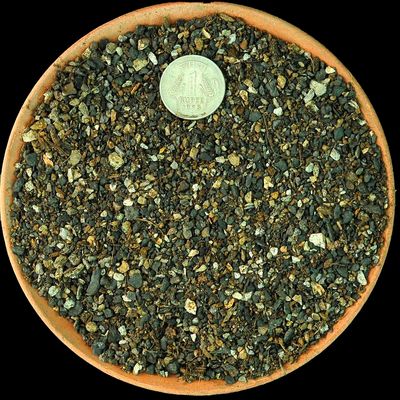
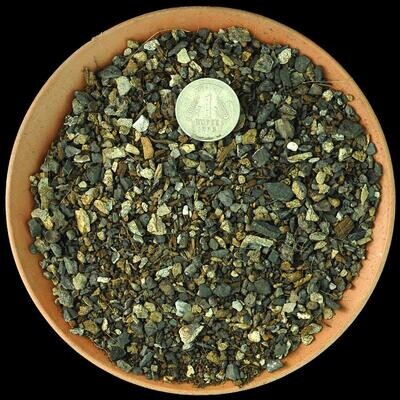
Cactus & Succulent Planting Mix FINE (aka Cactus Soil Mix or Succulent Soil Mix)
Cactus & Succulent Planting Mix FINE (aka Cactus Soil Mix or Succulent Soil Mix)
Fine-Grain Potting Mix for Cactus & Succulent Roots
SKU MNS001
₹39.85