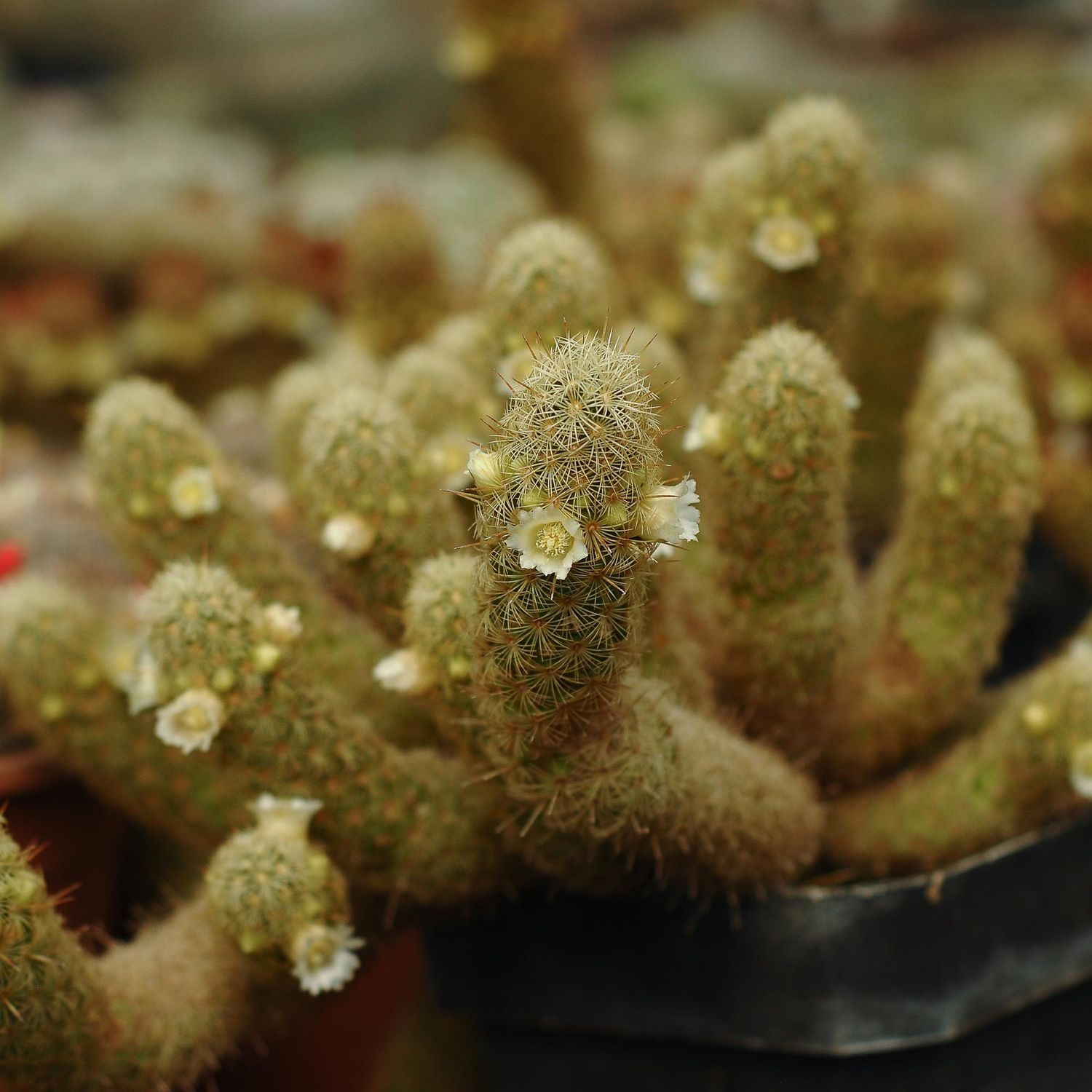
Mammillaria elongata Yellow Spines Albiflora
1. Origin of Name:
The genus Mammillaria comes from the Latin "mamma," meaning "nipple," relating to the plant's characteristic tubercles which resemble rounded protrusions. The species name elongata is derived from Latin, meaning "elongated," indicative of the plant’s long, cylindrical stems. The variety Yellow Spines Albiflora refers to its striking yellow spines and the pale or white flowers it produces, with "albiflora" combining the Latin words for "white" (albi) and "flower" (flora). First recognized in 19th-century botanical explorations, Mammillaria elongata charmed scientists and collectors alike with its unique, decorative spination and adaptability.
2. Origin of Plant:
This variety is native to the rugged, arid landscapes of central Mexico, predominantly in the regions of Hidalgo and Guanajuato. Mammillaria elongata thrives in gravelly, limestone-rich soils, well adapted to the scorching sun and limited rainfall. Its discovery, dating back to 19th-century botanical expeditions, showcased its ability to adapt to diverse environments, quickly making it a beloved addition to collections due to its resilience and ornamental allure.
3. Description:
Mammillaria elongata Yellow Spines Albiflora grows as elegant cylindrical stems, typically reaching up to 6 inches (15 cm) in length and about 1.5 inches (4 cm) in diameter, forming dense, cascading clumps. Its stunning stems are adorned with vibrant yellow spines that create a striking, sunlit appearance. This plant's blooming period in spring reveals delicate, creamy white flowers that gracefully encircle the tips of the stems, creating a beautiful contrast against the yellow spines. These ornamental features make it an ideal candidate for rock gardens, containers, or suspended in hanging planters, where its clusters can trail and elongate, offering visual interest.
4. Conservation Status:
Mammillaria elongata and its variations like Yellow Spines Albiflora are considered non-threatened and are common in both commercial cultivation and private collections. Their popularity ensures continued propagation, supporting their preservation outside natural habitats.
5. Care:
This cactus thrives best with abundant sunlight, requiring about 4-6 hours of direct exposure daily. Use a well-draining cactus or succulent soil mix to prevent root rot. Water sparingly, ensuring the soil fully dries out between watering sessions, especially during its dormant winter phase. It prefers temperatures ranging from 50°F to 85°F (10°C-29°C) and should be protected from frost. During the growing season, a monthly feeding with diluted cactus fertilizer encourages vibrant growth and flowering. Ensure good airflow and drainage to maintain its health and brilliant appearance.
Interesting Anecdote: