

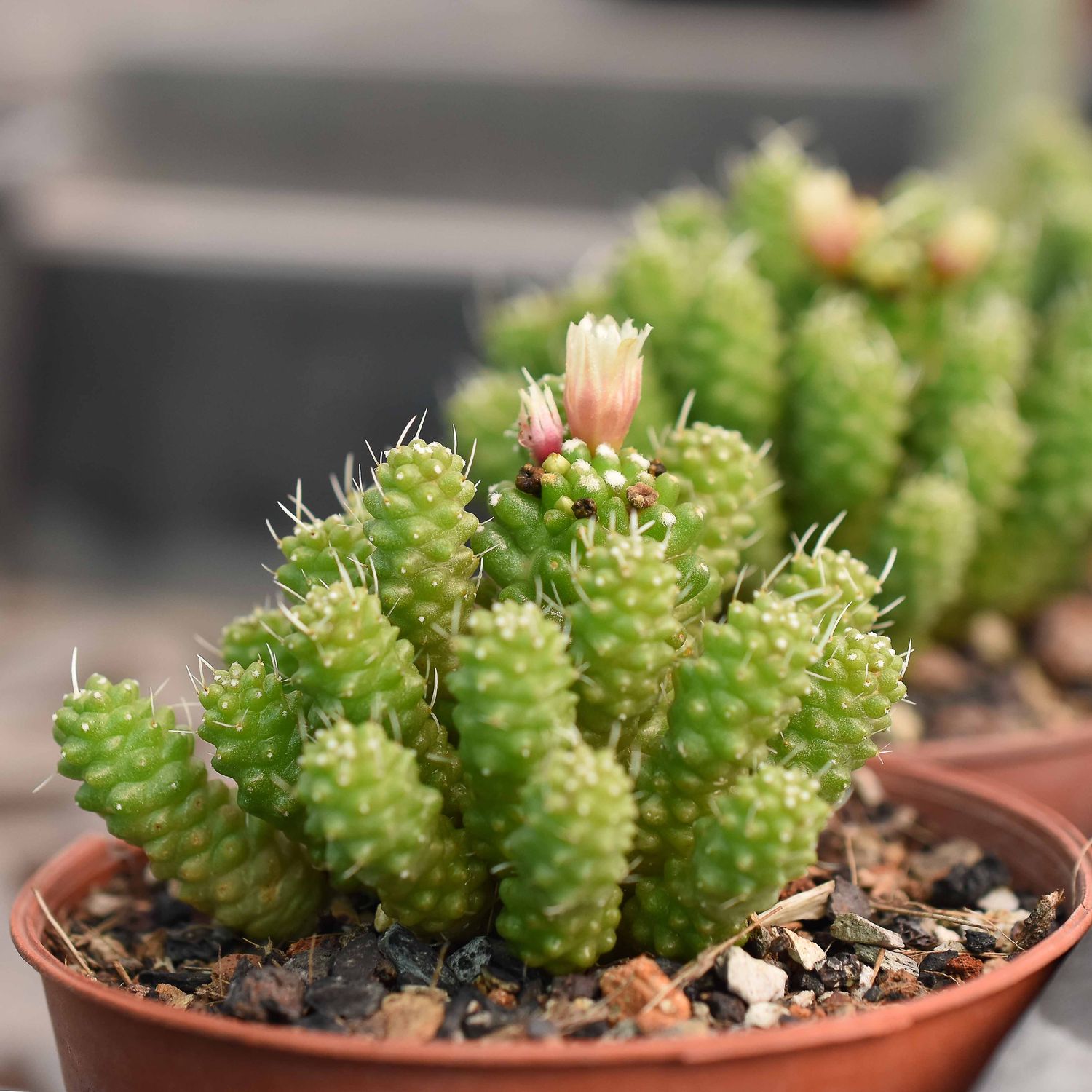
Mammillaria Gracilis Fragilis Monstrose Inermis
Product Details
The Thornless Marvel: Mammillaria gracilis fragilis 'Monstrose Inermis'
Acquire a masterclass in geometric minimalism with this rare, completely spineless mutation of the classic Thimble Cactus.
- Origin & History of Name: The genus name Mammillaria derives from the Latin mammilla ("nipple" or "teat"), referring to the characteristic tubercle-bearing body. This specific cultivar, fragilis, denotes the ease with which its offsets detach. The "Monstrose" designation indicates a structural growth mutation, while "Inermis" is Latin for "unarmed," signifying the total absence of spines—a prized trait selected by succulent enthusiasts over decades of cultivation.
- Morphology: This plant exhibits a clumping growth habit composed of bright green, cylindrical stems. Unlike the type species, the Inermis form lacks radial spines, revealing a smooth, waxy epidermis. Its tubercles (nodules) are closely packed, creating a "monstrose" or distorted appearance where growth occurs from multiple points simultaneously. It produces small, creamy-white flowers from the axils between tubercles during the cooler months.
- Habitat & Origin: This is a specialized cultivar and does not exist in the wild. While the parent species, Mammillaria vetula ssp. gracilis, is native to the calcareous cliffs of Hidalgo and Querétaro, Mexico, this spineless monstrosity was stabilized through selective breeding in nursery environments to ensure consistent, stable morphology.
- Cultivation Profile:
- Substrate: Use a high-porosity, mineral-based mix (70% grit/pumice/perlite to 30% organic matter). In the Indian climate, avoid heavy clay or standard potting soil to prevent root rot.
- Light: Requires bright, indirect sunlight. In India, protect from the harsh midday summer sun (12 PM – 4 PM) to prevent epidermal scorching; morning sun is ideal.
- Water/Dormancy: Water thoroughly only when the medium is bone-dry. During the monsoon and winter, significantly reduce frequency. It enters a semi-dormant state in peak summer and cold winters.
- Scientific/Historical Anecdote: The Mammillaria genus was first described by Carl Linnaeus in 1753, but it was later refined by Adrian Haworth. The "fragilis" variety is famous in botanical circles for its "gravity-based propagation"—its stems are so loosely attached that in their natural habitat, passing animals easily knock them off, allowing the plant to hitch a ride and root elsewhere, a process known as vegetative dispersal.
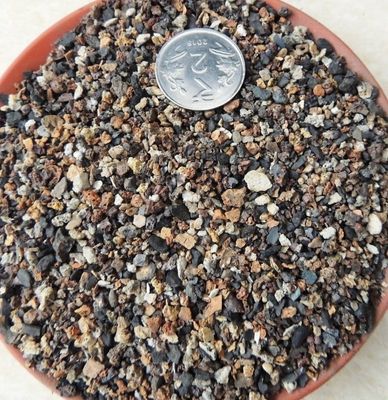

Cactus & Succulent Planting Mix FINE (aka Cactus Soil Mix or Succulent Soil Mix)
Cactus & Succulent Planting Mix FINE (aka Cactus Soil Mix or Succulent Soil Mix)
Fine-Grain Potting Mix for Cactus & Succulent Roots
SKU MNS001
₹39.85
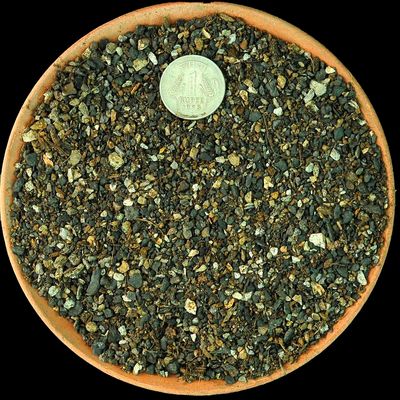
New

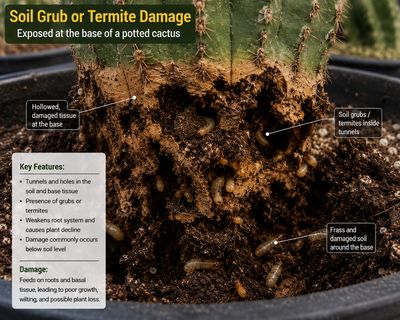
Monsoon Guardian Kit (5 in 1)
Monsoon Guardian Kit (5 in 1)
Complete 5-in-1 biological protection kit for cacti & succulents
SKU MNS024
₹850.00

Cactus Seed Planting Mix
Cactus Seed Planting Mix
Sterile, Fine-Grain Media for Cactus & Succulent Seeds
SKU MNS005
₹74.85