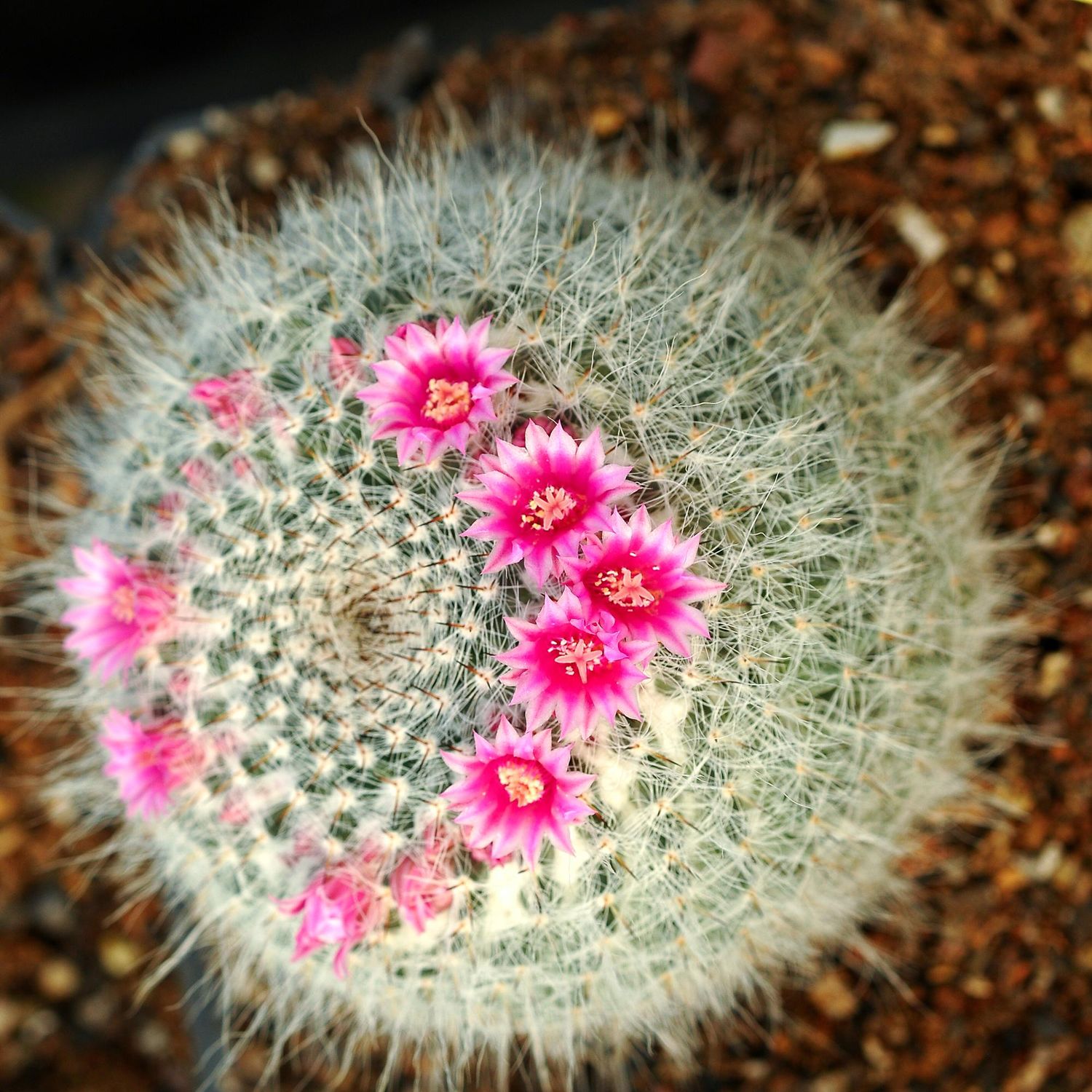
Mammillaria hahniana
Origin of Name:
The name Mammillaria derives from the Latin word mammilla, meaning "nipple," referring to the characteristic tubercles that cover the cactus’s surface, resembling small nipples or protuberances. The species name hahniana honors the German botanist Anton Hahn, who first collected specimens of this plant during the late 19th century. The plant was initially described by botanist Karl Moritz Schumann in 1897, with subsequent recognition of Hahn’s contributions to cactus exploration. Over the years, Mammillaria hahniana has also been known colloquially as the "Santa Catalina Mammillaria," due to its popularity being cultivated near Santa Catalina in California.
Origin of Plant:
Native to central Mexico, specifically the high-altitude regions of the State of Hidalgo and nearby areas, Mammillaria hahniana thrives in arid, rocky outcrops and shrublands. Its discovery can be traced back to early botanical expeditions in the late 1800s when explorers and collectors sought to document the diverse cacti of Mexico’s mountainous terrains. Its ability to withstand drought and poor soil conditions has made it a resilient symbol of the Mexican desert flora, appreciated by succulents enthusiasts worldwide.
Description:
This charming, globular cactus features densely packed, soft gray-green tubercles that are topped with fine, white radial spines, giving it a velvety appearance. It typically grows to about 3-4 inches in height and diameter, forming a compact, rounded shape with a slightly flattened top. Its delicate, woolly areoles from which the spines radiate enhance its ornamental appeal. In mid-summer, it produces stunning, trumpet-shaped flowers that are a vibrant magenta or pale pink, creating a striking contrast against its muted body. The flowers are large relative to the plant’s size, often forming a ring around the top, making it a true showstopper in any collection.
Conservation Status:
Mammillaria hahniana is currently not considered threatened or endangered; it is quite common in cultivation. However, because wild populations are sometimes collected illegally or impacted by habitat destruction, responsible sourcing and cultivation are encouraged. Cultivated specimens help reduce pressure on wild populations and support conservation efforts for native Mexican cacti.
Care:
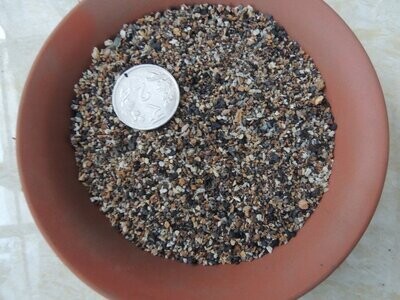
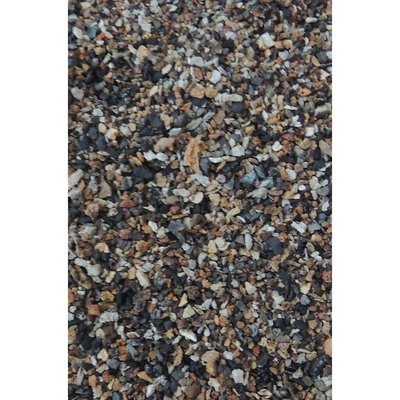
This cactus prefers bright, direct sunlight—aim for at least 4-6 hours daily—to bring out its best coloration and flowering potential. It thrives in well-draining cactus or succulent soil, such as a mix of mineral grit, sand, and organic matter. Water sparingly—allow the soil to dry completely between waterings—and reduce watering during winter months when the plant goes into dormancy. It appreciates warm temperatures—ideally between 65°F and 85°F—and should be protected from frost, as cold temperatures can damage it. During its active season, fertilize lightly with a cactus-specific fertilizer to promote healthy growth and blooms. With proper care, Mammillaria hahniana will reward you with its charming form and spectacular flowering display each year.
Interesting Fact:
Despite its simple appearance, Mammillaria hahniana has long fascinated cactus collectors and botanists for its velvety, woolly tubercles and stunning late-summer blooms. Its compact size and striking visual texture make it a favorite for windowsills and miniature desert gardens, symbolizing resilience and natural elegance in arid landscapes.