

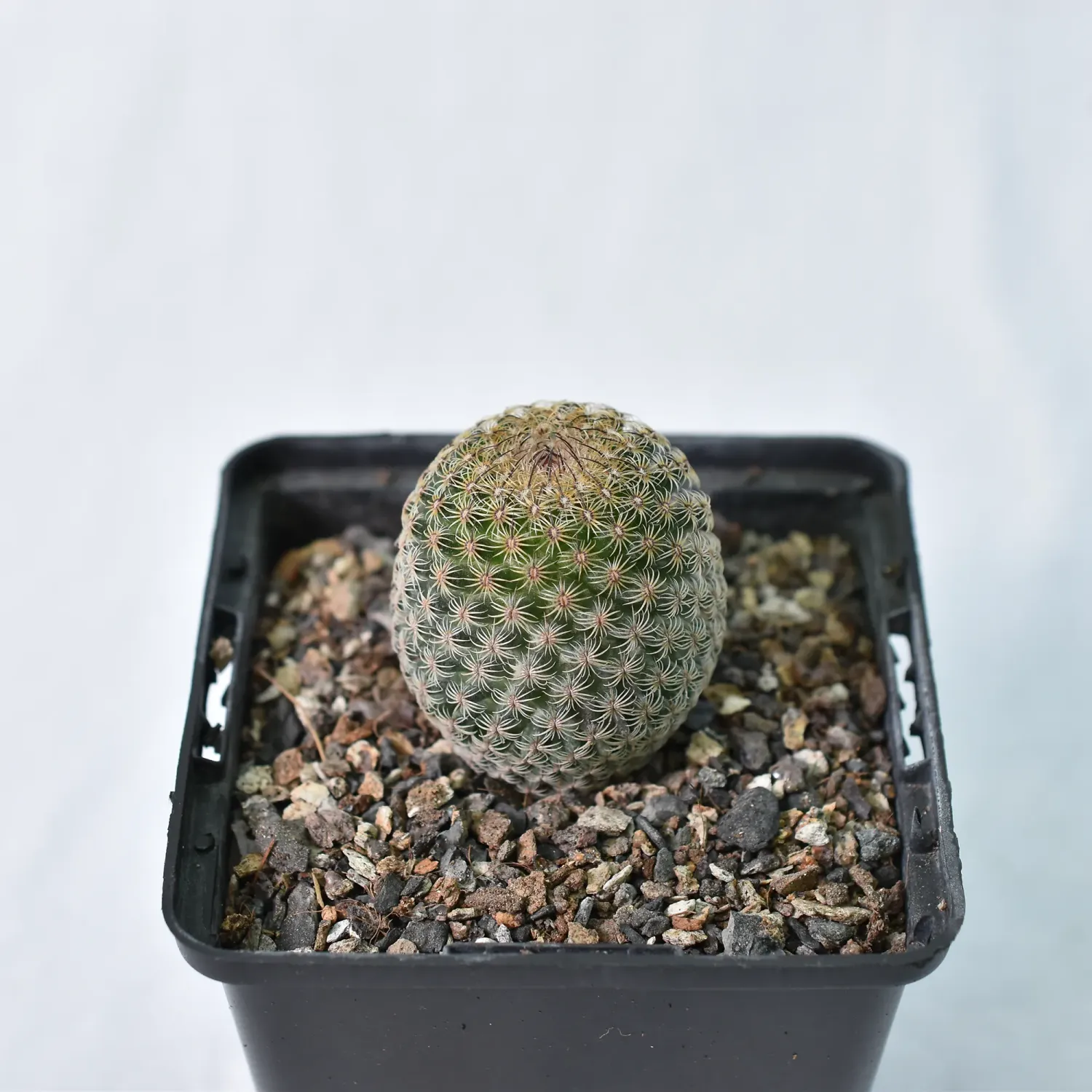
Mammillaria Huitzilopochtli
Product Details
Divine Geometry: Mammillaria huitzilopochtli
A rare, obsidian-spined masterpiece named after the Aztec God of Sun and War.
- Origin & History of Name: The species name huitzilopochtli is derived from the Nahuatl language, honoring the Aztec deity Huitzilopochtli.
- Morphology: This cactus features a globose to cylindrical epidermis covered in dense, woolly areoles. Its most striking feature is the contrast between the soft white radial spines and the dark, needle-like central spines. Unlike some species, it lacks significant costae (ribs), instead displaying spirally arranged tubercles that create a perfect geometric pattern.
- Habitat & Origin: This is a wild species endemic to the Tehuacán-Cuicatlán Valley in Oaxaca and Puebla, Mexico. It is a highly localized specialist that grows on limestone vertical walls.
- Cultivation Profile:
- Substrate: Use a strictly mineral-based mix (70% grit/pumice, 30% organic matter). In the Indian climate, ensure high porosity to prevent root rot during monsoon humidity.
- Light: Requires bright, filtered sunlight.
- Water/Dormancy: Water deeply only when the medium is bone-dry. During the winter dormancy (November–February), withhold water almost entirely to mimic its natural dry season and encourage spring flowering.
- Scientific/Historical Anecdote: Despite its fierce name, Mammillaria huitzilopochtli produces delicate, rings of deep pink flowers that emerge from the woolly crown.
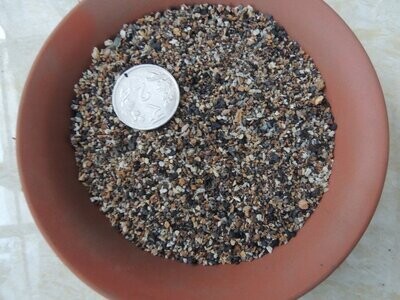
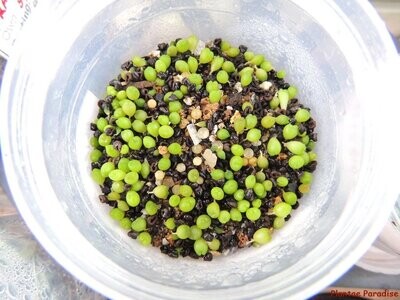
Cactus Seed Planting Mix
Cactus Seed Planting Mix
Sterile, Fine-Grain Media for Cactus & Succulent Seeds
SKU MNS005
₹74.85
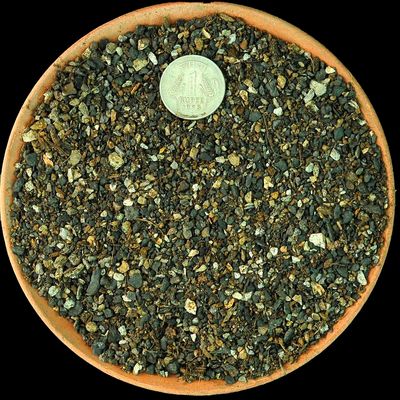
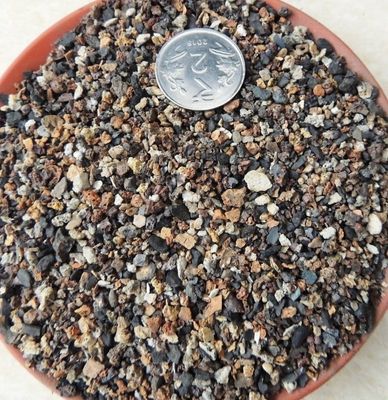
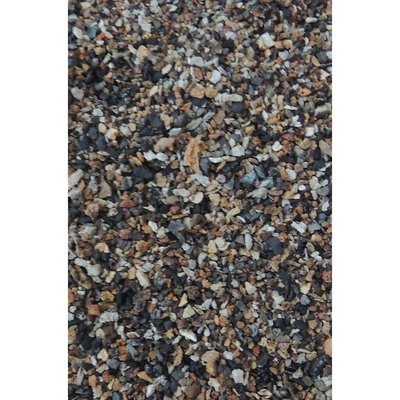
Cactus & Succulent Planting Mix FINE (aka Cactus Soil Mix or Succulent Soil Mix)
Cactus & Succulent Planting Mix FINE (aka Cactus Soil Mix or Succulent Soil Mix)
Fine-Grain Potting Mix for Cactus & Succulent Roots
SKU MNS001
₹39.85
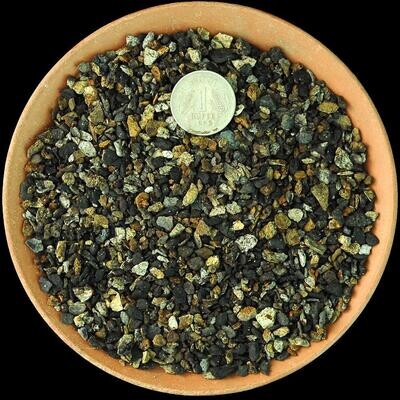
Cactus & Succulent Planting Mix COARSE (aka Cactus Soil Mix or Succulent Soil Mix)
Cactus & Succulent Planting Mix COARSE (aka Cactus Soil Mix or Succulent Soil Mix)
Washed, Free-Draining Mineral Mix for Cactus & Succulents
SKU MNS003
₹44.85