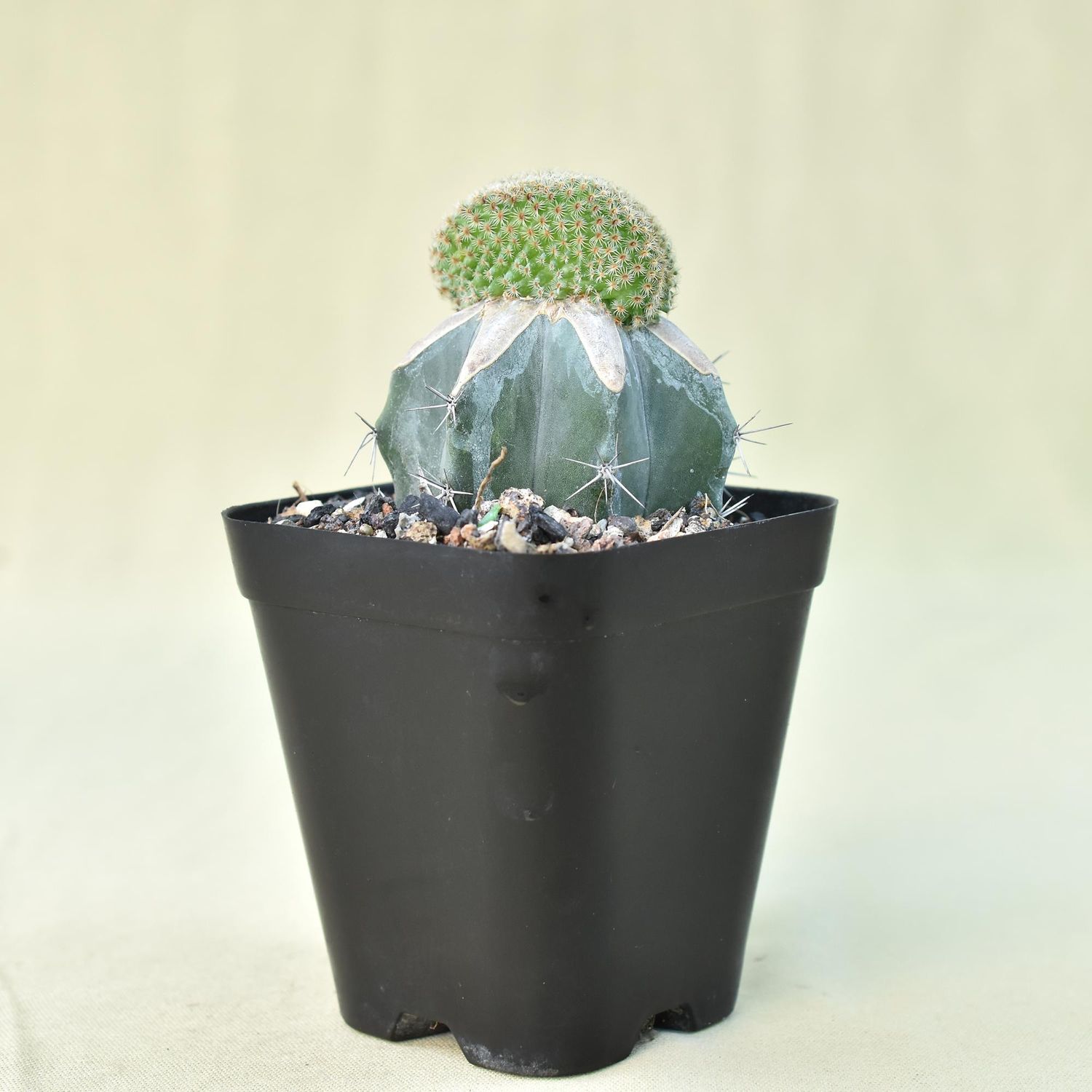
God of War Crest – Mammillaria huitzilopochtli f. cristata
An architectural marvel among cacti, this rare crested form transforms the standard spherical growth into a sculptural, fan-like wave of dense, silvery spination.
1. Origin & History of Name The species epithet honors Huitzilopochtli, the supreme Aztec deity of the Sun and War.
2. Morphology This variety exhibits fasciation, a mutation where the apical meristem (growth point) elongates into a line rather than a single point. This causes the stem to fan out into undulating, brain-like ridges rather than a standard globe. The epidermis is nearly invisible, cloaked in dense, glassy-white radial spines that contrast sharply with the darker, erect central spines. In mature specimens, a "halo" of deep carmine-pink flowers may emerge from the woolly axils between the ridges.
3. Habitat & Origin The standard M. huitzilopochtli is endemic to the Tomellín Canyon in Oaxaca, Mexico, where it grows on steep cliffs and sedimentary rock.
4. Cultivation Profile (Indian Context)
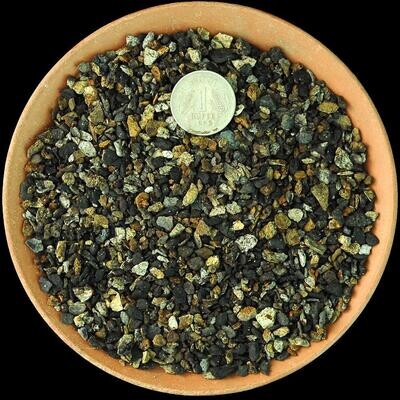
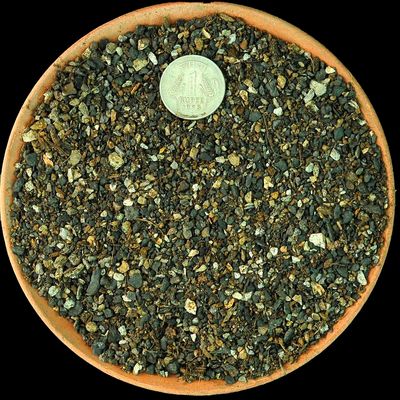
- Substrate: strictly mineral-heavy mix. Use 70% drainage material (pumice, perlite, or gravel) and only 30% organic cactus soil. Crests are highly prone to rot if the collar stays wet.
- Light: Bright, filtered sunlight. In the Indian plains, protect from the scorching midday sun of May/June to prevent scorching the crest ridges. Morning sun is ideal.
- Water & Dormancy:
- Summer: Water thoroughly when the substrate is bone dry.
- Monsoon: Critical: Keep completely dry and under shelter. High humidity combined with wet soil will rapidly rot a crest.
- Winter: Reduce watering significantly.
This species blooms in late autumn/winter (Sept-Dec); mist lightly to support buds but do not soak the soil.
5. Scientific Anecdote Despite being a popular ornamental plant, M. huitzilopochtli holds a significant biological secret: its mitochondrial genome. Recent genetic sequencing revealed it has an unusually large mitochondrial genome (2.052 Mbp) organized in a single linear molecule—a complexity that helps scientists understand the evolutionary history of angiosperms, contrasting its ancient genetic lineage with its relatively recent discovery (1979) by modern science.