

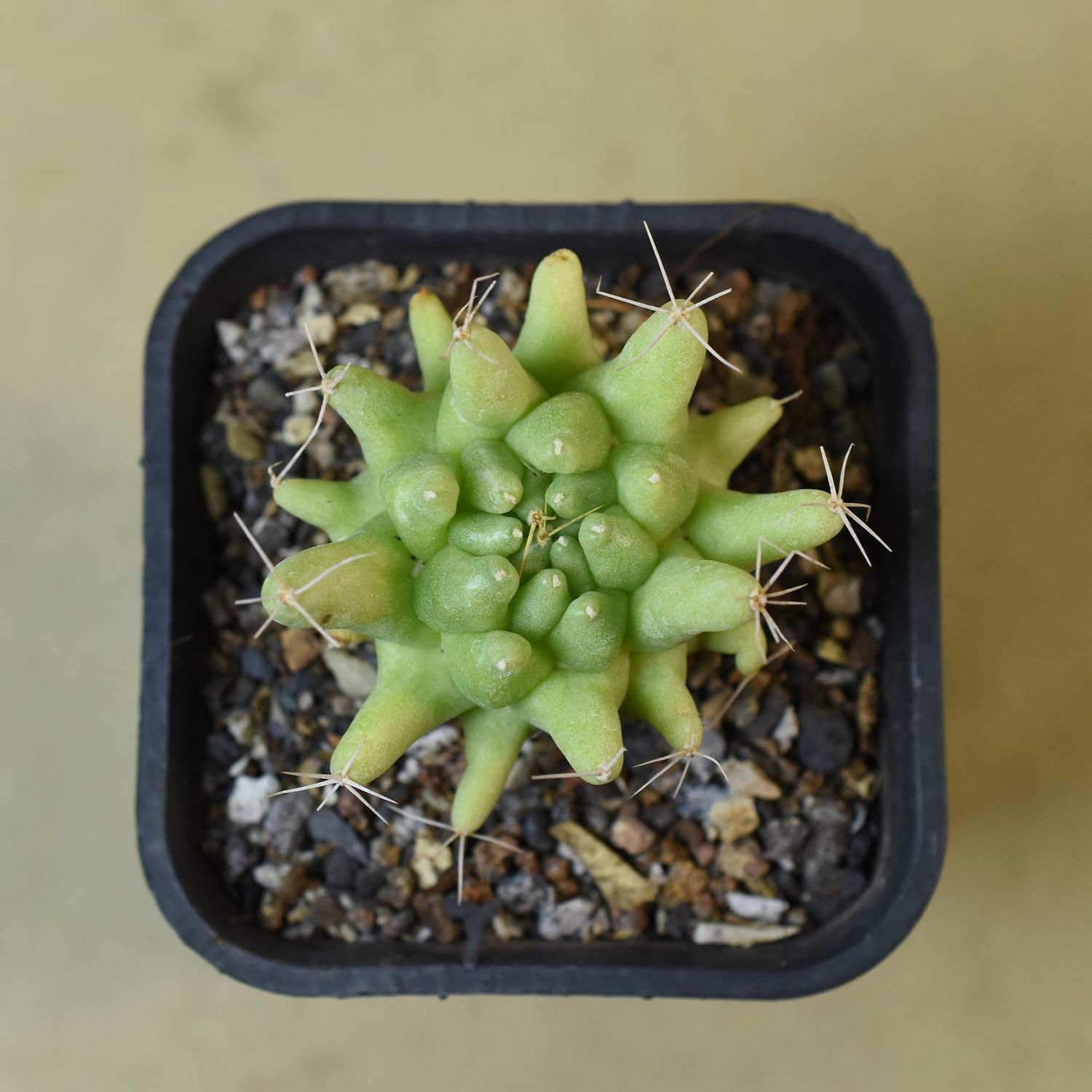
Mammillaria Longimamma Monstrose
Product Details
Finger-Like Freak: Mammillaria longimamma f. monstrose
An extraordinary architectural mutation featuring elongated tubercles that create a surreal, coral-like appearance for the avant-garde collector.
- Origin & History of Name: The genus Mammillaria comes from the Latin mammilla, meaning "nipple," referring to the plant's characteristic tubercles.
Longimamma translates to "long breast," describing the unusually extended tubercles of this species. The term "monstrose" denotes a morphological mutation where the plant's growth point (meristem) becomes disorganized, leading to the chaotic, multi-branching form seen in this cultivar. - Morphology: This plant is characterized by its soft, succulent epidermis and elongated, finger-like tubercles.
Unlike the standard species, the monstrose form grows in a stunted, clumping habit with multiple growing points. It lacks the typical organized geometric symmetry of most cacti, often producing smaller, reduced areoles and weak, inconspicuous spines, which emphasizes its fleshy, alien structure. - Habitat & Origin: While the parent species Mammillaria longimamma is native to the arid regions of Hidalgo and Querétaro, Mexico, the "monstrose" form is a cultivar derived from a natural mutation stabilized in cultivation. This specimen is nursery-propagated, ensuring it is a sustainable choice that does not involve the poaching of wild Mexican flora.
- Cultivation Profile:
- Substrate: Requires an extremely porous, mineral-based mix (e.g., 80% volcanic rock or coarse sand and 20% compost). In India, avoid heavy clay soils which trap heat and moisture around the sensitive roots.
- Light: Thrives in bright, filtered light. In the Indian subcontinent, protect from harsh afternoon sun (12 PM – 4 PM) to prevent the soft epidermis from yellowing or scarring.
- Water/Dormancy: Water sparingly and only when the medium is bone-dry.
During the Indian monsoon, keep the plant in a well-ventilated, dry spot to avoid humidity-induced rot. Reduce watering significantly in winter months.
- Scientific/Historical Anecdote: The parent species was once classified in its own genus, Dolichothele, due to its exceptionally long tubercles and large, fragrant yellow flowers—features quite distinct from typical small-flowered Mammillaria. Scientists eventually folded it back into Mammillaria, but collectors still prize this "monstrose" variant for breaking almost every rule of standard cactus symmetry.
New
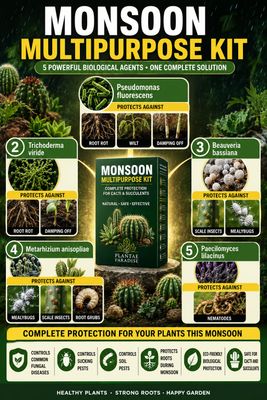
Monsoon Guardian Kit (5 in 1)
Monsoon Guardian Kit (5 in 1)
Complete 5-in-1 biological protection kit for cacti & succulents
SKU MNS024
₹850.00


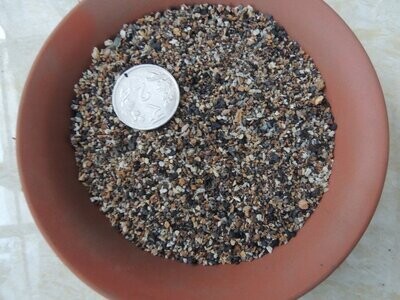
Cactus & Succulent Planting Mix COARSE (aka Cactus Soil Mix or Succulent Soil Mix)
Cactus & Succulent Planting Mix COARSE (aka Cactus Soil Mix or Succulent Soil Mix)
Washed, Free-Draining Mineral Mix for Cactus & Succulents
SKU MNS003
₹44.85
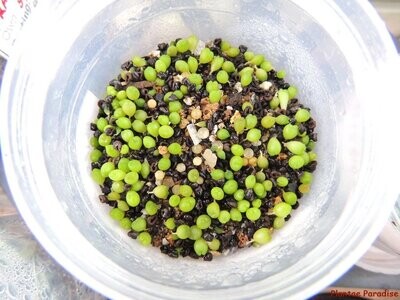
Cactus Seed Planting Mix
Cactus Seed Planting Mix
Sterile, Fine-Grain Media for Cactus & Succulent Seeds
SKU MNS005
₹74.85