

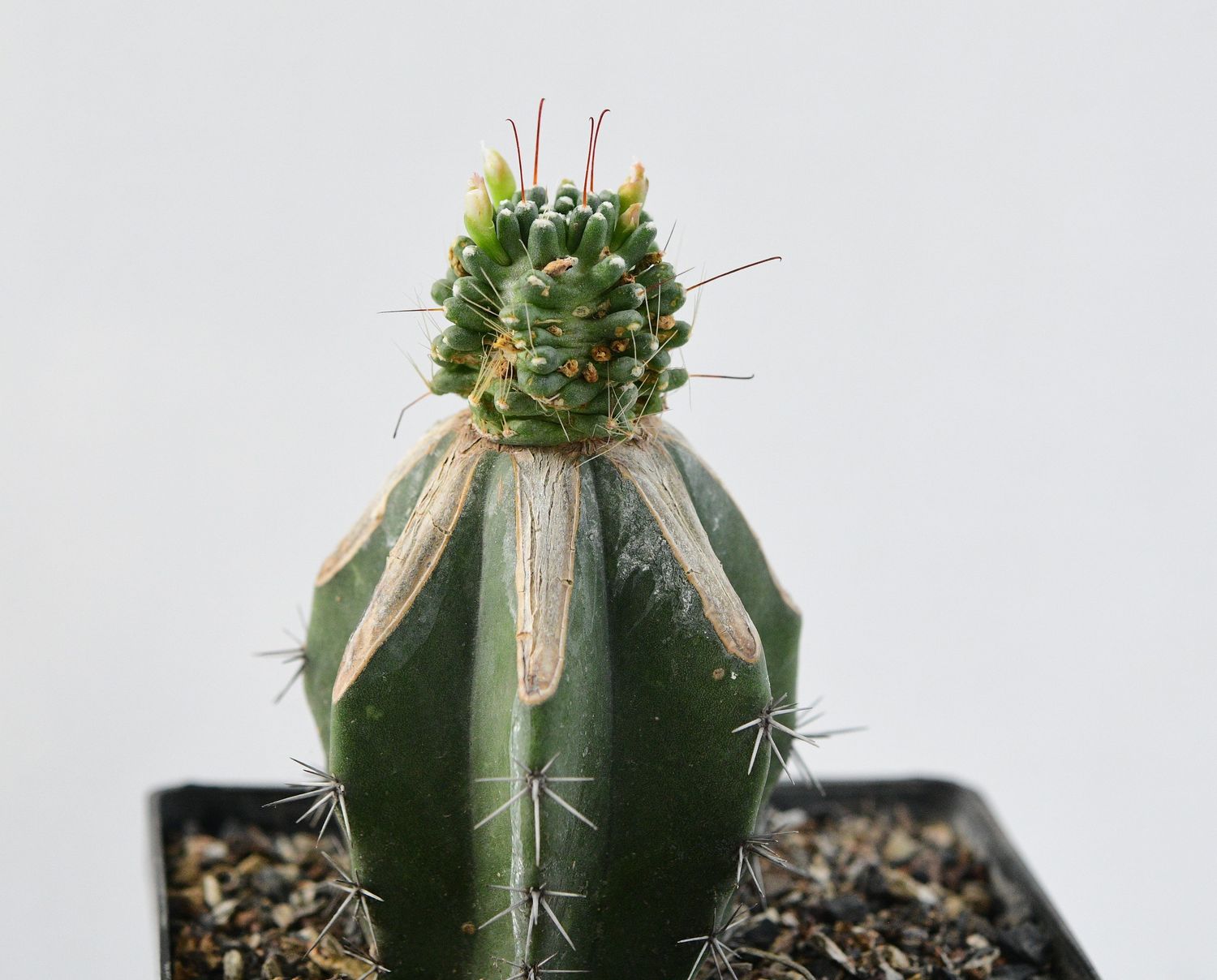
Mammillaria painteri forma mostruosa
Product Details
The Curio Cactus: Mammillaria painteri forma mostruosa
A sculptural marvel for collectors, this rare "monstrose" mutation offers a tactile, brain-like geometry that defies traditional cactus symmetry.
- Origin & History of Name: The genus name Mammillaria derives from the Latin mammilla, meaning "nipple" or "teat," referring to the tubercle-based structure of the plant. This species is named in honor of Joseph Nelson Rose’s contemporary, Joseph Henry Painter, a botanist at the Smithsonian in the early 1900s. The suffix forma mostruosa identifies it as a "monstrose" growth form, a genetic mutation where the plant's growth points (meristems) go haywire, resulting in its distorted, clumped appearance.
- Morphology: This cultivar lacks the typical radial symmetry of most cacti. Its epidermis is a rich forest green, hidden under a dense coat of soft, white, hair-like setae and curved spines. Unlike the standard species, the tubercular growth is irregular and multi-headed, creating a "cerebriform" or brain-like texture. It rarely exceeds 10 cm in height but offsets prolifically to form a tight, mounded cushion.
- Habitat & Origin: This specific "monstrous" form is a cultivar and does not occur naturally in the wild.
The base species, Mammillaria painteri, is native to the high-altitude deserts of Queretaro, Mexico. Our specimens are nursery-propagated via offsets, ensuring a sustainable supply chain that protects wild Mexican populations from poaching. - Cultivation Profile:
- Substrate: A strictly mineral-based mix (50% volcanic pumice or crushed brick, 25% coarse river sand, 25% organic compost). Avoid standard garden soil which retains too much moisture for Indian humidity.
- Light: High-intensity filtered sunlight. In the Indian subcontinent, provide 4–6 hours of morning sun, but use 50% shade cloth during peak summer (April–June) to prevent epidermal scorching.
- Water/Dormancy: Follow a "soak and dry" cycle. Water thoroughly when the substrate is bone-dry. During the monsoon, cease watering entirely if humidity is above 80%. Reduce water significantly in winter (December–January) to respect its semi-dormant phase.
- Scientific/Historical Anecdote: Mammillaria is one of the largest genera in the cactus family, but it was once a "taxonomic wasteland" where botanists disagreed on almost every species. The painteri species was nearly lost to history, frequently being lumped in with Mammillaria crinita until DNA sequencing and distinct seed morphology confirmed its unique status as a standalone species.

New


Monsoon Guardian Kit (5 in 1)
Monsoon Guardian Kit (5 in 1)
Complete 5-in-1 biological protection kit for cacti & succulents
SKU MNS024
₹850.00
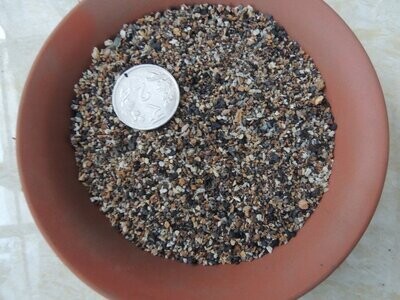
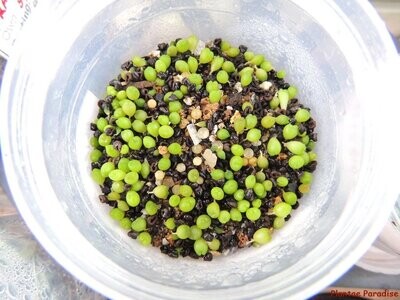
Cactus Seed Planting Mix
Cactus Seed Planting Mix
Sterile, Fine-Grain Media for Cactus & Succulent Seeds
SKU MNS005
₹74.85

Cactus & Succulent Planting Mix COARSE (aka Cactus Soil Mix or Succulent Soil Mix)
Cactus & Succulent Planting Mix COARSE (aka Cactus Soil Mix or Succulent Soil Mix)
Washed, Free-Draining Mineral Mix for Cactus & Succulents
SKU MNS003
₹44.85