Mammillaria perbella
1. Origin of Name:
The name Mammillaria comes from the Latin "mamma," meaning "nipple," referencing the plant’s characteristic tubercles that resemble small, rounded nipples. The species name perbella is derived from Latin, meaning "beautiful" or "very fine," highlighting its charming, delicate appearance. First described in the 19th century by botanists studying Mexican cacti, Mammillaria perbella was named to emphasize its aesthetically pleasing, finely textured form. Its name captures both its physical elegance and the admiration it has garnered from cactus enthusiasts worldwide.
2. Origin of Plant:
Mammillaria perbella is native to the dry, rocky regions of central Mexico, particularly in the states of Hidalgo and Queretaro. It thrives in well-drained limestone and volcanic soils on steep slopes and rocky outcrops, where it receives ample sunlight and minimal water. Discovered during early 20th-century botanical expeditions exploring Mexican deserts, it quickly became popular among collectors due to its distinctive appearance and especially delicate flowers.
3. Description:
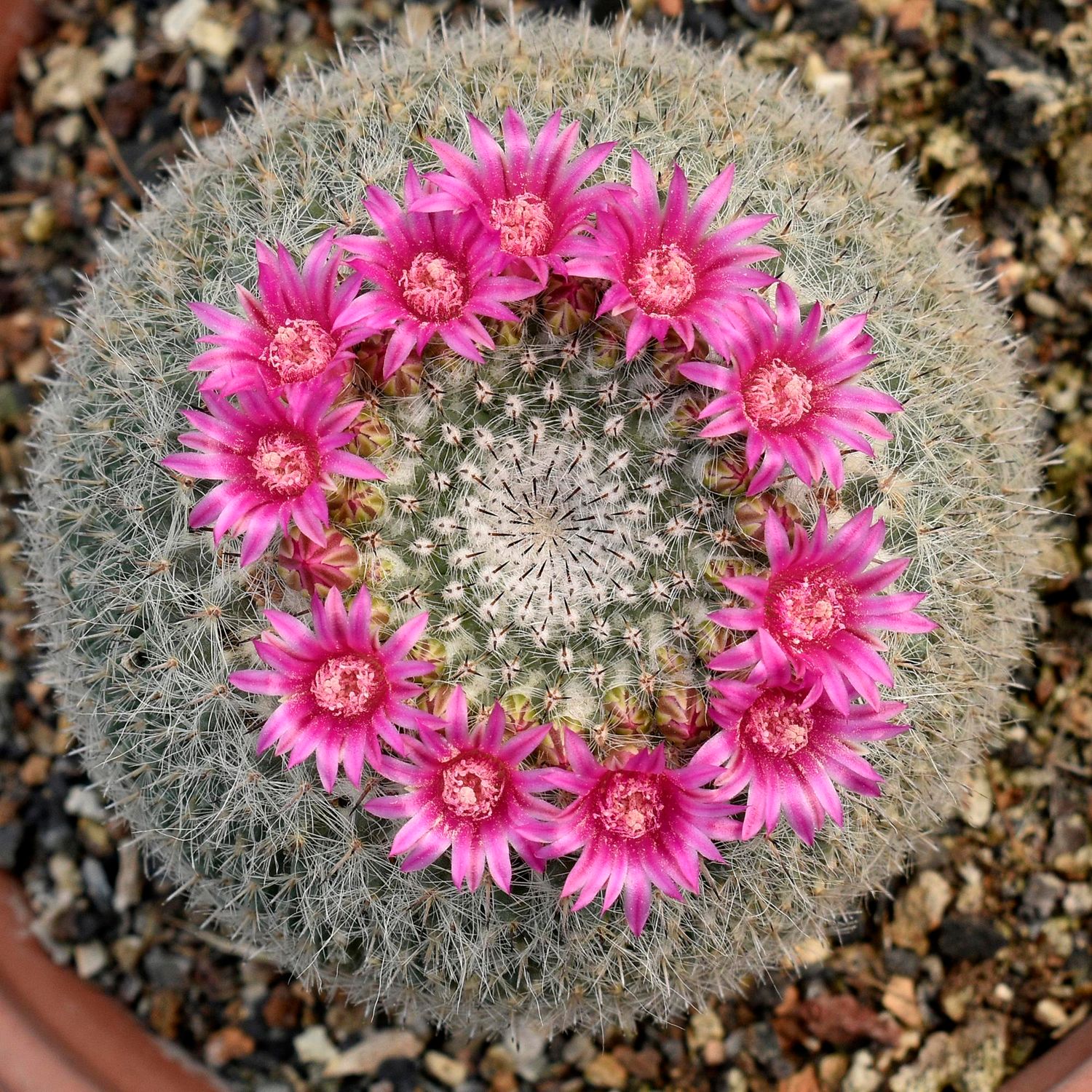
This charming cactus forms tight clusters of small, oval to globular stems, generally reaching about 3-4 inches (7.5-10 cm) in height and spreading into dense mats. Its surface is adorned with fine, soft woolly hairs and tiny, white, or pale pink spines that give it a velvety-soft look. During spring and early summer, Mammillaria perbella produces numerous small flowers—often in shades of pink, white, or pale lavender—that gracefully spiral around the top of each plant, adding a stunning splash of color. Its elegant, dainty appearance and charming floral display make it a perfect ornamental addition for collectors and enthusiasts.
4. Conservation Status:
Currently, Mammillaria perbella is not considered threatened or endangered. It is relatively abundant within its native habitat and is widely cultivated around the world. Promoting sustainable harvesting and responsible cultivation has helped maintain its populations both in the wild and in horticulture.
5. Care:
Mamillaria perbella thrives in bright, direct sunlight for at least 4-6 hours daily. Use a well-draining cactus or succulent soil to prevent water retention. Water sparingly—allow the soil to dry out completely between watering, especially in winter when the plant enters dormancy. It prefers warm temperatures from 50°F to 85°F (10°C-29°C) and must be protected from frost. During the growing season, feed monthly with a diluted cactus fertilizer. Good airflow and proper drainage are essential for healthy, continued growth, particularly because of its delicate surface texture.
Interesting Fact:
This species is often called the "Elegant Mammillaria" by collectors due to its refined form and gentle, star-like flowers. Its resilience and beauty symbolize the delicate strength of desert flora, inspiring admiration from cactus lovers worldwide.