

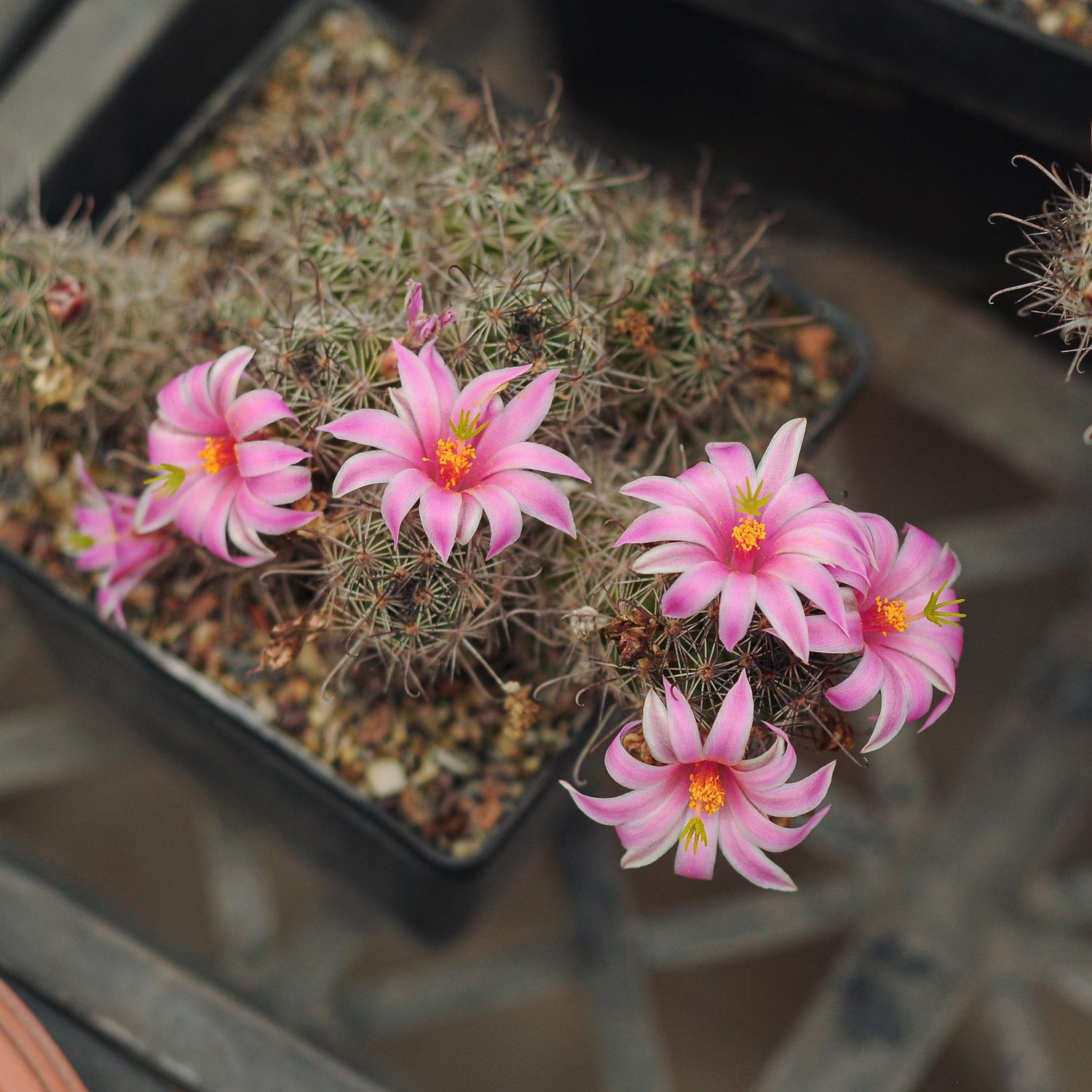
Mammillaria Scheldonii (Baja San Carlo)
Product Details
Coastal Sentinel: Mammillaria sheldonii (Baja San Carlos)
A geographically distinct specimen featuring hooked central spines and large, funnel-form pink blossoms.
- Origin & History of Name: The genus name Mammillaria comes from the Latin mammilla, meaning "nipple" or "teat," referring to the tubercle-based structure of the plant. This species was named in honor of Charles Sheldon, an American naturalist and hunter who explored the region in the early 20th century. The locality data "Baja San Carlos" identifies this specific population from the coastal regions of Sonora, Mexico, near the Gulf of California.
- Morphology: Unlike ribbed cacti, this species is composed of individual tubercles (conical bumps) arranged in a spiral. The epidermis is a dark, glaucous green, often turning reddish under high light. Each areole bears a cluster of straight radial spines and 1–3 dark, hooked central spines. The flowers are relatively large for the genus, appearing in a ring near the apex with a distinctive dark mid-stripe on each petal.
- Habitat & Origin: This is a wild species native to the coastal deserts of Sonora and northern Sinaloa, Mexico. It typically grows at low elevations in rocky, well-drained soils. These specimens are produced through controlled nursery cultivation to prevent the illegal poaching of wild Mexican populations, ensuring a sustainable addition to your collection.
- Cultivation Profile:
- Substrate: Use a highly gritty mineral-based mix (e.g., 70% volcanic rock, fine gravel, or silica sand and 30% organic matter) to mimic its rocky native habitat.
- Light: Requires full sun to bright indirect light. In North India, it benefits from maximum exposure, but in South India, protection from extreme midday sun during May is advised to prevent heat stress.
- Water/Dormancy: Water only when the substrate is entirely dry during the growing season. During the Indian winter (November–February), keep the plant completely dry and cool to stimulate the following season's floral production.
- Scientific/Historical Anecdote: Mammillaria sheldonii is part of a complex of closely related species (including M. mazatlanensis) that have adapted "fish-hook" spines. These hooks are not just defensive; in the wild, they can snag on the fur of passing animals, allowing small "pups" or offsets to be detached and carried to new locations—a clever method of vegetative dispersal known as epizoochory.
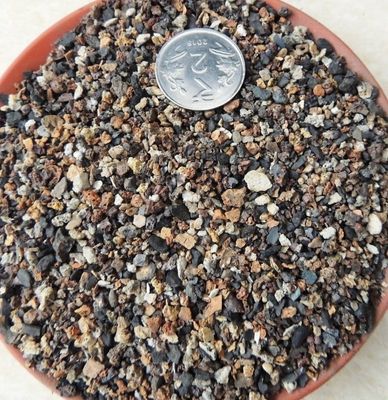
Cactus & Succulent Planting Mix FINE (aka Cactus Soil Mix or Succulent Soil Mix)
Cactus & Succulent Planting Mix FINE (aka Cactus Soil Mix or Succulent Soil Mix)
Fine-Grain Potting Mix for Cactus & Succulent Roots
SKU MNS001
₹35.51

Cactus & Succulent Planting Mix COARSE (aka Cactus Soil Mix or Succulent Soil Mix)
Cactus & Succulent Planting Mix COARSE (aka Cactus Soil Mix or Succulent Soil Mix)
Washed, Free-Draining Mineral Mix for Cactus & Succulents
SKU MNS003
₹40.51

