

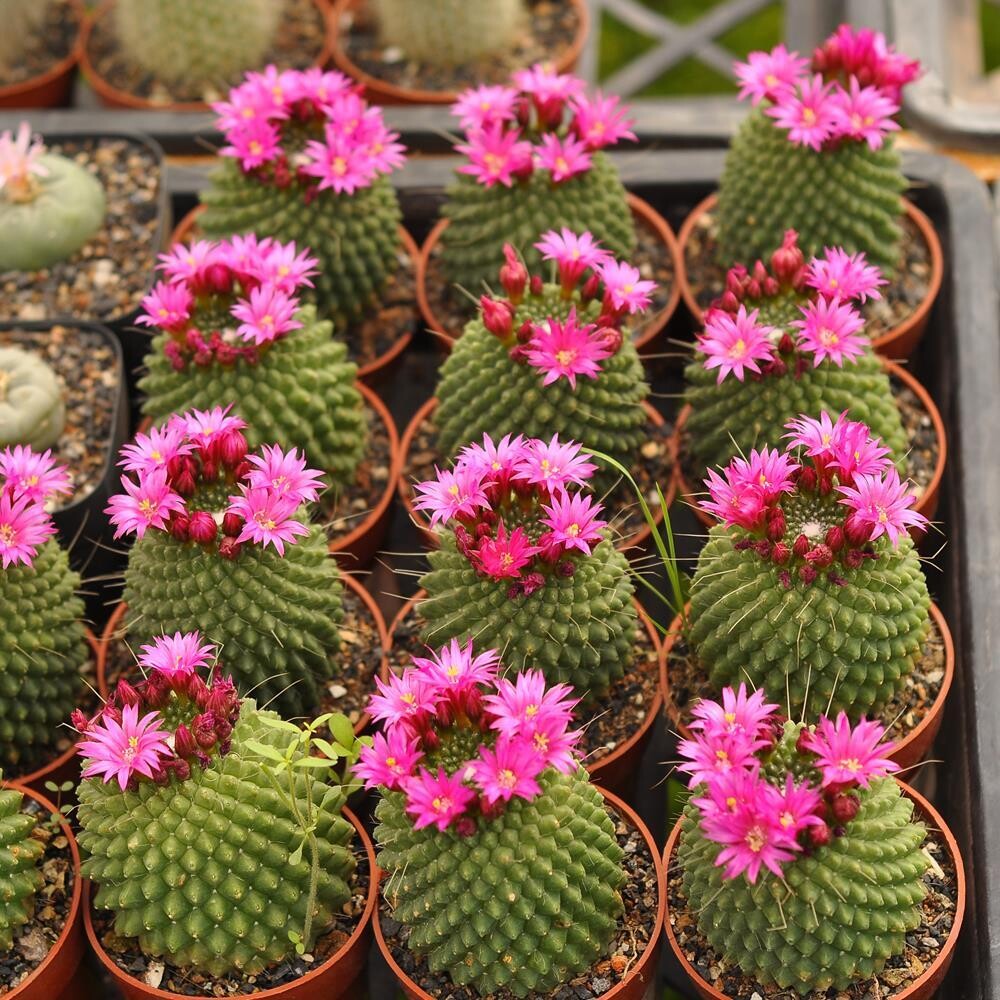
Mammillaria spinosissima cv. 'Un Pico'
Product Details
Minimalist Geometry: Mammillaria spinosissima cv. 'Un Pico'
A striking architectural mutation characterized by its singular, oversized central spines and clean, radial symmetry.
- Origin & History of Name: The genus name Mammillaria is derived from the Latin mammilla (nipple or tubercle), referring to the characteristic tubercular bumps covering the plant body.
- Morphology: This specimen features a cylindrical epidermis composed of tightly packed, conical tubercles. Unlike the wild type, 'Un Pico' is defined by a reduction in radial spines, replaced by a solitary, elongated central spine per areole that can reach lengths of 2-3 cm. The crown of the plant is often covered in white woolly hair, contrasting with the dark spines, and it produces a circumferential ring of vivid magenta flowers.
- Habitat & Origin: This plant is a cultivar of a species originally endemic to the central Mexican states of Guerrero and Morelos. It arose through selective greenhouse breeding to stabilize the "single spine" mutation. Because it is exclusively nursery-produced, its trade does not impact wild populations, making it a sustainable choice for international collectors.
- Cultivation Profile:
- Substrate: Requires a high-porosity, mineral-based mix (60% coarse sand/pumice, 40% organic compost). In India’s monsoon regions, ensure the pot is unglazed terracotta to facilitate evaporation.
- Light: Thrives in bright, indirect sunlight or filtered morning sun. In the Indian subcontinent, protect from the harsh midday sun in April and May to prevent scorching of the epidermis.
- Water/Dormancy: Follow a strict dry-wet cycle during the growing season. In winter, the plant enters a rest phase; withhold water entirely from December to February to induce flowering and prevent rot in the cooler, humid Indian nights.
- Scientific/Historical Anecdote: Mammillaria is one of the largest genera in the Cactaceae family, first described by Carl Linnaeus in 1753. A unique biological feature of this genus is that its flowers and fruits arise from the axils (the "valleys" between the bumps), whereas the spines arise from the apex of the tubercles—a sophisticated evolutionary separation of reproductive and defensive structures.


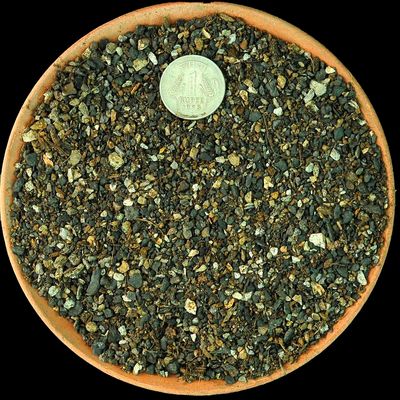
Cactus & Succulent Planting Mix FINE (aka Cactus Soil Mix or Succulent Soil Mix)
Cactus & Succulent Planting Mix FINE (aka Cactus Soil Mix or Succulent Soil Mix)
Fine-Grain Potting Mix for Cactus & Succulent Roots
SKU MNS001
₹39.85

New


Monsoon Guardian Kit (5 in 1)
Monsoon Guardian Kit (5 in 1)
Complete 5-in-1 biological protection kit for cacti & succulents
SKU MNS024
₹850.00