

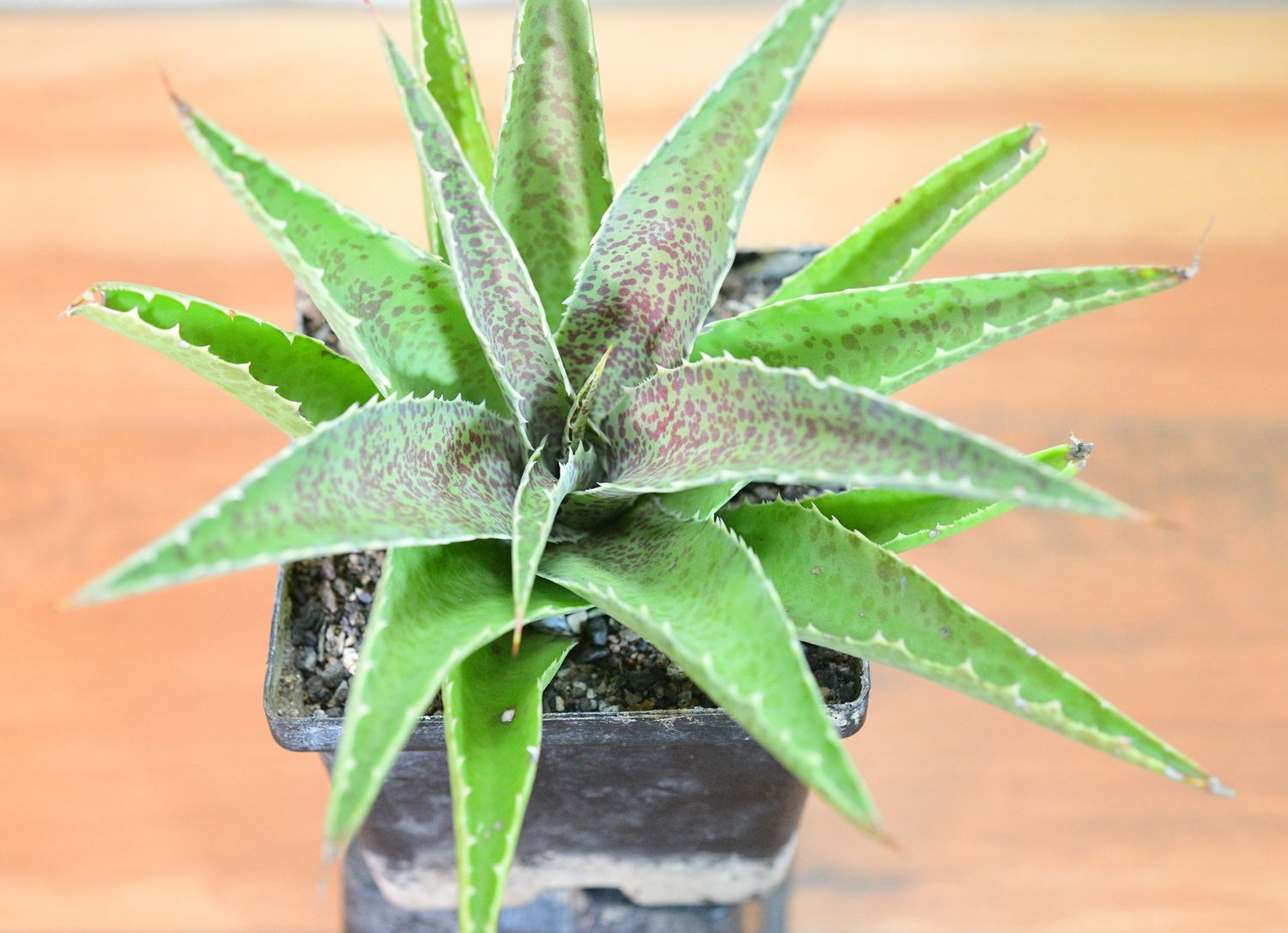
Mangave Jabber Jaws
Product Details
Interspecific Apex: Mangave 'Jabber Jaws'
This striking intergeneric hybrid commands attention with its serrated silhouette and intense burgundy maculation.
- Origin & History of Name: The portmanteau Mangave denotes a rare intergeneric hybrid between Manfreda and Agave.
The cultivar name 'Jabber Jaws' is a whimsical reference to the plant's prominent, prominent marginal teeth (cilia), which resemble the snapping jaws of a shark or a prehistoric predator. This specific hybrid was popularized through the Mad About Mangave® collection, pushing the boundaries of succulent breeding. - Morphology: 'Jabber Jaws' features a low-profile rosette of thick, succulent leaves.
The epidermis is characterized by a silvery-green base heavily overlaid with dark purple maculations (spotting) that intensify under UV light. The leaf margins are distinguished by distinct, prominent marginal teeth that are soft to the touch compared to true Agaves. Unlike many succulents, it lacks deep costae, presenting a smooth, arching leaf surface that terminates in a non-lethal terminal spine. - Habitat & Origin: This plant is an anthropogenic cultivar, not found in the wild. It is the result of sophisticated cross-breeding programs in the United States, designed to combine the rapid growth and spotting of Manfreda with the structural durability of Agave. It is a sustainable choice for collectors, as it is produced via tissue culture, ensuring no impact on wild succulent populations.
- Cultivation Profile:
- Substrate: Requires a fast-draining, gritty mineral mix. In the Indian context, use a blend of 60% coarse sand or cinder and 40% compost to manage high monsoon humidity.
- Light: Thrives in full sun to partial shade. In the Indian subcontinent, 4–6 hours of direct morning sun is ideal; excessive afternoon shade may cause the purple spotting to fade to green.
- Water/Dormancy: Follow a soak-and-dry regimen during the summer. Unlike many desert succulents, Mangave can tolerate more frequent watering during the growing season (March–September). It does not have a strict dormancy but slows growth significantly during the peak of the Indian winter.
- Scientific/Historical Anecdote: The existence of Mangave was originally considered a botanical fluke. The first specimens were discovered in the wild as "accidental" hybrids where Manfreda and Agave grew in proximity and were cross-pollinated by nocturnal bats. Breeders eventually harnessed this rare genetic compatibility to create plants that grow up to twice as fast as standard Agaves.
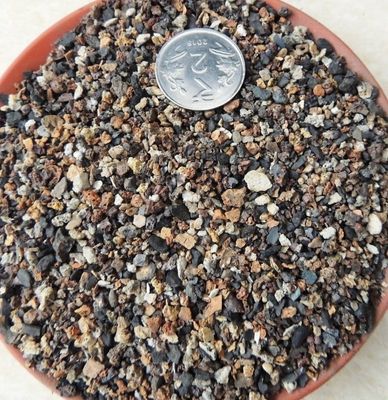
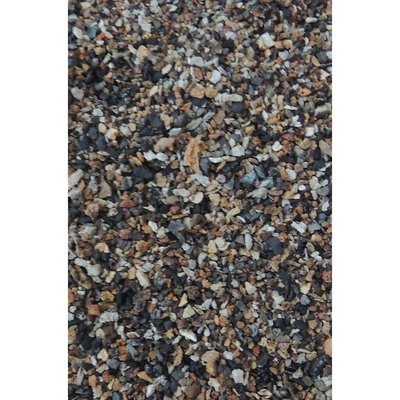
Cactus & Succulent Planting Mix FINE (aka Cactus Soil Mix or Succulent Soil Mix)
Cactus & Succulent Planting Mix FINE (aka Cactus Soil Mix or Succulent Soil Mix)
Fine-Grain Potting Mix for Cactus & Succulent Roots
SKU MNS001
₹39.85
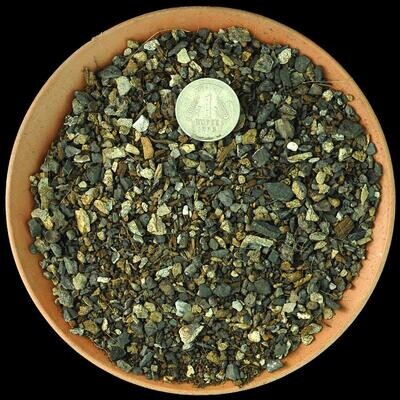



Cactus Seed Planting Mix
Cactus Seed Planting Mix
Sterile, Fine-Grain Media for Cactus & Succulent Seeds
SKU MNS005
₹74.85