

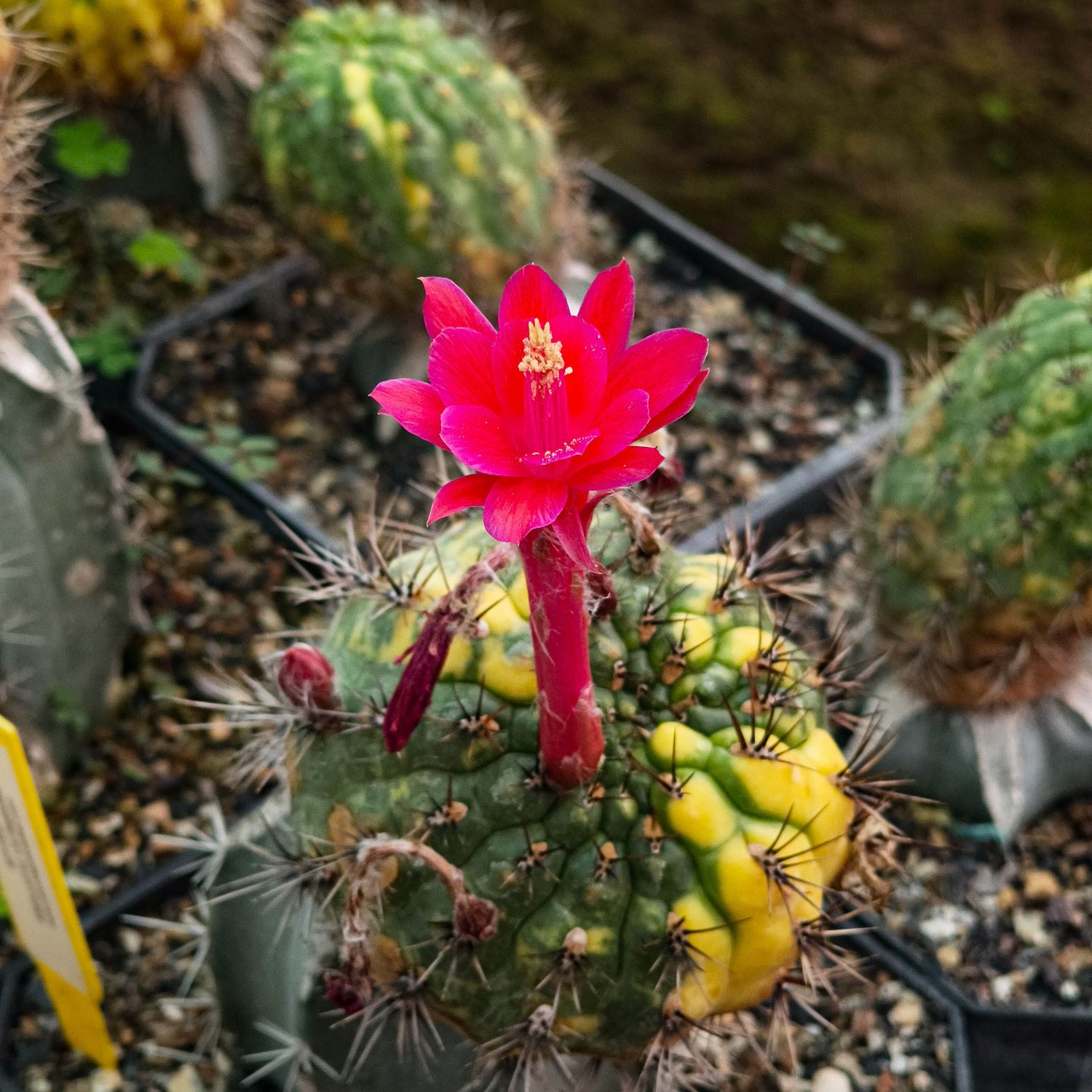
Matucana aurantiaca Variegated
Product Details
Luminous Geometry: Matucana aurantiaca f. variegata
A rare chimeric masterpiece combining high-altitude resilience with striking golden architectural variegation.
- Origin & History of Name: The genus name Matucana is derived from the town of Matucana, Peru, located in the Rimac valley, where the type species was first identified. The specific epithet aurantiaca stems from the Latin aurantiacus, meaning "orange-colored," referencing its vibrant floral display.
- Morphology: This specimen features a globose to short-cylindrical epidermis characterized by chimeric variegation, where chlorophyll-deficient yellow patches contrast against deep forest green. It possesses distinct costae (ribs) that are often tuberculate (bumpy), supporting areoles with curved, needle-like spines. Unlike many cacti, its variegation is stable but asymmetrical, ensuring every individual plant is a unique biological sculpture.
- Habitat & Origin: While the base species Matucana aurantiaca is native to the high-elevation rocky slopes of Cajamarca, Peru, the variegated form is a rare cultivar selected in cultivation. These specimens are produced through controlled propagation rather than wild collection, ensuring the preservation of the vulnerable Andean populations while providing sustainable options for collectors.
- Cultivation Profile:
- Substrate: Use a strictly mineral-based mix (60% volcanic rock/pumice, 20% coarse sand, 20% organic matter) to prevent root rot in humid Indian climates.
- Light: Requires bright, filtered sunlight.
- Water/Dormancy: Water deeply when the substrate is completely dry during the growing season (March–October). Maintain a strict dry dormancy during the cool winter months or peak monsoon humidity to mimic its arid alpine habitat.
- Scientific/Historical Anecdote: Matucanas were originally grouped under the genus Echinocactus until botanists realized their unique floral tubes were specifically adapted for hummingbird pollination. The aurantiaca species is particularly noted for its "zygomorphic" flowers—meaning they possess bilateral symmetry rather than the radial symmetry typical of most cacti—a sophisticated evolutionary trait designed to precisely deposit pollen on visiting birds.

Cactus & Succulent Planting Mix FINE (aka Cactus Soil Mix or Succulent Soil Mix)
Cactus & Succulent Planting Mix FINE (aka Cactus Soil Mix or Succulent Soil Mix)
Fine-Grain Potting Mix for Cactus & Succulent Roots
SKU MNS001
₹35.51
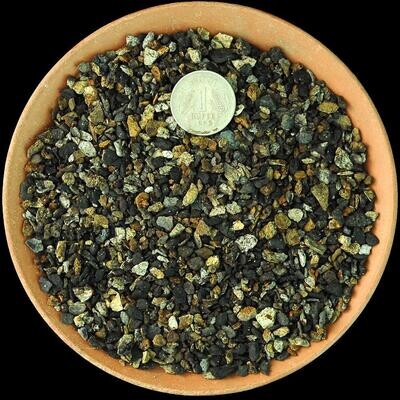
Cactus & Succulent Planting Mix COARSE (aka Cactus Soil Mix or Succulent Soil Mix)
Cactus & Succulent Planting Mix COARSE (aka Cactus Soil Mix or Succulent Soil Mix)
Washed, Free-Draining Mineral Mix for Cactus & Succulents
SKU MNS003
₹40.51

