

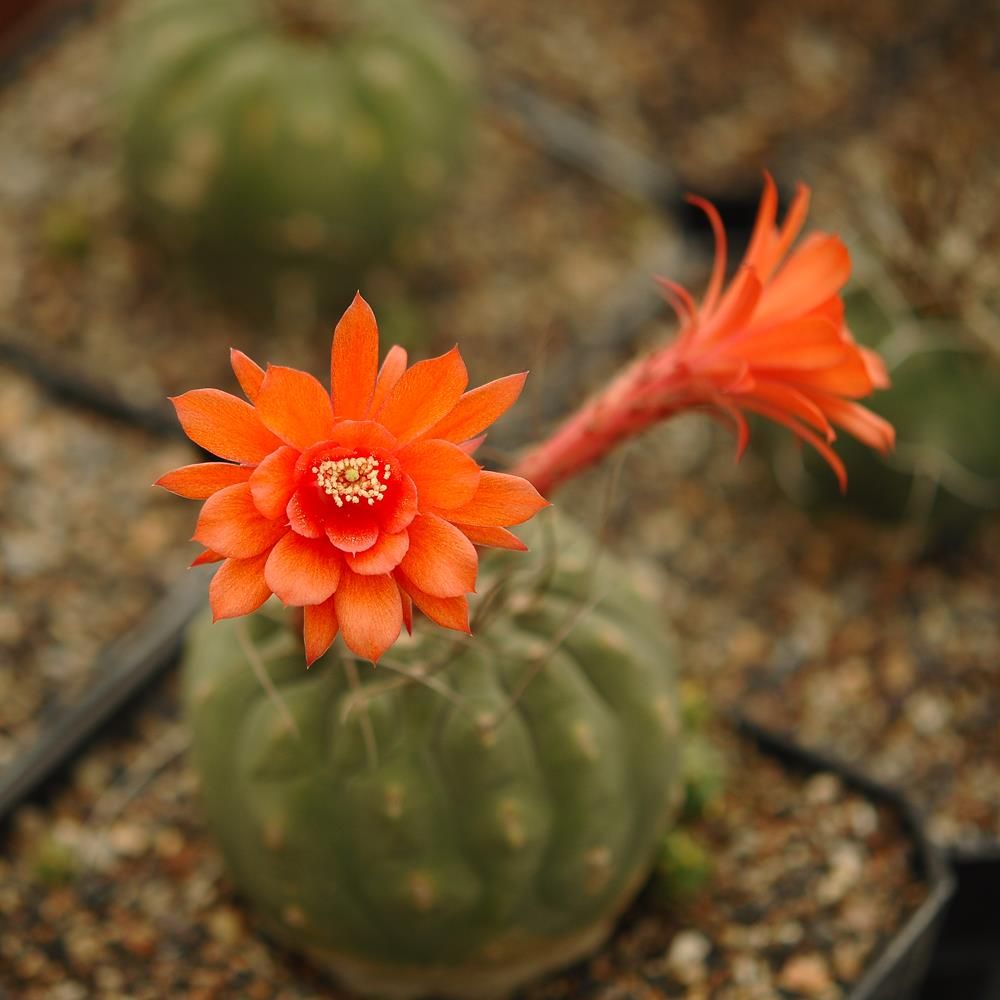
Matucana Madisoniorum (Syn: Submatucana madisoniorum )
Product Details
The Minimalist Marvel: Matucana madisoniorum
A rare, velvet-textured gem from the Peruvian Andes, prized for its nearly spineless, pebble-like aesthetic.
- Origin & History of Name: The genus name Matucana is derived from the town of Matucana, Peru, located near the original discovery sites.
- Morphology: This globose cactus is distinct for its matte, greyish-blue to dull green epidermis that feels soft to the touch.
- Habitat & Origin: This is a wild species endemic to a very small region in the Amazonas department of Peru, specifically the Cenepa River valley.
- Cultivation Profile:
- Substrate: Use a strictly mineral-based mix (70% pumice, perlite, or crushed brick and 30% organic matter) to prevent root rot.
- Light: Requires bright, indirect sunlight.
- Water/Dormancy: Follow a "soak and dry" method during the growing season. In the Indian monsoon, keep completely dry to avoid humidity-related fungal issues. Maintain strict winter dormancy with zero water from November to February.
- Scientific/Historical Anecdote: When first discovered, Matucana madisoniorum caused a stir in the botanical community because it looked more like a Lophophora (Peyote) than a typical Matucana.

Cactus & Succulent Planting Mix COARSE (aka Cactus Soil Mix or Succulent Soil Mix)
Cactus & Succulent Planting Mix COARSE (aka Cactus Soil Mix or Succulent Soil Mix)
Washed, Free-Draining Mineral Mix for Cactus & Succulents
SKU MNS003
₹40.51



Cactus Seed Planting Mix
Cactus Seed Planting Mix
Sterile, Fine-Grain Media for Cactus & Succulent Seeds
SKU MNS005
₹70.51