

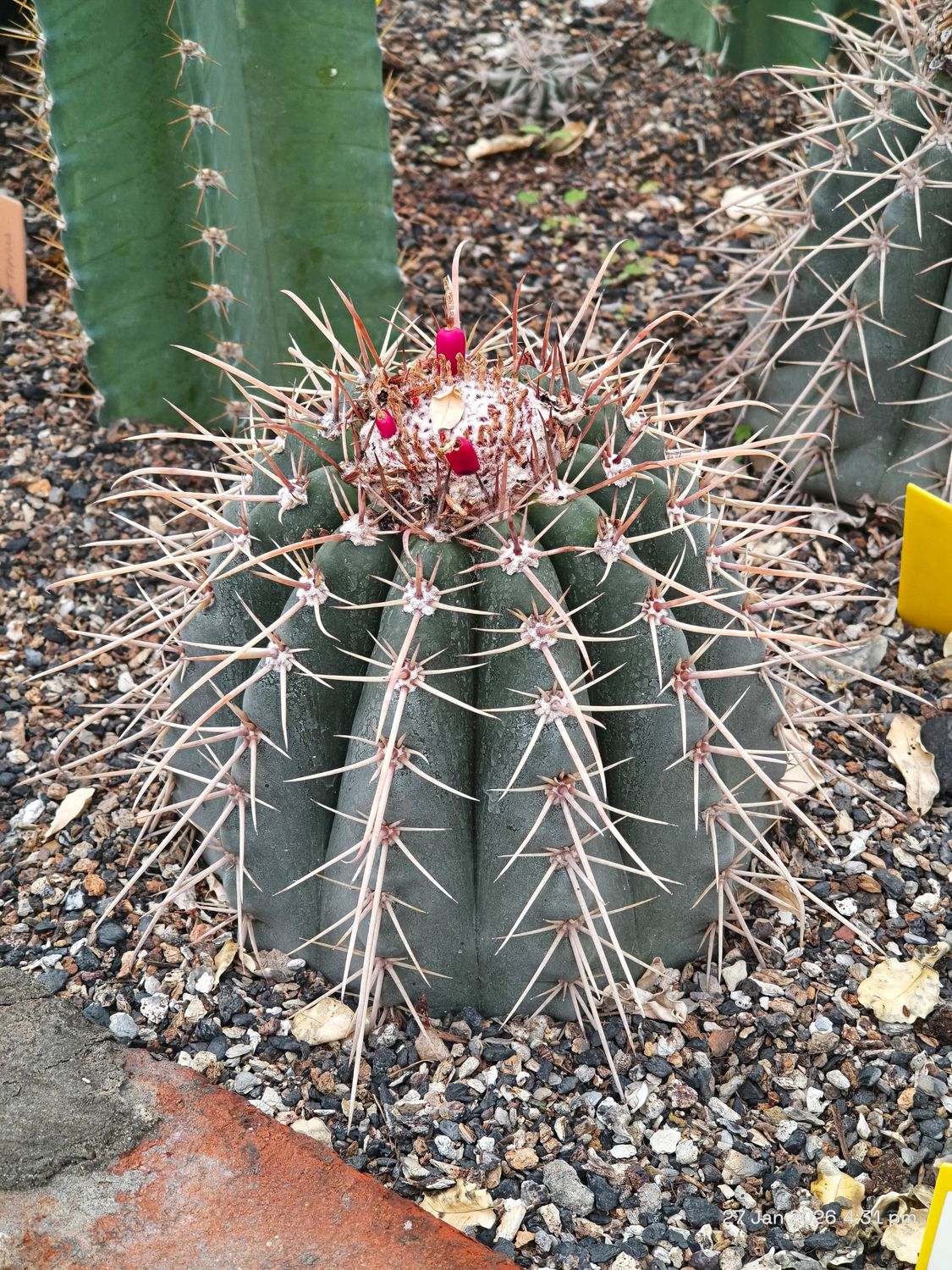
Melocactus bahiensis Large plants
Product Details
6 inch across plants will soon develop a cephalum.
Crown of the Caatinga: Melocactus bahiensis
A distinctive Brazilian treasure prized for its signature cephalum and robust, geometric form.
- Origin & History of Name: The genus name Melocactus stems from the Latin melo (melon), describing its rounded shape, and cactus. The specific epithet bahiensis refers to the state of Bahia in Brazil, where the species was first identified.
It was formally described in the early 20th century, cementing its place as a representative species of the diverse Brazilian semi-arid flora. - Morphology: This solitary cactus features a globose to short-cylindrical epidermis in dark green. It possesses 10 to 12 sharp, well-defined costae (ribs) armed with sturdy, recurved spines. Its most unique feature is the cephalum—a terminal cap of reddish-brown bristles and wool that develops once the plant reaches reproductive maturity, after which the green body stops growing and only the cap expands.
- Habitat & Origin: This is a wild species native to the rocky outcrops and "caatinga" shrublands of Eastern Brazil.
It is specifically found in the states of Bahia and Pernambuco. Our stock is sourced through ethical, nursery-propagated means to ensure the conservation of its specialized wild habitat. - Cultivation Profile:
- Substrate: Requires a highly porous, mineral-based mix (volcanic rock, coarse sand, and a small fraction of coco-peat).
- Light: Thrives in full sun to bright filtered light.
In the intense Indian summer, provide afternoon shade to avoid epidermis yellowing. - Water/Dormancy: Unlike many desert cacti, Melocactus prefers consistent warmth.
Water when the top inch of substrate is dry during the growing season. In the Indian winter, reduce watering but do not allow the roots to stay bone-dry for extended periods, as they are less tolerant of complete drought than other genera.
- Scientific/Historical Anecdote: Melocactus was among the first cacti ever seen by Europeans; Christopher Columbus reportedly brought specimens back to the Spanish court, describing them as "echinus" (sea urchins) of the land.
Because they develop a cephalum, they are often called "Turk's Cap" cacti, as the structure resembles a traditional fez.
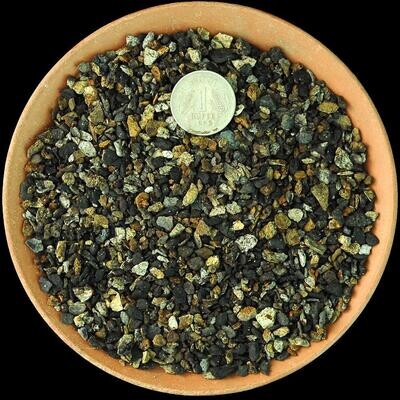
Cactus & Succulent Planting Mix COARSE (aka Cactus Soil Mix or Succulent Soil Mix)
Cactus & Succulent Planting Mix COARSE (aka Cactus Soil Mix or Succulent Soil Mix)
Washed, Free-Draining Mineral Mix for Cactus & Succulents
SKU MNS003
₹44.85
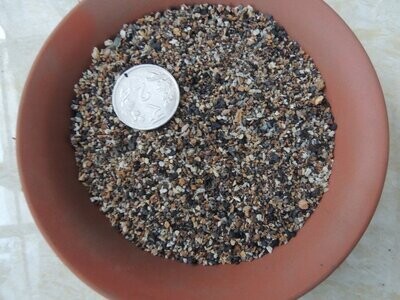
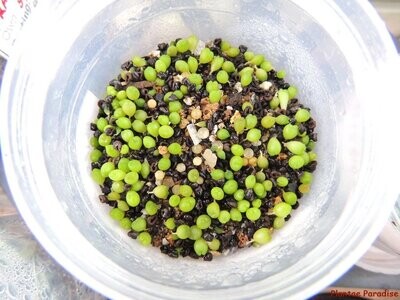
Cactus Seed Planting Mix
Cactus Seed Planting Mix
Sterile, Fine-Grain Media for Cactus & Succulent Seeds
SKU MNS005
₹74.85

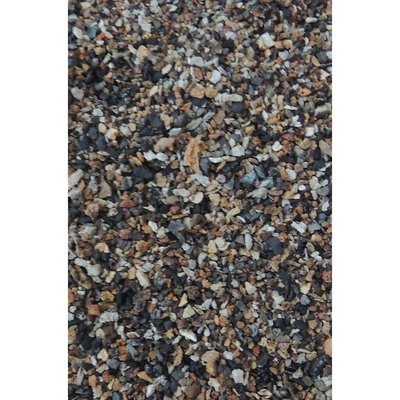
Cactus & Succulent Planting Mix FINE (aka Cactus Soil Mix or Succulent Soil Mix)
Cactus & Succulent Planting Mix FINE (aka Cactus Soil Mix or Succulent Soil Mix)
Fine-Grain Potting Mix for Cactus & Succulent Roots
SKU MNS001
₹39.85
