

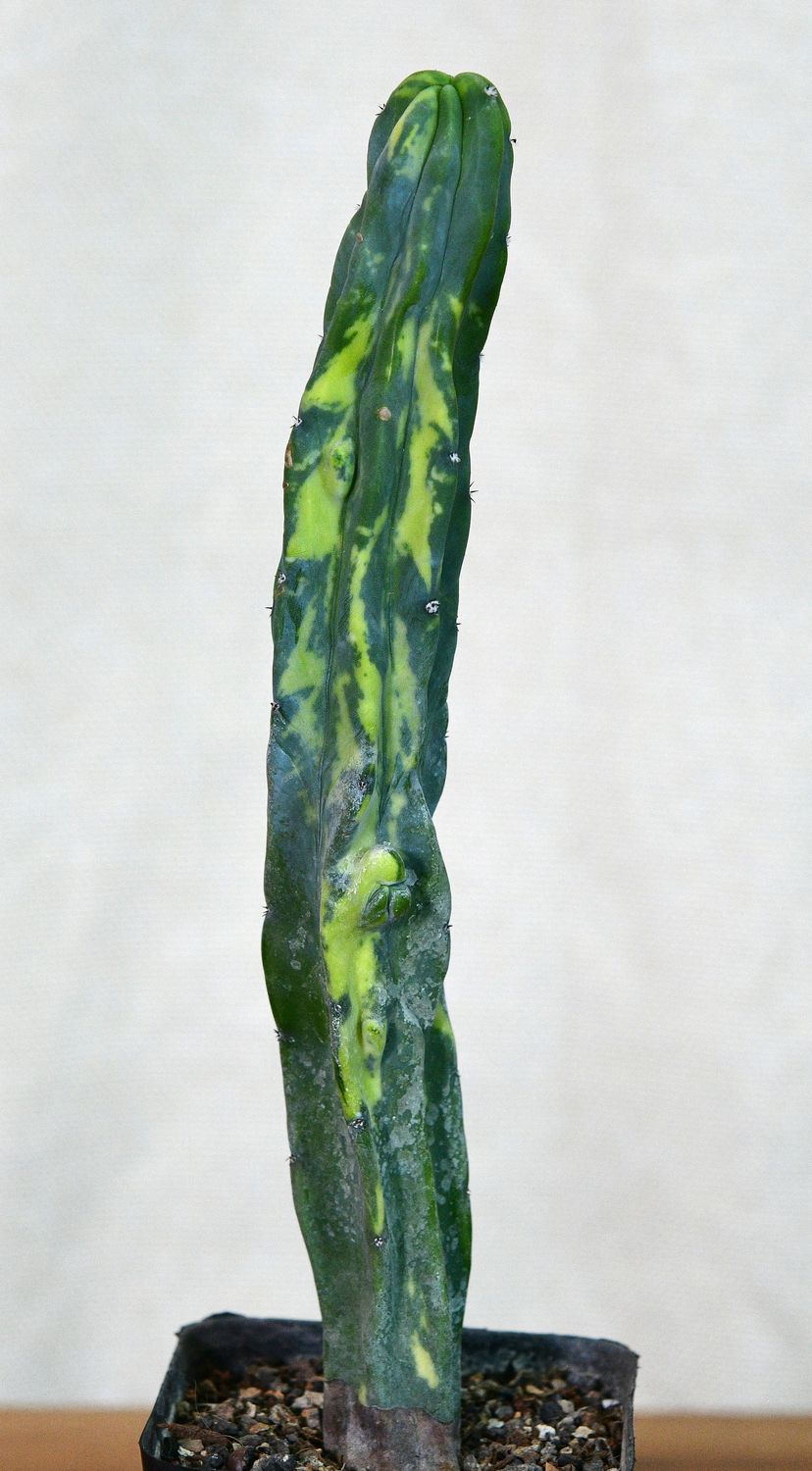
Myrtillocactus geometerizans variegated (Columnar )
Product Details
Radiant Geometry: Myrtillocactus geometrizans Variegated
An architectural masterpiece of living art, this rare variegated specimen offers a striking fusion of geometric form and vibrant chlorophyll mutation.
- Origin & History of Name The genus name Myrtillocactus is derived from the Greek myrtillus (small myrtle) and the Latin cactus, referencing the plant’s small, blueberry-like fruits.
The specific epithet geometrizans was coined by Italian botanist Michelangelo Console in 1897, describing the precise, mathematical symmetry of its branching habit. Historically, it is known in Mexico as "Garambullo," a name deeply rooted in indigenous culinary and medicinal traditions. - Morphology This columnar cactus is distinguished by its glaucous epidermis, which displays unstable variegation—sections where chlorophyll is absent, resulting in creamy yellow or white marbling. The plant features 5–8 distinct costae (ribs) that create its signature "geometric" cross-section. Small, dark areoles are spaced along the margins, typically bearing short, suppressed spines, allowing the vibrant, variegated skin to remain the visual focal point.
- Habitat & Origin While the standard M. geometrizans is native to the high plateaus of Central and Northern Mexico, this variegated form is a cultivar selected and stabilized in greenhouse environments. These specimens are propagated via grafting or offsets to preserve the mutation. All our stock is nursery-grown through sustainable practices, ensuring no impact on wild populations.
- Cultivation Profile
- Substrate: Requires a highly porous, mineral-based mix. Use a ratio of 70% inorganic grit (pumice, perlite, or crushed brick) to 30% organic compost to prevent root rot.
- Light: Thrives in bright, indirect sunlight. In the Indian subcontinent, protection from harsh afternoon sun (12:00 PM – 4:00 PM) is critical to prevent "sunscorch" on the sensitive variegated tissue.
- Water/Dormancy: Follow a "soak and dry" cycle. During the monsoon, keep the plant strictly dry. In winter, enter a period of obligate dormancy by withholding water almost entirely to mimic its natural arid cycle.
- Scientific/Historical Anecdote The Myrtillocactus is one of the few columnar cacti used extensively in intergeneric grafting.
Because of its robust vascular system and rapid growth rate, it is frequently used as a "rootstock" to support the growth of slower-growing or more sensitive species. In its variegated form, however, the plant’s own reduced photosynthetic capacity makes it a prized "scion" or standalone collector's item rather than a mere utility plant.
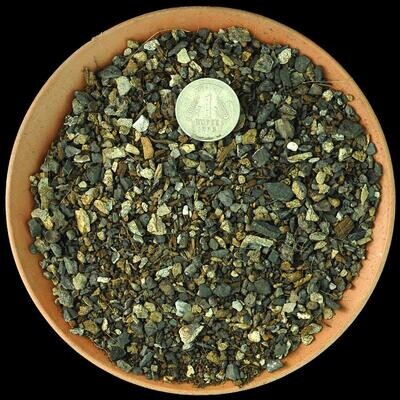
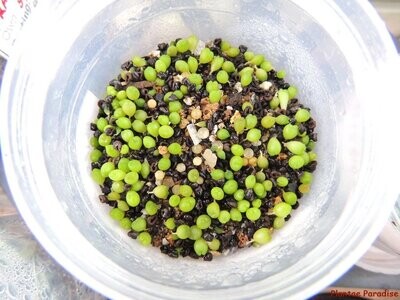
Cactus Seed Planting Mix
Cactus Seed Planting Mix
Sterile, Fine-Grain Media for Cactus & Succulent Seeds
SKU MNS005
₹74.85
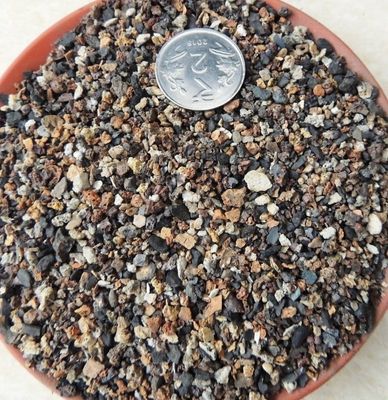
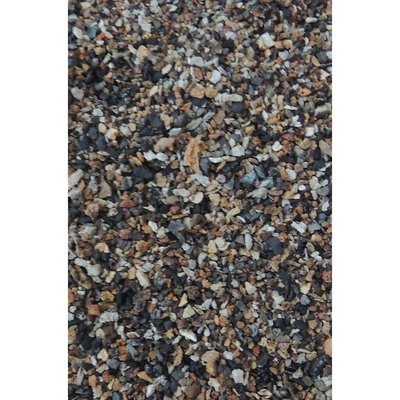
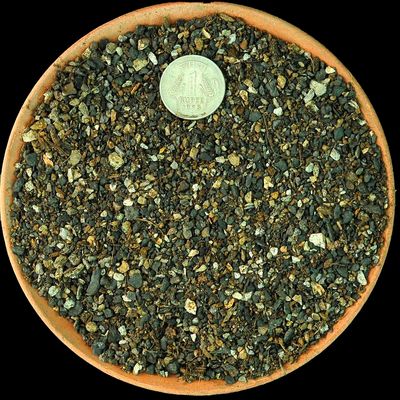
Cactus & Succulent Planting Mix FINE (aka Cactus Soil Mix or Succulent Soil Mix)
Cactus & Succulent Planting Mix FINE (aka Cactus Soil Mix or Succulent Soil Mix)
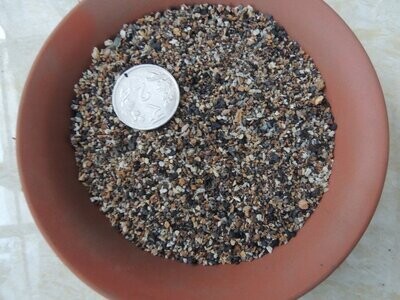
Fine-Grain Potting Mix for Cactus & Succulent Roots
SKU MNS001
₹39.85