Origin of Name
Myrtillocactus geometrizans ‘Fukurokuryuzinboku’ is a unique cultivar of Myrtillocactus geometrizans. The name ‘Fukurokuryuzinboku’ is Japanese in origin, translating to "Buddha’s Belly Cactus" in English, which aptly describes the unusual, swollen form of this plant. The genus name 'Myrtillocactus' refers to its myrtle-like (small and rounded) fruits, while 'geometrizans' suggests the geometric pattern of the cactus’s ribs.
Technical Description of Plant
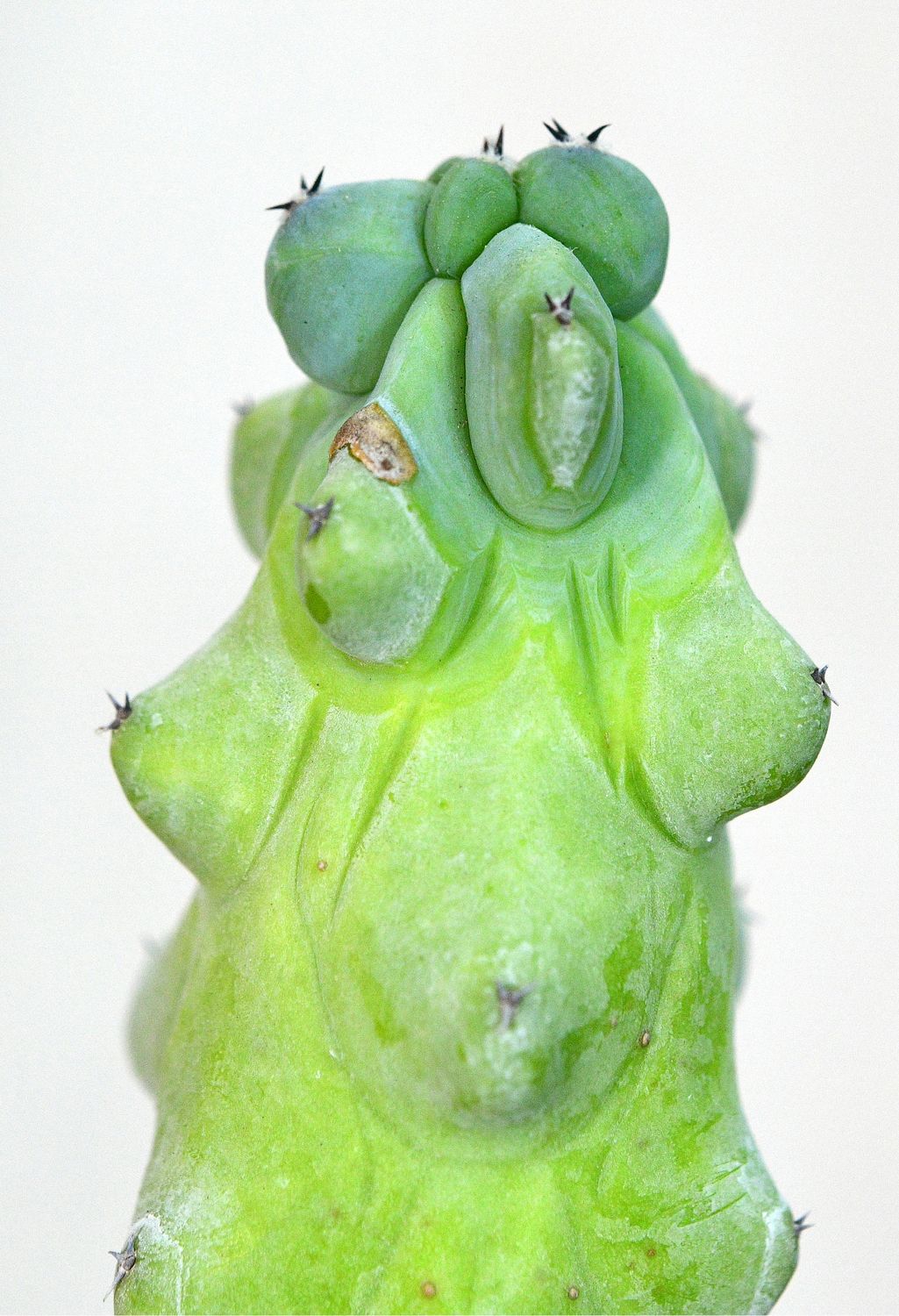
This cultivar is particularly notable for its rare, monstrose growth form. Unlike the standard columnar shape of Myrtillocactus geometrizans, ‘Fukurokuryuzinboku’ develops unusual, undulating, and swollen stems, giving it a distinctive, sculptural appearance. The stems are blue-green in color and bear areoles with small spines. This cultivar may occasionally produce small, white flowers, followed by edible fruits, although flowering is less common due to its monstrose nature.
Origin of Plant
Myrtillocactus geometrizans is native to Northern and Central Mexico. The ‘Fukurokuryuzinboku’ cultivar, however, is a result of selective breeding and does not occur naturally in the wild.
Conservation Status
As a cultivated variety, Myrtillocactus geometrizans ‘Fukurokuryuzinboku’ does not have a conservation status. The species Myrtillocactus geometrizans itself is not listed as endangered.
Care instructions
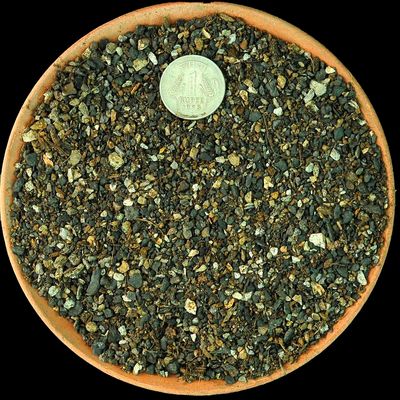
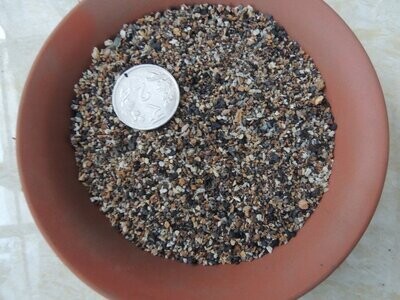
This cactus requires well-draining soil, preferably a cactus mix, and a pot with good drainage. It thrives in full sun to partial shade and should be watered moderately when the soil is dry to the touch. In winter, reduce watering to prevent root rot. While it is somewhat cold-hardy, protection from frost is recommended. Fertilize sparingly during the growing season for optimal growth. Due to its unique growth form, this cactus may require support as it matures. Regular inspection for pests and grooming will keep the plant healthy and maintain its unusual shape.