

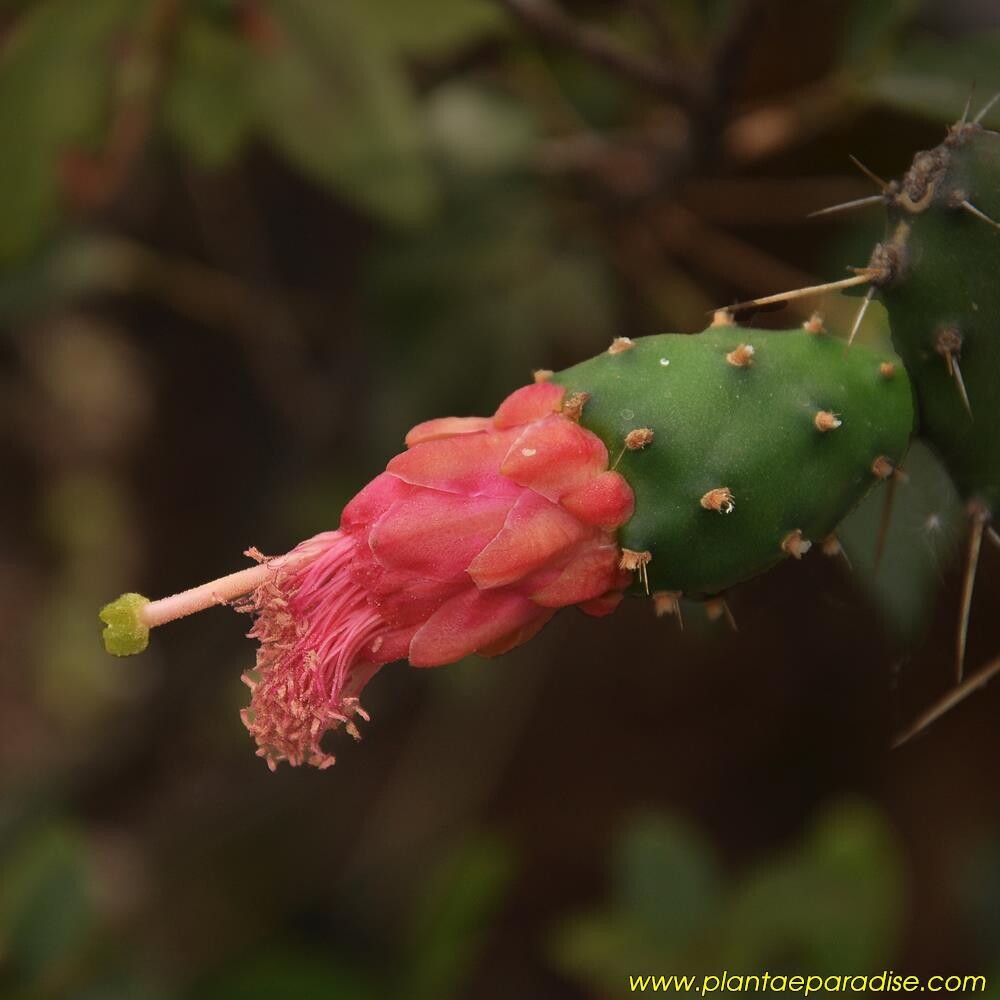
Nopalea Karwinskiana (Red Flowers) Syn Opuntia Karwinskiana
Product Details
Radiant Blooms: Nopalea Karwinskiana (Red Flowers)
An architectural rarity for the serious collector, prized for its slender silhouette and vibrant, hummingbird-attracting crimson blossoms.
- Origin & History of Name: The genus name Nopalea is derived from the Nahuatl word "nopal," the indigenous Mexican term for cacti. The specific epithet karwinskiana honors Wilhelm Karwinski von Karwin, a Bavarian naturalist who explored Mexico in the mid-19th century (c. 1826–1832). While often classified under the broad genus Opuntia, it is distinguished by its unique flower structure designed specifically for bird pollination.
- Morphology: This cactus features elongated, flattened stems known as cladodes (pads) which possess a smooth, bright green epidermis. Unlike common prickly pears, its areoles (growth nodes) are sparsely armed, giving it a cleaner aesthetic. Its most striking feature is the perianth; the red petals remain erect and tube-like rather than spreading wide, with the stamens and pistil exserted (protruding) far beyond the petals to facilitate pollination.
- Habitat & Origin: Nopalea karwinskiana is a wild species native to the tropical deciduous forests of Mexico, particularly in regions like Oaxaca and Chiapas. It is not a man-made cultivar. In its native habitat, it grows as an upright, tree-like shrub. Our specimens are propagated via sustainable cuttings to prevent the depletion of wild populations.
- Cultivation Profile:
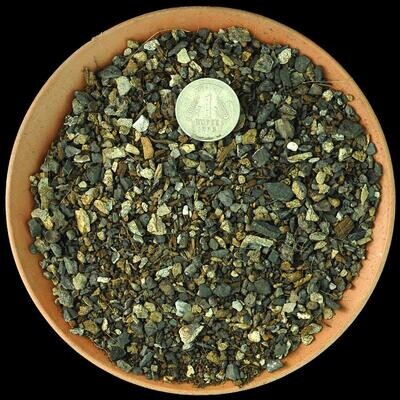
- Substrate: Use a strictly mineral-based mix. A ratio of 50% coarse river sand, 25% pumice or grit, and 25% garden soil is ideal for the Indian climate to prevent root rot.
- Light: Requires Full Sun to partial shade. In the intense heat of Northern or Central India, provide 20% shade during peak summer afternoons to prevent epidermal scorching.
- Water/Dormancy: Follow a "soak and dry" method. Water thoroughly during the monsoon and summer growth phases, but ensure the pot drains rapidly. Maintain strict dryness during the cooler winter months (November–February) to respect its natural dormancy.
- Scientific/Historical Anecdote: Historically, members of the Nopalea and Opuntia genera were of immense economic value as hosts for the Cochineal insect. These insects were harvested from the cactus pads to produce a highly coveted, deep-red dye used by Aztec royalty and later exported by Spanish colonists as a global luxury commodity.
New
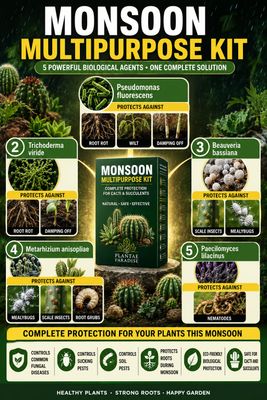
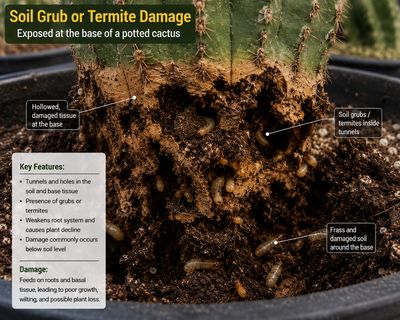
Monsoon Guardian Kit (5 in 1)
Monsoon Guardian Kit (5 in 1)
Complete 5-in-1 biological protection kit for cacti & succulents
SKU MNS024
₹850.00
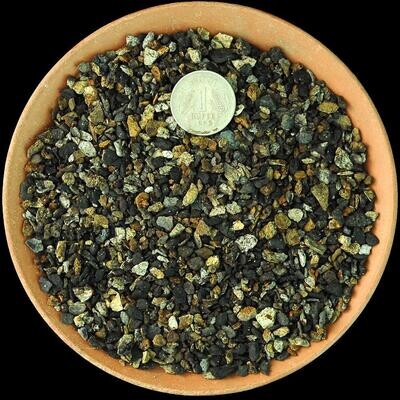
Cactus & Succulent Planting Mix COARSE (aka Cactus Soil Mix or Succulent Soil Mix)
Cactus & Succulent Planting Mix COARSE (aka Cactus Soil Mix or Succulent Soil Mix)
Washed, Free-Draining Mineral Mix for Cactus & Succulents
SKU MNS003
₹44.85


Cactus & Succulent Planting Mix FINE (aka Cactus Soil Mix or Succulent Soil Mix)
Cactus & Succulent Planting Mix FINE (aka Cactus Soil Mix or Succulent Soil Mix)
Fine-Grain Potting Mix for Cactus & Succulent Roots
SKU MNS001
₹39.85