

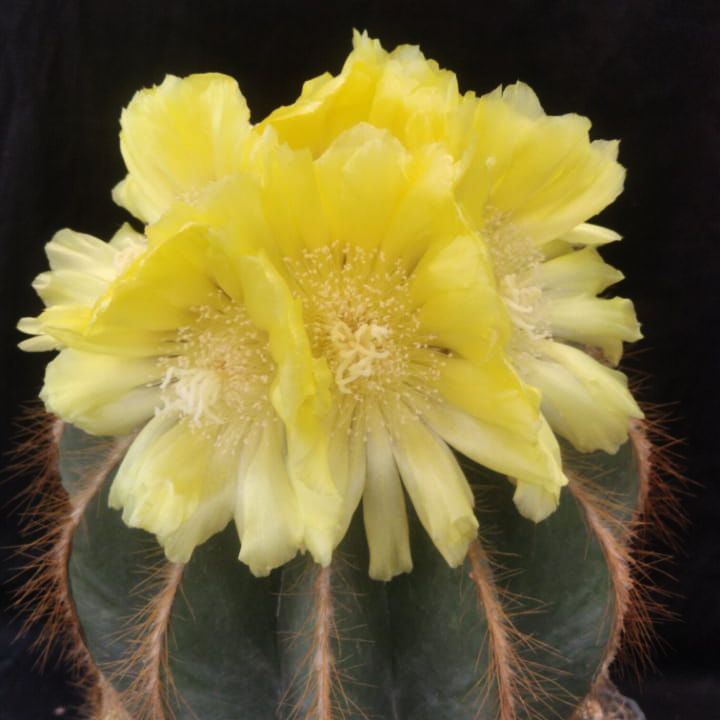
Notocactus magnificus
Product Details
Sculptural Symmetry: Notocactus magnificus
A prize of the Rio Grande do Sul, this globe-shaped marvel is celebrated for its precise geometric ribbing and soft, golden-bristled aura.
- Origin & History of Name The genus name Notocactus is derived from the Greek notos (south), signifying its southern hemispheric distribution.
The specific epithet magnificus is Latin for "magnificent" or "splendid," a name bestowed by the German botanist Friedrich Ritter in 1966. He chose the name to reflect the plant's unusually large size and striking symmetry compared to other species in the genus. While often reclassified under Parodia, collectors globally still favor the Notocactus designation for these distinctively ribbed specimens. - Morphology This cactus features a globose to short-columnar epidermis (outer skin) of a distinct glaucous blue-green hue.
Its most striking feature is the development of 11–15 straight, deep costae (ribs) that are lined with continuous, woolly areoles. These areoles sprout soft, yellowish hairlike spines rather than sharp needles. As the plant matures, it may offset at the base to form impressive clusters. In summer, it produces sulfur-yellow, funnel-shaped flowers at the apex (top). - Habitat & Origin Notocactus magnificus is a wild species native to the grasslands and rocky outcrops of Rio Grande do Sul in Southern Brazil. Despite being widely available in cultivation, it is listed as Endangered on the IUCN Red List due to habitat loss in its native range. Choosing nursery-grown specimens ensures the protection of wild populations and supports sustainable horticultural practices.
- Cultivation Profile
- Substrate: Requires a highly porous, mineral-based mix.
Use a ratio of 50% coarse sand/pumice and 50% organic matter to prevent root rot. - Light: In the Indian context, it thrives in bright, indirect sunlight. Protect from the harsh midday sun of May and June to avoid scorching the epidermis; a 50% shade net is ideal.
- Water/Dormancy: Water thoroughly when the substrate is completely dry during the growing season (March–September). During the Indian monsoon and winter, significantly reduce watering to induce dormancy, as high humidity and wet soil can be fatal.
- Substrate: Requires a highly porous, mineral-based mix.
- Scientific/Historical Anecdote Interestingly, Notocactus magnificus is one of the few cacti that can tolerate slightly more acidic soil than its desert-dwelling cousins. This is a biological remnant of its evolution in the humid, grassy pampas of Brazil, where decaying organic matter naturally lowers the pH—a sharp contrast to the alkaline limestone soils many other cacti inhabit.


Cactus Seed Planting Mix
Cactus Seed Planting Mix
Sterile, Fine-Grain Media for Cactus & Succulent Seeds
SKU MNS005
₹74.85
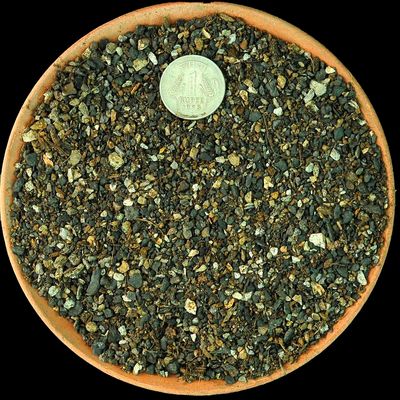

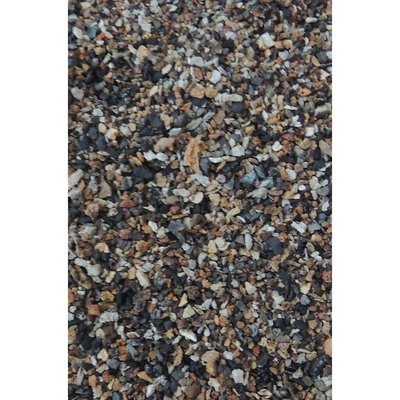
Cactus & Succulent Planting Mix FINE (aka Cactus Soil Mix or Succulent Soil Mix)
Cactus & Succulent Planting Mix FINE (aka Cactus Soil Mix or Succulent Soil Mix)
Fine-Grain Potting Mix for Cactus & Succulent Roots
SKU MNS001
₹39.85
