Sculptural Rarity: Notocactus scopa 'Monstrosus' f. crest
A striking botanical anomaly where natural mutation transforms the classic Silver Ball cactus into a silvery, undulating sculpture, making it a prized specimen for serious collectors.
1. Origin & History of Name The genus name Notocactus derives from the Greek notos (south) and cactus, referencing its origins in the Southern Hemisphere.
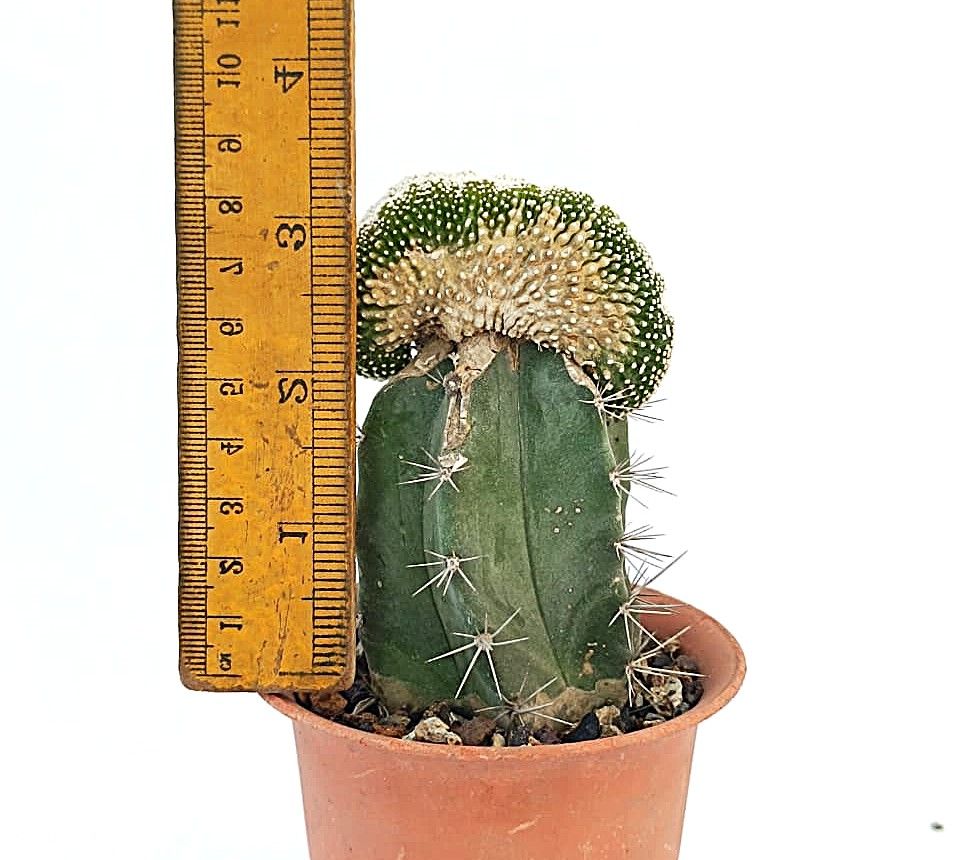
2. Morphology This specimen exhibits fasciation, a condition where the apical meristem (growth point) elongates into a line rather than a single point, creating a fan-shaped or wavy vegetative body. The 'Monstrosus' trait disrupts the standard rib structure, causing the epidermis to bulge irregularly. It is densely covered in soft, white radial spines emerging from woolly areoles, giving the plant a shimmering, silver-white appearance that contrasts sharply with its green body.
3. Habitat & Origin While the standard Notocactus scopa is native to the grasslands of Southern Brazil and Uruguay, this specific crested monstrosity is a cultivar.
4. Cultivation Profile
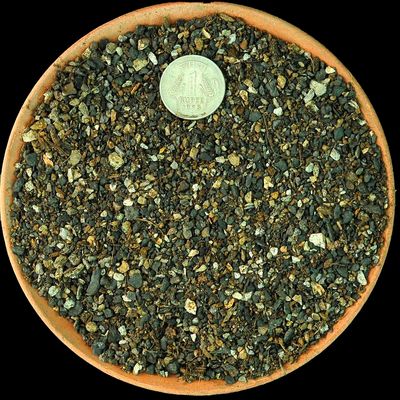
- Substrate: Requires a highly porous, mineral-heavy substrate to prevent root rot. Use a mix of 70% grit (pumice, perlite, or gravel) and 30% organic matter (coco peat).
- Light: Thrives in bright, indirect sunlight. In the Indian climate, provide full morning sun but use shade cloth or filtered light during harsh afternoon hours (1 PM–4 PM) to prevent epidermal scorching.
- Water & Dormancy: Water thoroughly when the substrate is bone dry. During the Indian monsoon, strictly limit watering and ensure excellent airflow to avoid fungal infections. Reduce watering significantly in winter (dormancy phase) to maintain compact growth.
5. Scientific Anecdote Taxonomists have debated the classification of this genus for decades. While widely known commercially as Notocactus, modern molecular phylogenetics prompted the International Organization for Succulent Plant Study to subsume the genus into Parodia in the late 20th century. However, hobbyists and commercial growers stubbornly retain the name Notocactus to specifically categorize these distinctively ribbed, South American staples.