

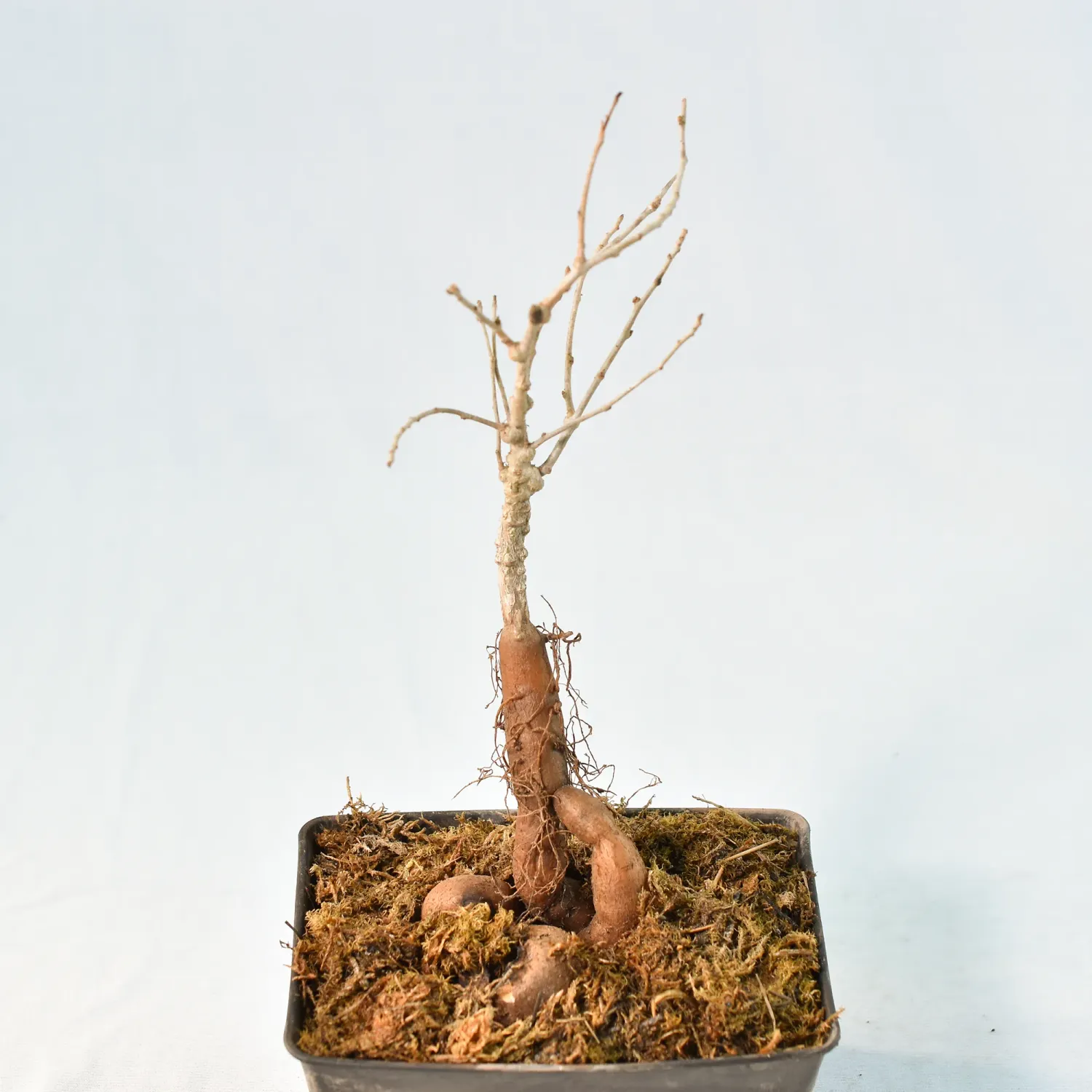
Operculicarya hyphaenoides
Product Details
The Sculptural Rarity: Operculicarya hyphaenoides
A premier architectural treasure for the discerning collector, renowned for its intricate zig-zag branching and ancient aesthetic.
- Origin & History of Name: The genus name Operculicarya is derived from the Latin operculum (lid) and the Greek karya (nut), referring to the "lidded" openings on the fruit's seed stones. The species epithet hyphaenoides means "resembling Hyphaene," a genus of palms, noting the similarity in the way its delicate leaves or growth patterns mimic certain palm fronds. It was formally described by botanist H. Perrier in 1944.
- Morphology: This pachycaul (thick-stemmed) shrub is characterized by a rugose, tuberculate epidermis—a corky, bumpy bark that gives even young specimens an aged appearance. It features imparipinnate leaves (leaflets arranged in pairs with a single terminal leaflet) that are significantly smaller and more deciduous than its cousin, O. decaryi. Its most distinct trait is the "zig-zag" growth habit of its woody branches.
- Habitat & Origin: This is a wild species endemic to the Toliara province in southwest Madagascar. It thrives in sub-arid climates within calcicolous (lime-rich) rocky soils. Due to its limited range and slow growth, it is a high-priority species for conservation; ensure your specimen is sourced from nurseries practicing sustainable ex situ propagation rather than wild-harvesting.
- Cultivation Profile:
- Substrate: Use a strictly mineral-based, gritty mix. A blend of 70% inorganic material (pumice, perlite, or crushed brick) and 30% organic matter is ideal for the Indian climate to prevent root rot.
- Light: Requires full sun to maintain its compact, zig-zag form. In intense Indian summers (April–June), provide 30% shade cloth to prevent leaf scorch.
- Water/Dormancy: Water deeply when the substrate is dry during the monsoon and growing season. In winter, or when the plant drops its leaves (dormancy), withhold water almost entirely. It is sensitive to cold-to-wet transitions.
- Scientific/Historical Anecdote: While often compared to the common "Elephant Tree" (O. decaryi), O. hyphaenoides remained a "ghost species" in many collections for decades due to the extreme remoteness of its habitat. It belongs to the Anacardiaceae family, making it a distant, succulent relative of the Mango and Cashew trees.