

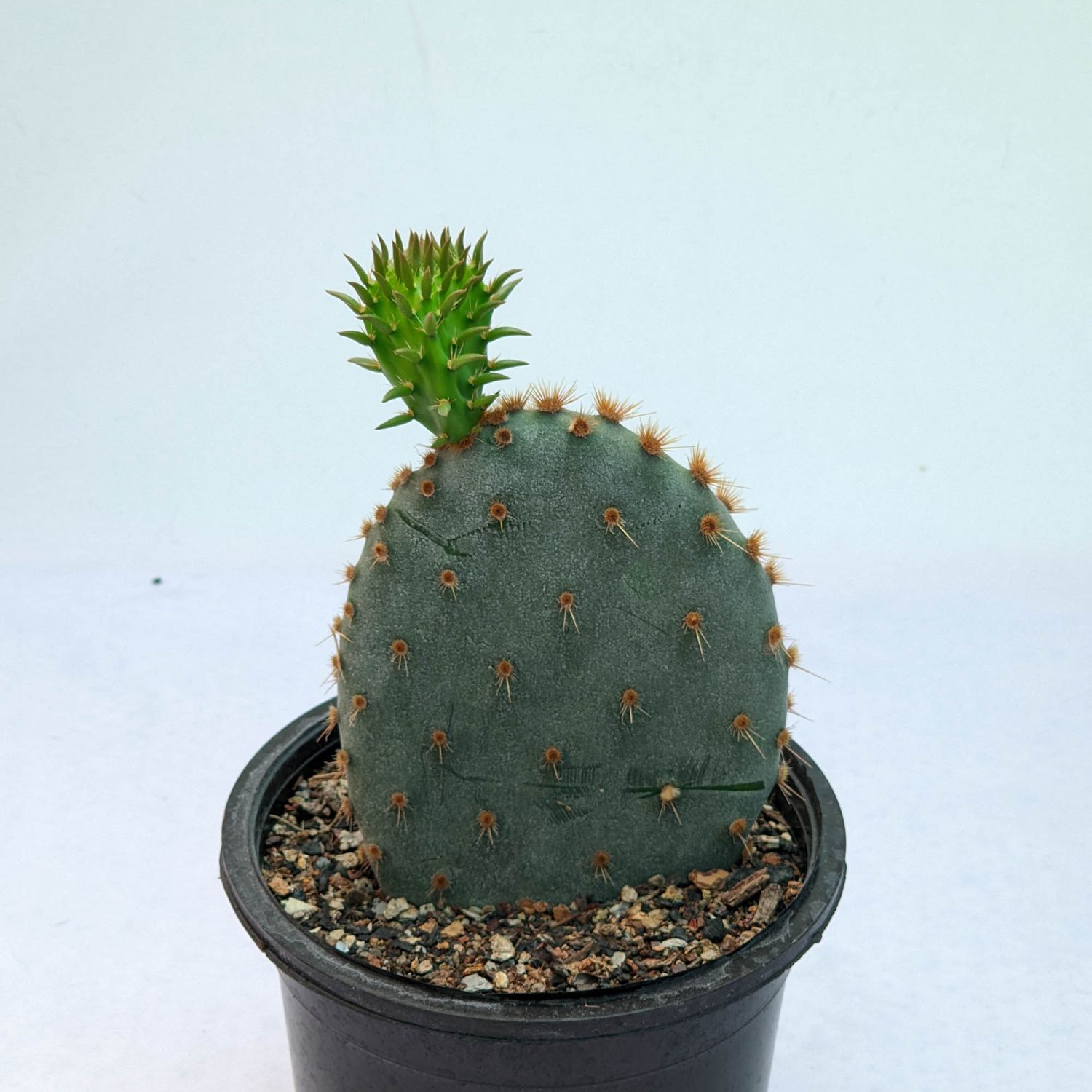
Opuntia aciculata
Product Details
Golden Glow Architect: Opuntia aciculata
A sculptural masterpiece defined by its vibrant cinnamon-colored glochids and striking geometric silhouette.
- Origin & History of Name: The genus name Opuntia refers to the ancient Greek city of Opus, where a cactus-like plant was said to grow. The specific epithet aciculata is derived from the Latin acicula, meaning "small needle" or "pin-like," referring to the dense clusters of fine bristles (glochids) that decorate the pads. It was formally described by Frederick Scheer in 1845.
- Morphology: This species is characterized by flattened, ovate stem segments known as cladodes. Its blue-green epidermis provides a cool contrast to the prominent areoles, which are densely packed with reddish-brown or golden glochids (barbed micro-spines). Unlike many cacti, it lacks large central spines, relying instead on these shimmering, needle-like clusters for defense and aesthetic distinction.
- Habitat & Origin: Opuntia aciculata is a wild species native to the Chihuahuan Desert, spanning the Rio Grande valley in Texas and northern Mexico. These specimens are propagated via sustainable nursery cuttings to prevent the poaching of wild populations, ensuring a conservation-friendly addition to your collection.
- Cultivation Profile:
- Substrate: Use a strictly mineral-based mix (60% grit/pumice, 40% coarse sand/organic matter) to ensure rapid drainage during monsoon seasons.
- Light: Requires full, direct sunlight. In the extreme heat of Central India or Rajasthan, provide light afternoon shade to prevent epidermal scorching.
- Water/Dormancy: Water deeply when the medium is bone-dry. During the winter dormancy (November–February), withhold water almost entirely to prevent root rot in humid Indian climates.
- Scientific/Historical Anecdote: Despite their delicate, fuzzy appearance, the glochids of Opuntia are a sophisticated biological defense mechanism. They possess backward-pointing barbs that make them difficult to remove once they contact skin. Historically, various Opuntia species were so vital for cochineal dye production that they were once guarded as high-value state secrets in colonial trade.

Cactus & Succulent Planting Mix COARSE (aka Cactus Soil Mix or Succulent Soil Mix)
Cactus & Succulent Planting Mix COARSE (aka Cactus Soil Mix or Succulent Soil Mix)
Washed, Free-Draining Mineral Mix for Cactus & Succulents
SKU MNS003
₹40.51
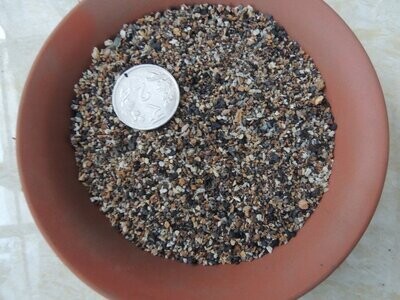
Cactus Seed Planting Mix
Cactus Seed Planting Mix
Sterile, Fine-Grain Media for Cactus & Succulent Seeds
SKU MNS005
₹70.51
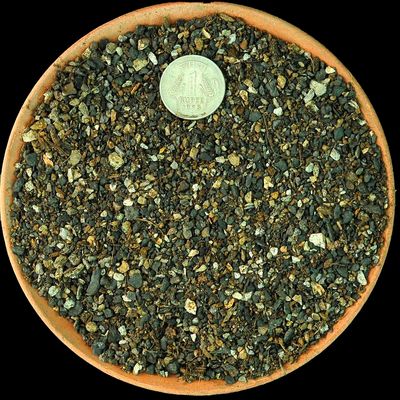

Cactus & Succulent Planting Mix FINE (aka Cactus Soil Mix or Succulent Soil Mix)
Cactus & Succulent Planting Mix FINE (aka Cactus Soil Mix or Succulent Soil Mix)
Fine-Grain Potting Mix for Cactus & Succulent Roots
SKU MNS001
₹35.51