

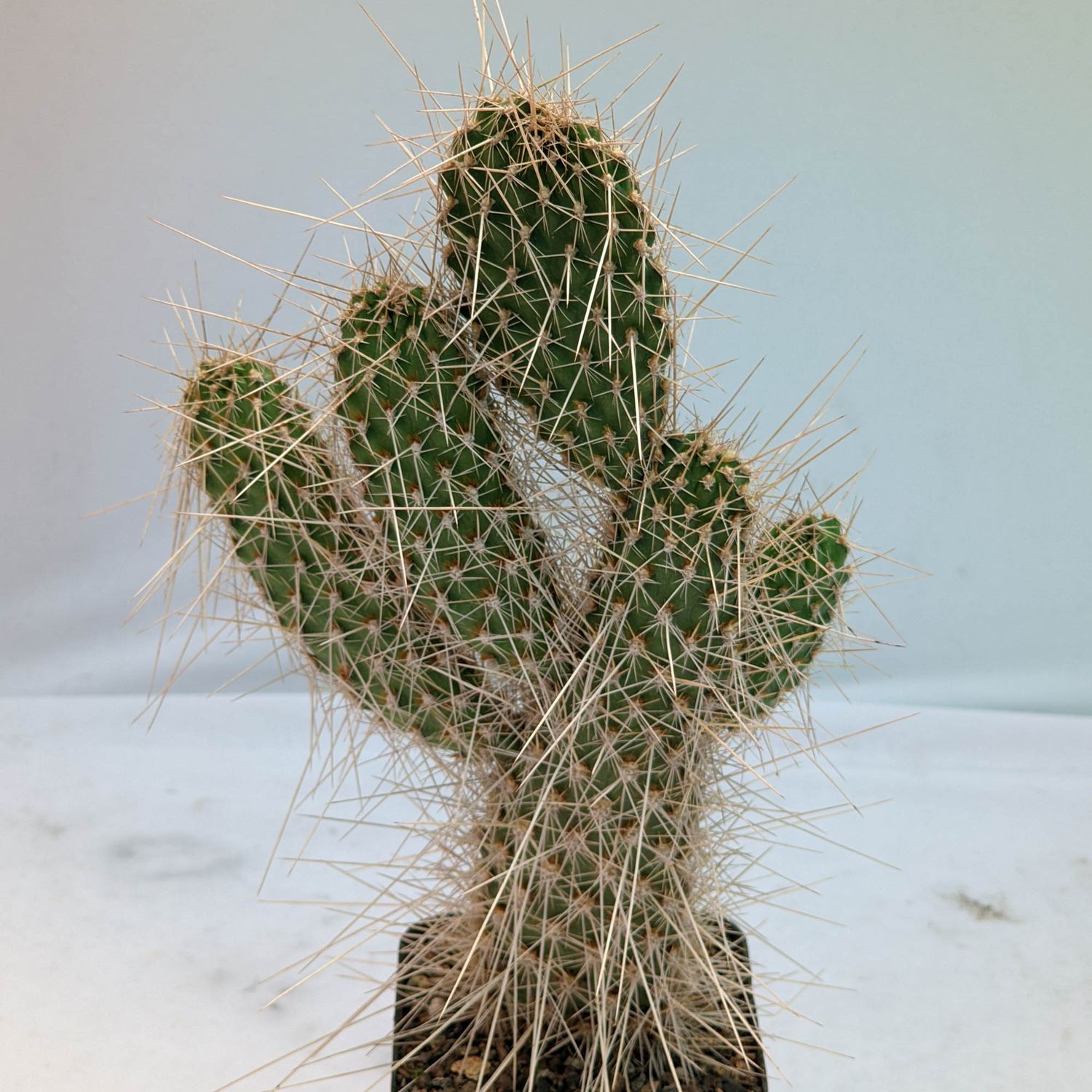
Opuntia polycantha var erinacea ursina
Product Details
Grizzly Guardian: Opuntia polyacantha var. erinacea 'ursina'
The ultimate botanical curiosity featuring a dense shroud of long, flexible white spines resembling thick animal fur.
- Origin & History of Name: The genus name Opuntia refers to the ancient Greek city of Opus, where succulent plants were said to grow. The variety name erinacea stems from the Latin for "hedgehog," while the cultivar epithet ursina is derived from ursus (bear). Collectively known as the "Grizzly Bear Cactus," it was formally described by botanists in the late 19th century to categorize the extreme "shaggy" appearance of this Great Basin variety.
- Morphology: This cactus is characterized by flattened stem segments called cladodes. Unlike standard prickly pears, the epidermis is almost entirely obscured by exceptionally long, thin, and flexible setaceous spines that can reach up to 15–20 cm in length. These spines emerge from specialized sites called areoles, which also contain glochids (tiny barbed bristles), creating a unique "furry" texture that provides significant thermal protection.
- Habitat & Origin: This is a wild variety native to the high-elevation Mojave Desert and the Great Basin regions of the Southwestern United States. It is a naturally occurring variant evolved for extreme temperature fluctuations. Our specimens are propagated through sustainable nursery-grown pads, ensuring no disturbance to the sensitive desert ecosystems of California or Utah.
- Cultivation Profile:
- Substrate: Use a highly inorganic mineral-based mix (80% coarse sand, scoria, or leca and 20% lean soil). Proper drainage is critical to prevent base rot during the high-humidity Indian monsoon.
- Light: Requires full, unfiltered sun (6–8 hours daily). In the Indian subcontinent, this plant thrives in open rooftop or garden settings; insufficient light will cause the new pads to become weak and elongated (etiolation).
- Water/Dormancy: Highly drought-tolerant. Water only when the pads show slight wrinkling during the growing season. Maintain strict dry conditions during the winter months to mimic its native cold-desert dormancy.
- Scientific/Historical Anecdote: The "long hair" of the Grizzly Bear Cactus is a sophisticated evolutionary adaptation. Scientifically, these elongated spines act as a "boundary layer," trapping a pocket of still air against the plant's skin. This reduces moisture loss from dry winds and protects the tissue from both the intense UV radiation of the desert sun and the freezing temperatures of high-altitude nights.
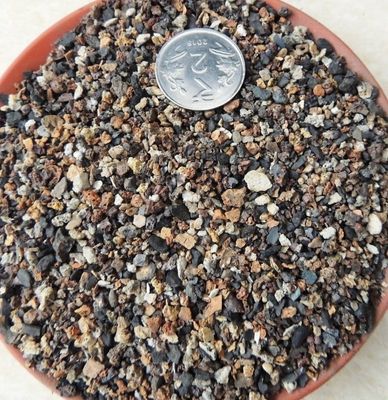
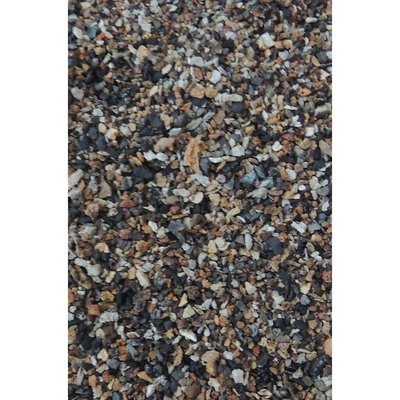
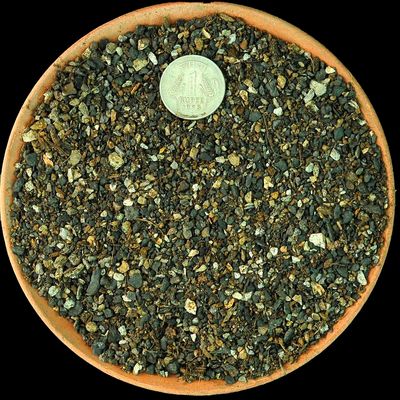
Cactus & Succulent Planting Mix FINE (aka Cactus Soil Mix or Succulent Soil Mix)
Cactus & Succulent Planting Mix FINE (aka Cactus Soil Mix or Succulent Soil Mix)
Fine-Grain Potting Mix for Cactus & Succulent Roots
SKU MNS001
₹39.85
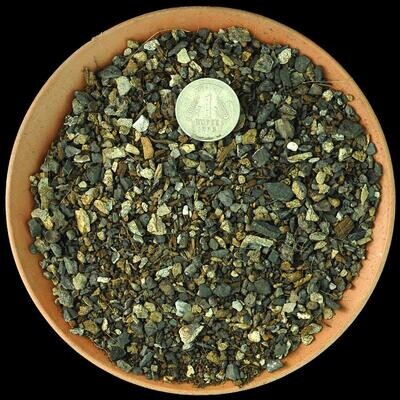
New


Monsoon Guardian Kit (5 in 1)
Monsoon Guardian Kit (5 in 1)
Complete 5-in-1 biological protection kit for cacti & succulents
SKU MNS024
₹850.00