

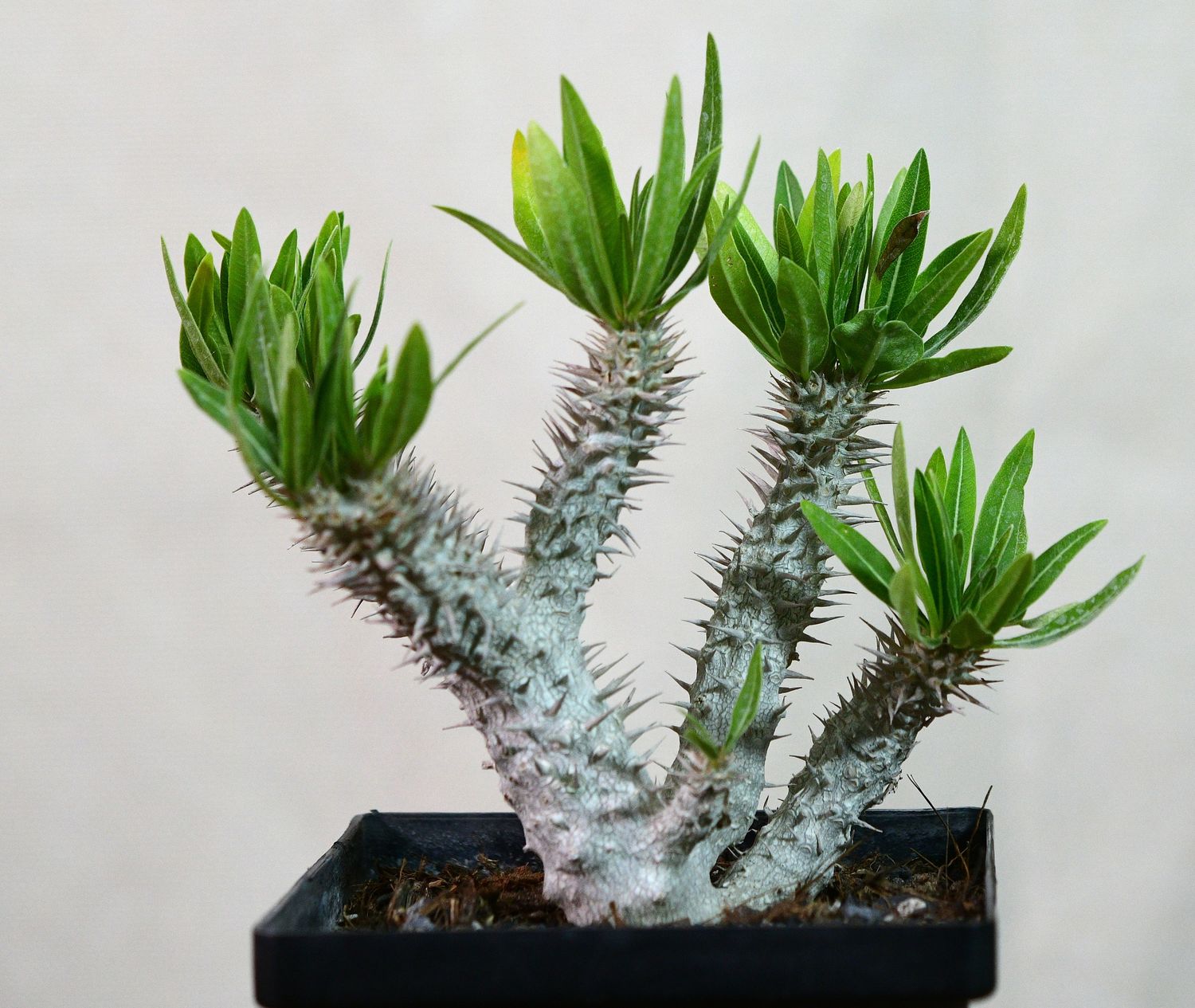
Pachypodium inopinatum
Product Details
The Unexpected Discovery: Pachypodium inopinatum
A rare, ghostly caudiciform prized for its brilliant white blooms and its status as a crown jewel of Malagasy succulents.
- Origin & History of Name: The genus name Pachypodium combines the Greek pachys (thick) and podion (foot), describing the distinctive swollen base. The specific epithet inopinatum is Latin for "unexpected" or "unforeseen."
This name was bestowed by botanists Gérard Louvel and Bruno Lavranos in 1996, referencing the surprise of discovering a distinct white-flowered species in a region where only yellow-flowered Pachypodium rosulatum varieties were thought to exist. - Morphology: P. inopinatum is a globose pachycaul, characterized by a stunted, silver-grey epidermis that stores water for survival. Unlike the elongated P. lamerei, this species remains compact and low-growing. It features narrow, deciduous leaves and short, paired spines.
Its most significant morphological trait is the flower: a large, salverform white corolla with a yellow throat, which lacks the prominent costae (ribbing) found in the trunks of larger arborescent species. - Habitat & Origin: This is a wild species endemic to a very restricted range in north-central Madagascar, specifically the Sofia region.
It grows on inselbergs—isolated granitic rock outcrops. To ensure sustainability, collectors should only acquire plants that are nursery-grown from seed, as wild populations are extremely vulnerable to habitat loss and over-collection. - Cultivation Profile:
- Substrate: Requires a highly porous, mineral-based mix. Use a composition of 80% volcanic rock, grit, or coarse sand and 20% organic compost to ensure rapid drainage.
- Light: Thrives in unfiltered full sun. In the Indian subcontinent, it benefits from maximum solar exposure to maintain its compact, "bonsai-like" stature and to trigger flowering.
- Water/Dormancy: Provide moderate water during the hot growing season (March–October). Enter strict dry dormancy during the winter months; the plant is highly susceptible to root rot if the substrate remains damp during cool nights in Northern India or the high-humidity winters of the South.
- Scientific/Historical Anecdote: For decades, P. inopinatum was hidden in plain sight, often misidentified as a stunted form of Pachypodium rosulatum or P. densiflorum. It wasn't until it flowered in a controlled environment that its status as a unique species was confirmed. Because it grows on granite rather than the limestone preferred by many other Pachypodiums, it has evolved a specific chemical tolerance for acidic mineral environments.