

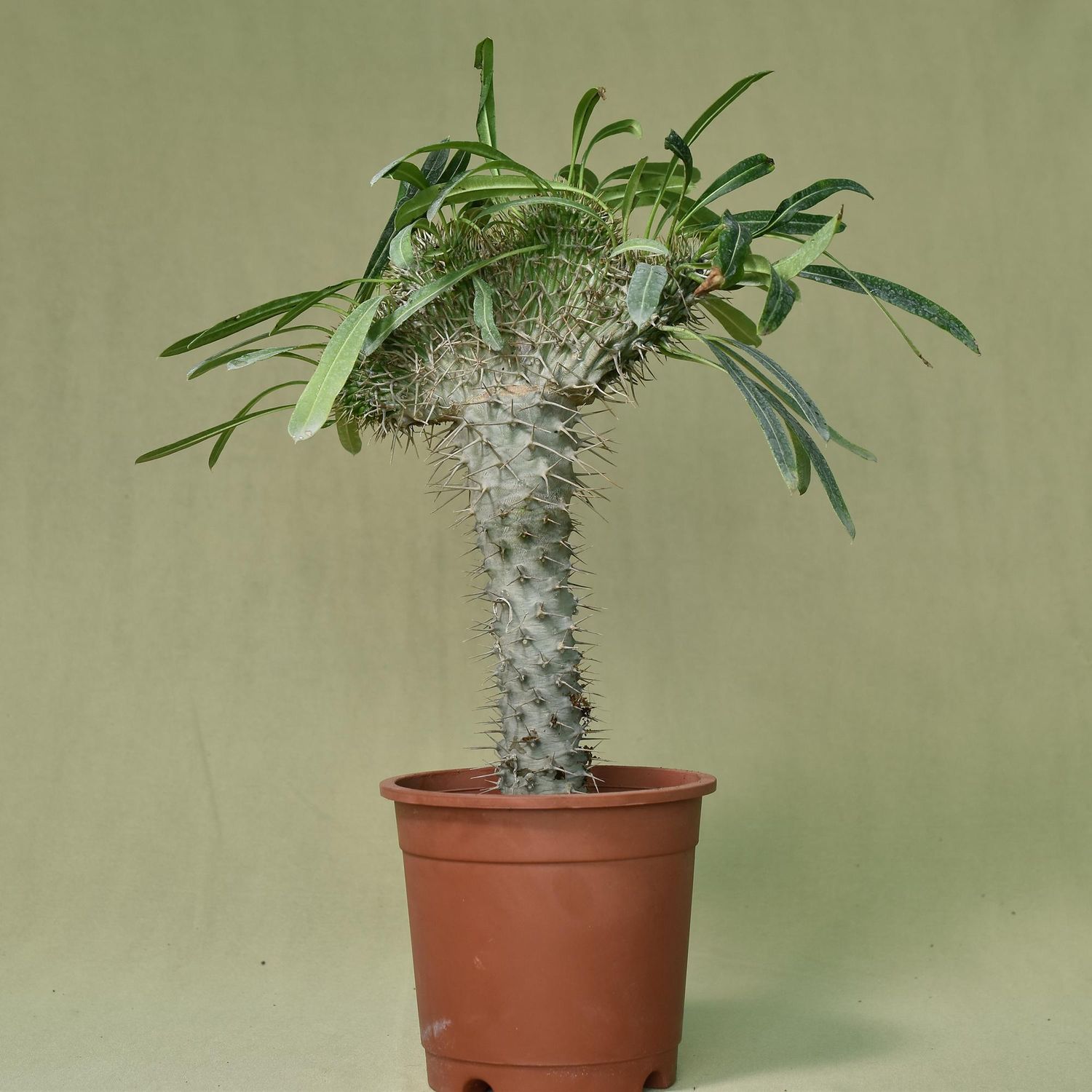
Pachypodium lamerei crest
Product Details
Architectural Marvel: Pachypodium lamerei f. cristata
A sculptural rarity for the serious collector, this crested Madagascar Palm transforms a desert classic into a living piece of fine art.
- Origin & History of Name: The genus name Pachypodium is derived from the Greek pachys (thick) and podion (foot), referencing the pachycaul, or swollen, water-storing trunk.
- Morphology: Unlike the typical columnar form, this specimen exhibits fasciation, where the apical meristem grows in a ribbon-like fold.
- Habitat & Origin: The base species, Pachypodium lamerei, is endemic to the arid regions of southern Madagascar.
- Cultivation Profile:
- Substrate: Use a strictly mineral-based mix. A ratio of 70% inorganic material (pumice, perlite, or crushed brick) and 30% organic matter is ideal for the Indian climate to prevent root rot.
- Light: Requires full sun to maintain its compact, crested form.
- Water/Dormancy: Water deeply when the substrate is bone-dry during the summer monsoon growth phase. During the winter (Nov–Feb), the plant enters obligate dormancy and may shed leaves; withhold water entirely to prevent fungal infections.
- Scientific/Historical Anecdote: Despite being called the "Madagascar Palm," this plant is biologically unrelated to true palms.


Cactus & Succulent Planting Mix COARSE (aka Cactus Soil Mix or Succulent Soil Mix)
Cactus & Succulent Planting Mix COARSE (aka Cactus Soil Mix or Succulent Soil Mix)
Washed, Free-Draining Mineral Mix for Cactus & Succulents
SKU MNS003
₹40.51

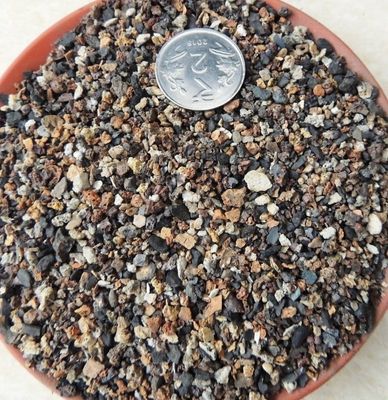
Cactus & Succulent Planting Mix FINE (aka Cactus Soil Mix or Succulent Soil Mix)
Cactus & Succulent Planting Mix FINE (aka Cactus Soil Mix or Succulent Soil Mix)
Fine-Grain Potting Mix for Cactus & Succulent Roots
SKU MNS001
₹35.51