

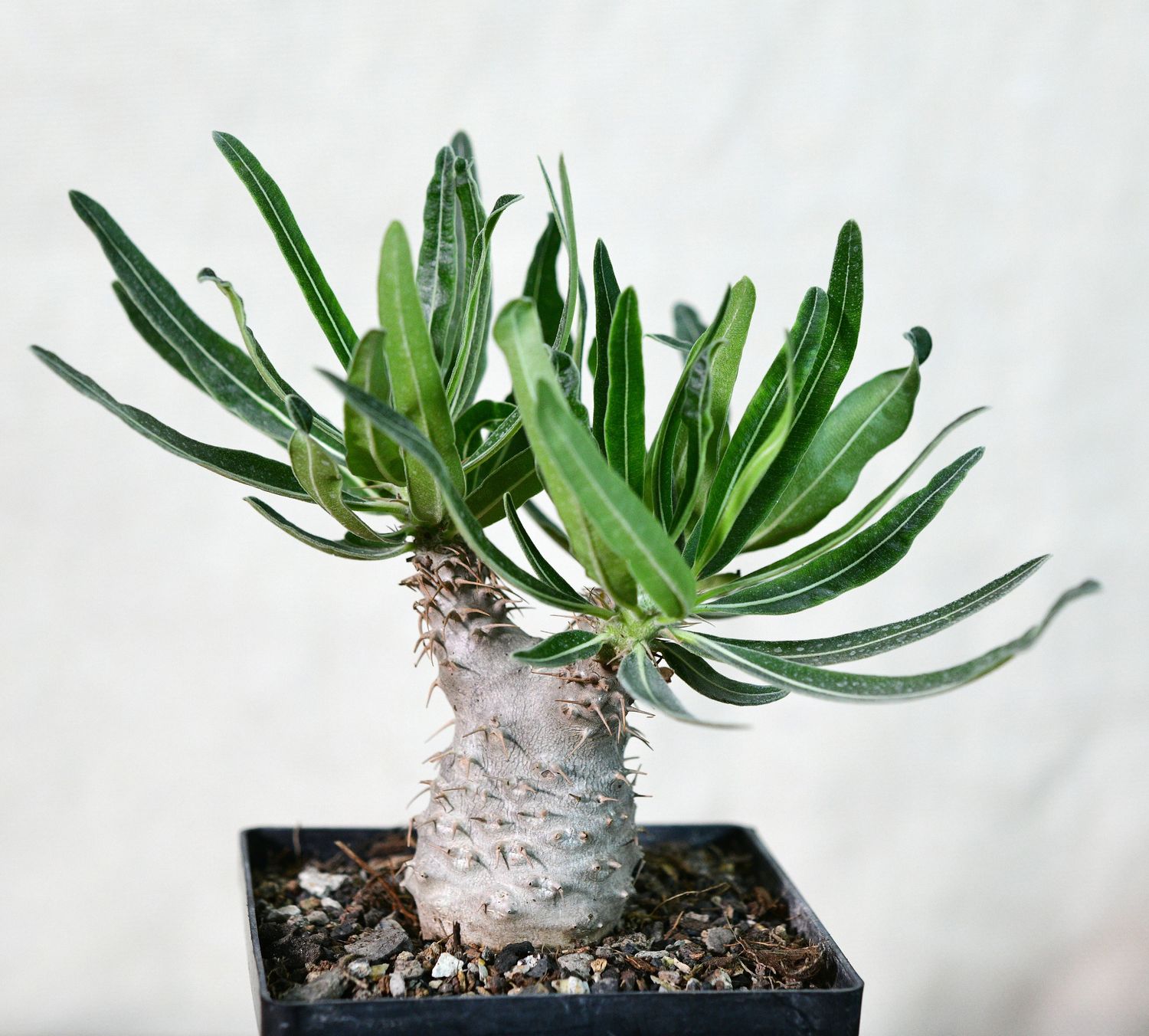
Pachypodium rosulatum subsp. gracilius: A Gem of the Succulent World
1. Origin of Name:
The genus name "Pachypodium" is derived from the Greek “pachys” (thick) and “podion” (foot), referring to the plant’s thick, swollen base that resembles a sturdy foot. The species name "rosulatum" comes from the Latin “rosula,” meaning little rose, due to the rosette-like arrangement of its leaves. The subspecies name "gracilius" translates to slender or graceful in Latin, highlighting the plant’s elegant and refined form compared to its tubbier relatives. Named by botanists exploring the diverse flora of Madagascar, Pachypodium rosulatum subsp. gracilius captures both its robust structure and delicate beauty, making it a cherished species among collectors and enthusiasts.
2. Origin of Plant:
Native to Madagascar, Pachypodium rosulatum subsp. gracilius is found primarily in the arid, rocky regions of the island’s southern and southwestern parts, particularly thriving in the dry forest and thorny scrub habitats. Its unique adaptation to Madagascar’s challenging climate was first documented in the late 19th and early 20th centuries by European explorers and botanists who marveled at the island's distinct succulent flora. This subspecies, known for its elegant, bottle-like trunk and striking yellow blooms, has become a captivating exhibit in botanical collections worldwide.
3. Description:
This stunning succulent is celebrated for its thick, bulbous trunk that serves as a water reservoir, tapering delicately into slender branches. Its silvery-gray, textured bark offers a striking contrast to the vibrant, lance-shaped leaves that form in rosettes at the crown of the plant. Typically reaching up to 12–24 inches in height, it produces clusters of vivid yellow, star-shaped flowers from late spring to summer, creating a stunning display against its silvery trunk. With its sculptural form and brilliant blooms, P. rosulatum subsp. gracilius makes a dramatic, living piece of art that enhances any succulent collection or garden display.
4. Conservation Status:
While not currently classified as endangered, Pachypodium rosulatum subsp. gracilius is vulnerable due to habitat destruction and climate change impacts in Madagascar. Conservation efforts focus on preserving its native habitat and promoting sustainable cultivation practices to ensure its continued survival. As enthusiasts, supporting propagation in cultivation helps alleviate pressure on wild populations, contributing to its conservation.
5. Care:
To enjoy the beauty of this unusual plant, follow these care instructions:
- Watering: Water sparingly, allowing the soil to dry out completely between waterings. It’s more tolerant of drought than overwatering.
- Soil: Use a well-draining cactus or succulent mix to prevent waterlogging. Adding sand or grit can enhance drainage.
- Light: Prefers bright, indirect sunlight. A sunny window or outdoor space that gets morning sun and afternoon shade is ideal.
- Temperature: Thrives in warm temperatures between 65°F and 85°F (18°C - 29°C). Protect from cold drafts and frost.
- Tips: Fertilize lightly during the growing season with a balanced, diluted fertilizer. Repot every few years to give its roots room to expand and replace the old soil.
Interesting Anecdote:
Madagascar’s unique and often harsh environment has led to the evolution of some of the most extraordinary plants on Earth, and Pachypodium rosulatum subsp. gracilius is no exception. Locals have historically regarded these plants as symbols of endurance and resilience, surviving where little else can thrive. Stories abound of explorers who first encountered them mistaking them for small trees on the barren landscape, only to discover their succulent nature upon closer inspection. This blend of hardiness and beauty serves as a living testament to nature's adaptability and the hidden gems waiting to be discovered in Madagascar's unfolding botanical tapestry.