

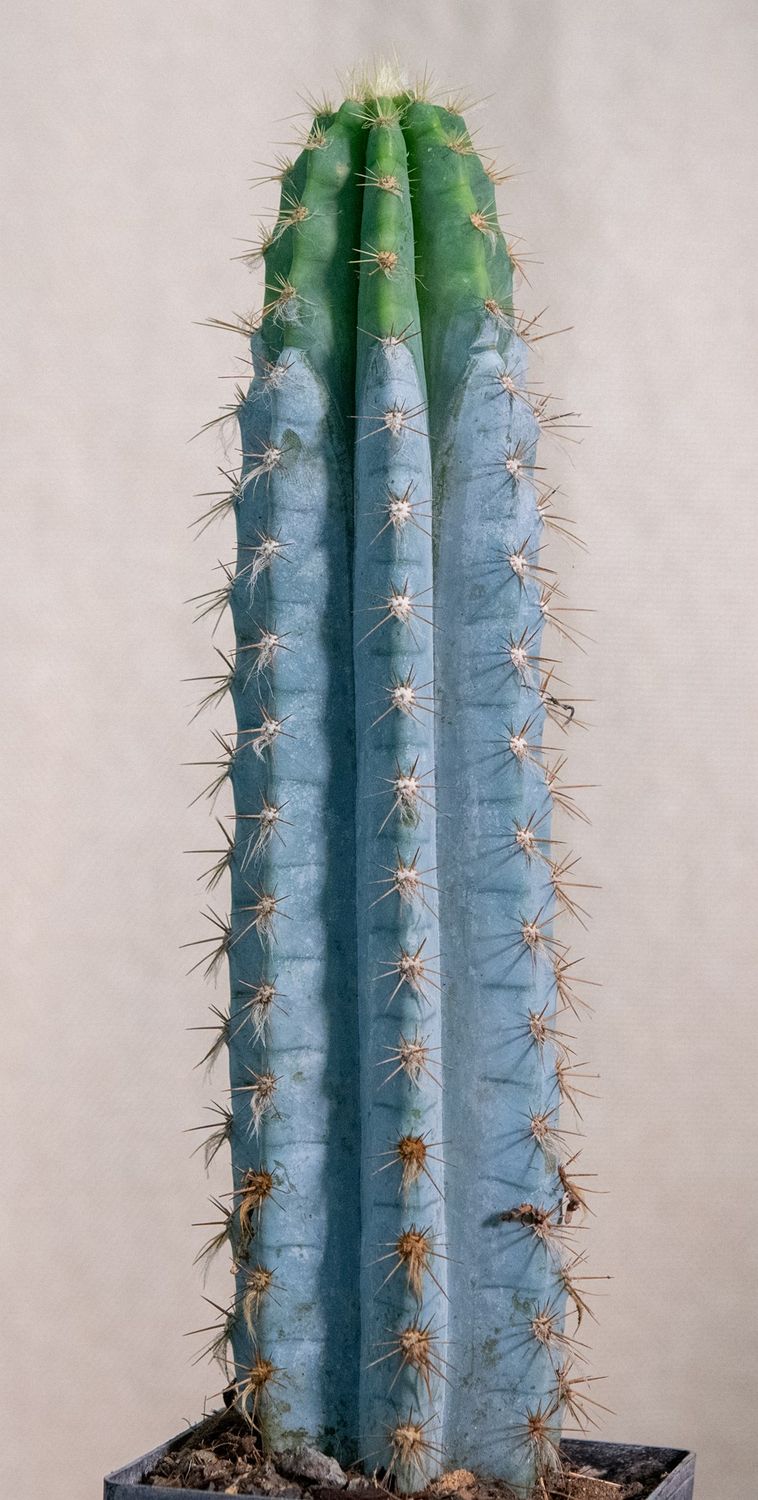
Pilosocereus pachycladus - Blue Columnar Cactus
Product Details
Cerulean Majesty: Pilosocereus pachycladus - Blue Columnar Cactus
Bring a striking architectural statement to your collection with one of the most vibrant, naturally blue succulents in the world.
- Origin & History of Name The genus name Pilosocereus is derived from the Latin pilosus (hairy) and cereus (wax/torch), referring to the woolly pseudocephalium often found on mature specimens.
The specific epithet pachycladus combines the Greek pachys (thick) and klados (branch), describing its robust, heavy-set growth habit. It was formally described by Friedrich Ritter, a renowned German cactus specialist, in the mid-20th century. - Morphology This cactus is defined by its striking glaucous epidermis, which secretes a thick waxy bloom to reflect intense UV rays, resulting in its signature azure-blue color. It features 5 to 19 deep vertical costae (ribs) lined with golden-yellow spines.
As it matures, the stems may develop a woolly texture near the apex, and it produces large, nocturnal, funnel-form flowers. - Habitat & Origin Pilosocereus pachycladus is a wild species native to the caatinga (scrubland) of northeastern Brazil. It thrives in rocky, arid landscapes where it grows as a dominant columnar feature.
Our specimens are ethically nursery-propagated via seed or sustainable cuttings to ensure no impact on wild Brazilian populations. - Cultivation Profile
- Substrate: Use a strictly mineral-based mix. A ratio of 70% inorganic grit (crushed brick, pumice, or perlite) to 30% organic matter is ideal to prevent root rot in humid Indian climates.
- Light: Requires full, direct sunlight to maintain its intense blue color. In South Asia, 6–8 hours of direct sun is recommended; if grown in shade, the blue hue will fade to dull green.
- Water/Dormancy: Follow a "soak and dry" method. Water deeply during the hot summer months, but keep completely dry during the winter or the monsoon season if humidity is excessively high.
5. Scientific/Historical Anecdote Biologically, the "blue" of this cactus isn't a pigment like chlorophyll; it is a structural color created by a layer of epicuticular wax. Scientists have found that this wax not only prevents desiccation but also acts as a sophisticated cooling system, reflecting infrared radiation to keep the plant's internal temperature significantly lower than the surrounding air.

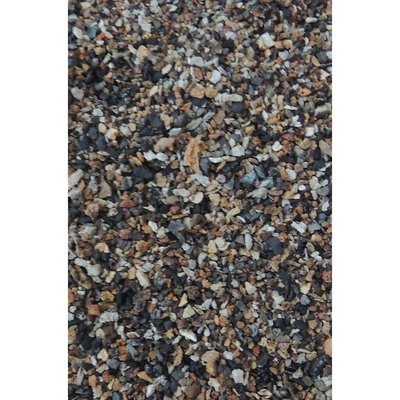
Cactus & Succulent Planting Mix FINE (aka Cactus Soil Mix or Succulent Soil Mix)
Cactus & Succulent Planting Mix FINE (aka Cactus Soil Mix or Succulent Soil Mix)
Fine-Grain Potting Mix for Cactus & Succulent Roots
SKU MNS001
₹39.85
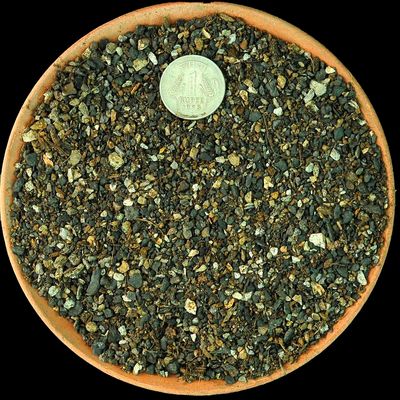


Cactus Seed Planting Mix
Cactus Seed Planting Mix
Sterile, Fine-Grain Media for Cactus & Succulent Seeds
SKU MNS005
₹74.85
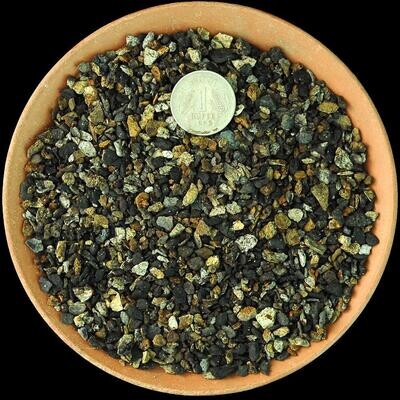
Cactus & Succulent Planting Mix COARSE (aka Cactus Soil Mix or Succulent Soil Mix)
Cactus & Succulent Planting Mix COARSE (aka Cactus Soil Mix or Succulent Soil Mix)
Washed, Free-Draining Mineral Mix for Cactus & Succulents
SKU MNS003
₹44.85