

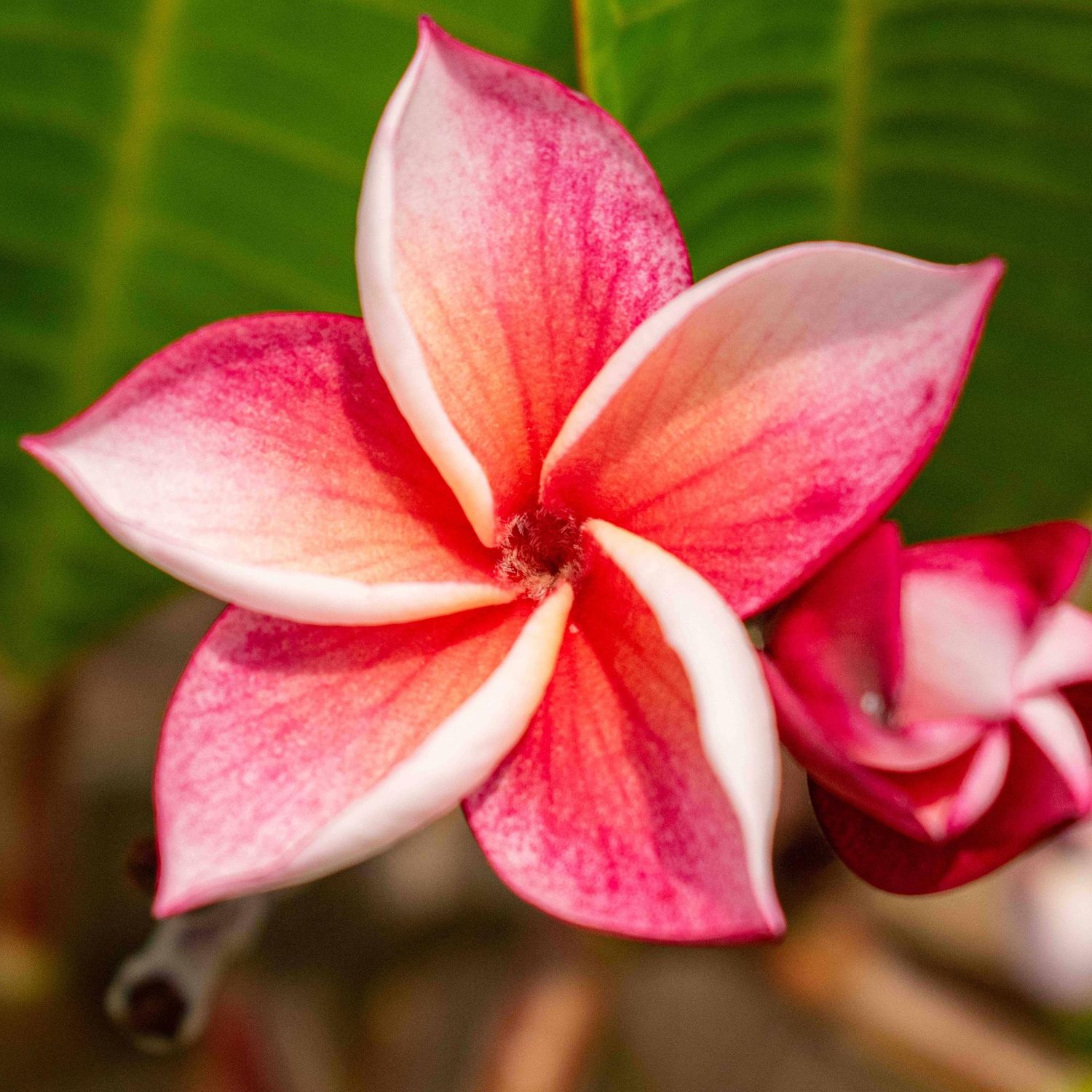
Plumeria (Frangipani) Champa
Product Details
Sculptural Fragrance: Plumeria (Champa)
A drought-tolerant botanical icon prized for its waxy, spiral-petaled blooms and a legendary fragrance that anchors any tropical landscape.
- Origin & History of Name The genus name Plumeria was established by French botanist Joseph Pitton de Tournefort in honor of the 17th-century Franciscan monk and botanist Charles Plumier, who traveled extensively in the New World documenting flora. The common name "Frangipani" is widely attributed to a 16th-century Italian noble, the Marquis Frangipani, who created a popular almond-scented perfume that the flowers were said to resemble.
In India, the name "Champa" derives from the Sanskrit Campaka, deeply embedded in Hindu and Buddhist cultural traditions as a symbol of immortality due to the plant's ability to produce leaves even after being uprooted. - Morphology This genus is characterized by its pachycaul (thick-stemmed) architecture, featuring swollen, succulent branches that store water, making it highly drought-resistant. The foliage is arranged spirally at the branch tips, with distinct, prominent midribs. The inflorescences produce salverform (trumpet-shaped) flowers with five overlapping, waxy petals that resist wilting.
The plant exudes a milky latex when injured, a defense mechanism against herbivores. - Habitat & Origin Plumeria species are primarily native to the Neotropics, ranging from Mexico to Panama and the Caribbean. While they are wild species in their endemic zones, the varieties sold commercially are often complex hybrids or established cultivars selected for color vibrancy and scent intensity. Sustainably propagated via stem cuttings, these plants are naturalized across the Indian subcontinent, thriving in tropical and sub-tropical heat.
- Cultivation Profile (Indian Context)
- Substrate: Requires a highly porous, fast-draining medium to prevent root rot.
A mix of 50% garden soil (red soil preferred), 30% river sand, and 20% compost or vermicompost is ideal. - Light: Obligate heliophile. Requires full, direct sunlight for at least 6–8 hours daily to induce blooming. In shade, the plant will etiolate and fail to flower.
- Water & Dormancy: Water deeply only when the top 2 inches of soil are completely dry. In Indian winters (November–February), the plant enters dormancy and may drop leaves; strictly reduce watering to once every 10–14 days during this period to mimic its natural dry season.
- Substrate: Requires a highly porous, fast-draining medium to prevent root rot.
- Scientific/Historical Anecdote Plumeria employs a biological strategy known as deceptive pollination.
The flowers emit their strongest fragrance at night to attract pollinators—specifically Sphingidae (hawk moths)—but they produce no nectar. The moths, tricked by the scent, search fruitlessly from flower to flower, inadvertently transferring pollen in the process without receiving a caloric reward.
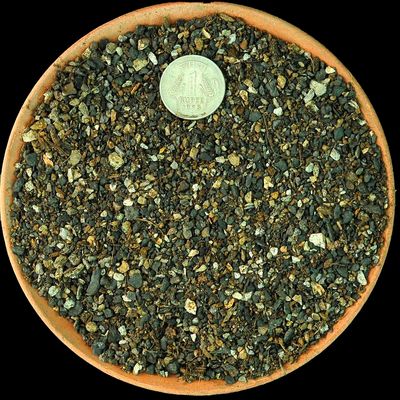

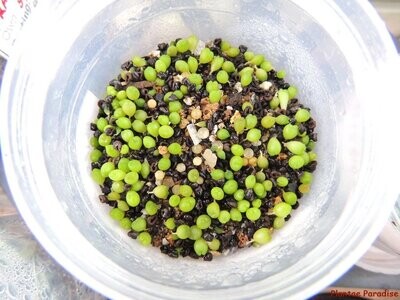
Cactus Seed Planting Mix
Cactus Seed Planting Mix
Sterile, Fine-Grain Media for Cactus & Succulent Seeds
SKU MNS005
₹74.85
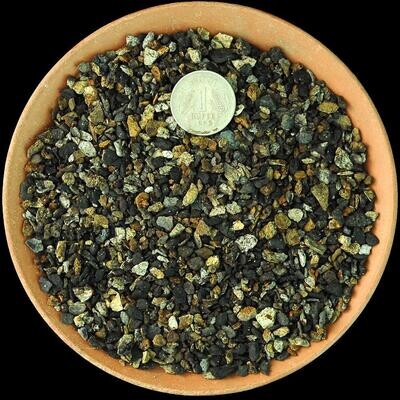
Cactus & Succulent Planting Mix COARSE (aka Cactus Soil Mix or Succulent Soil Mix)
Cactus & Succulent Planting Mix COARSE (aka Cactus Soil Mix or Succulent Soil Mix)
Washed, Free-Draining Mineral Mix for Cactus & Succulents
SKU MNS003
₹44.85
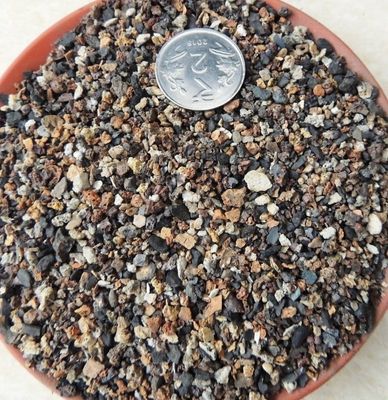
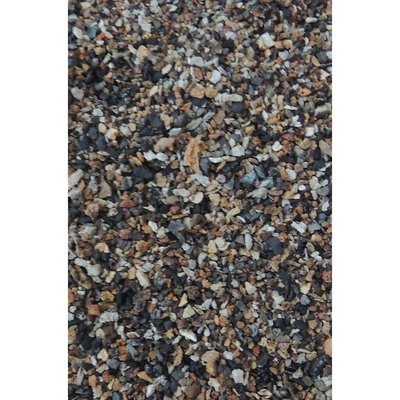
Cactus & Succulent Planting Mix FINE (aka Cactus Soil Mix or Succulent Soil Mix)
Cactus & Succulent Planting Mix FINE (aka Cactus Soil Mix or Succulent Soil Mix)
Fine-Grain Potting Mix for Cactus & Succulent Roots
SKU MNS001
₹39.85