

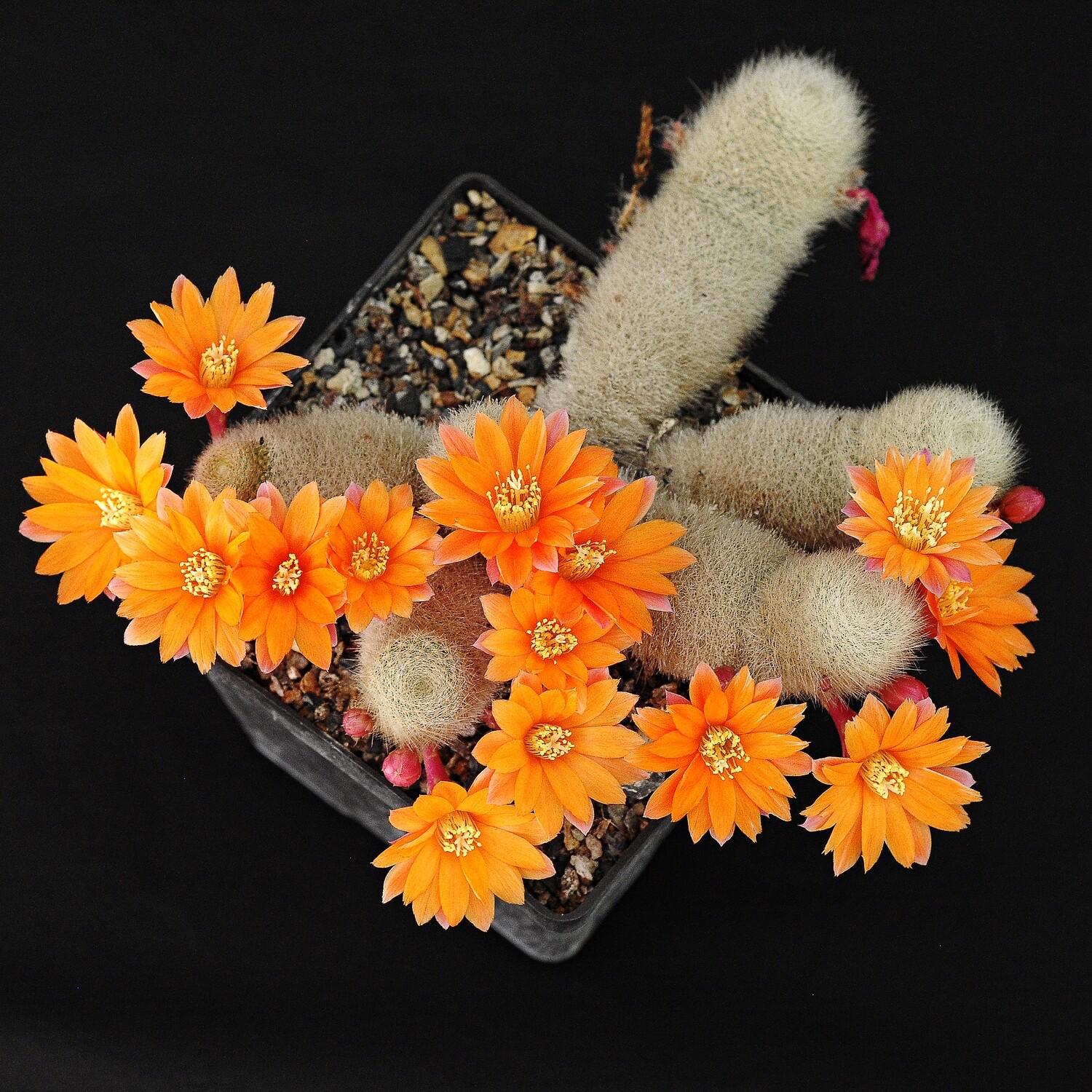
Rebutia muscula
Product Details
Silver Fuzz Radiance: Rebutia muscula
An essential specimen for collectors seeking a soft, tactile aesthetic paired with vibrant, prolific orange blooms.
- Origin & History of Name: The genus Rebutia honors P. Rebut, a 19th-century French cactus specialist. The specific epithet muscula is derived from the Latin musculus, meaning "little mouse," a direct reference to the plant's soft, white, downy appearance that mimics fine fur.
- Morphology: This globose cactus is characterized by its densely packed, fine white spines (areoles) that completely shroud the green epidermis, providing natural UV protection. Unlike many cacti, these spines are soft to the touch. The plant typically offsets to form tight clusters, with vivid orange funnel-shaped flowers emerging from the base of the stems rather than the apex.
- Habitat & Origin: Rebutia muscula is a wild species native to the mountain forests of Tarija, Bolivia. It thrives at high altitudes (2,000–3,000 meters). Our specimens are nursery-propagated to ensure the conservation of wild populations in the Andean highlands.
- Cultivation Profile:
- Substrate: A strictly porous, mineral-based mix (60% inorganic material like pumice or grit) to prevent root rot.
- Light: Bright, filtered sunlight. In the Indian subcontinent, provide 40–50% shade during peak summer afternoons to avoid scorching the white spination.
- Water/Dormancy: Deep soak only when the substrate is completely dry. Maintain strict dryness during the winter months (November–February) to trigger spring flowering; avoid overhead watering to keep the "fur" clean.
- Scientific/Historical Anecdote: Rebutia species are unique in the cactus world because their flowers develop from older areoles at the bottom of the plant. This "basal blooming" habit was a primary factor used by early botanists to distinguish the genus from Lobivia and Echinopsis before modern DNA sequencing confirmed their close genetic relationships


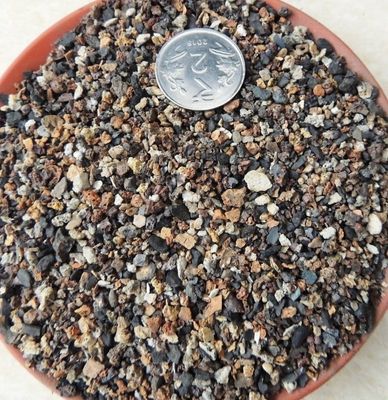
Cactus & Succulent Planting Mix FINE (aka Cactus Soil Mix or Succulent Soil Mix)
Cactus & Succulent Planting Mix FINE (aka Cactus Soil Mix or Succulent Soil Mix)
Fine-Grain Potting Mix for Cactus & Succulent Roots
SKU MNS001
₹35.51
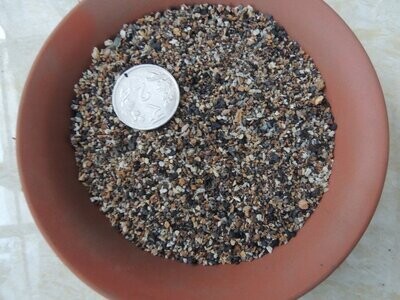
Cactus Seed Planting Mix
Cactus Seed Planting Mix
Sterile, Fine-Grain Media for Cactus & Succulent Seeds
SKU MNS005
₹70.51