

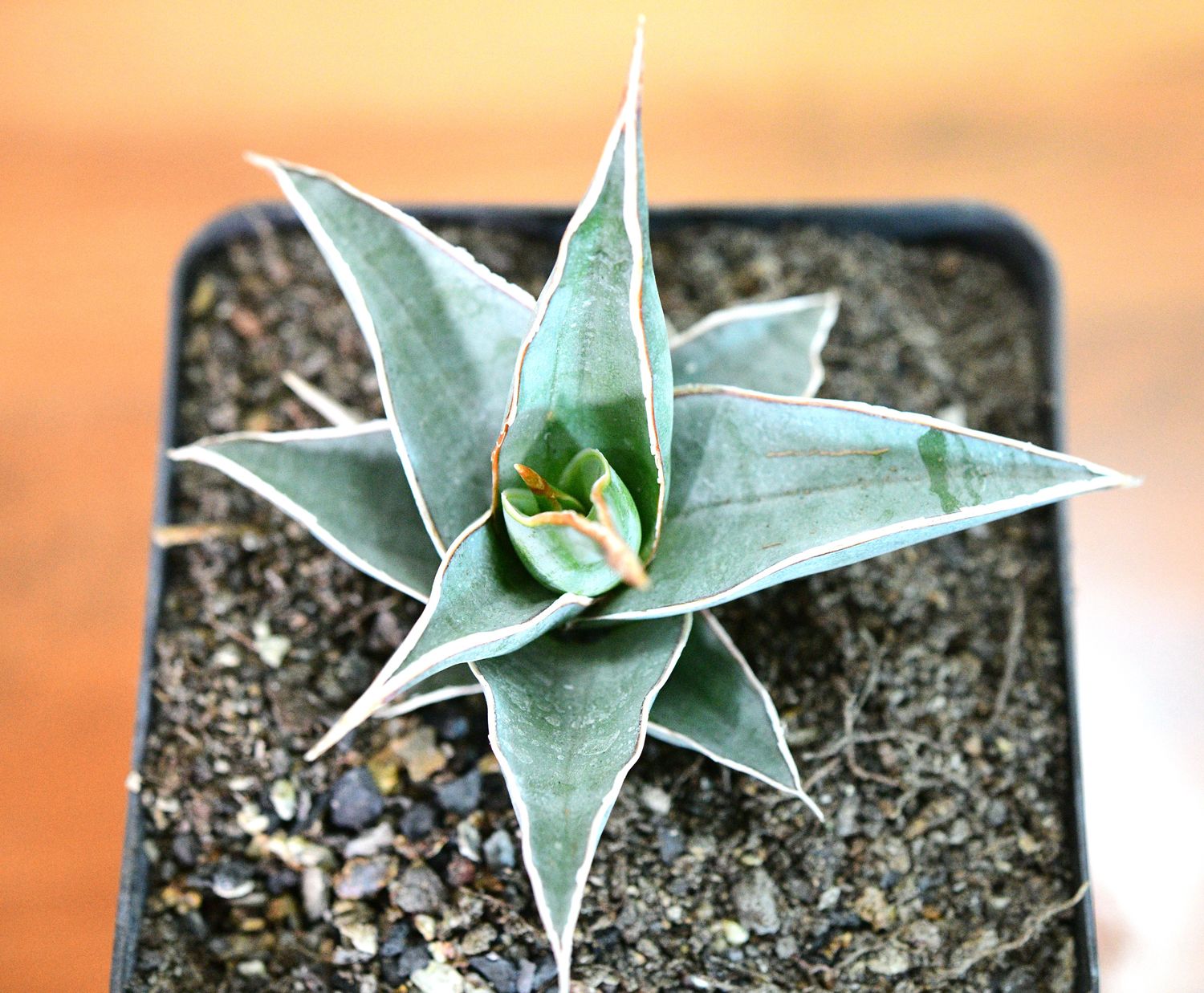
Sansevieria pinguicula
Product Details
The Walking Treasure: Sansevieria pinguicula
An architectural masterpiece for the discerning collector, famous for its unique stilt-like growth and sculptural, succulent foliage.
- Origin & History of Name: The genus was named in honor of the Italian Prince of San Severo, Raimondo di Sangro.
The specific epithet pinguicula is derived from the Latin pinguis, meaning "fat," a direct reference to the plant's thick, plump leaves. It was scientifically described by Peter René Oscar Bally in 1964, a Swiss botanist renowned for his extensive work on East African succulents. - Morphology: This species is distinct for its short, heavy rosette of bluish-green leaves. Each leaf is deeply channeled (concave) with a sharp, reddish-brown terminal spine.
Its most unique feature is the production of stolons (runners) that terminate in new plantlets; these runners eventually develop thick, aerial "stilt roots" that lift the plant off the ground, giving it the appearance of "walking." - Habitat & Origin: Sansevieria pinguicula is a wild species endemic to a very restricted region in the Bura district of Kenya.
It grows in arid, bush-covered slopes. Our plants are ethically propagated from nursery stock to protect the limited and vulnerable wild populations in East Africa. - Cultivation Profile:
- Substrate: Requires a highly porous, mineral-based mix (coarse sand, grit, and pumice). In India, avoid heavy garden soil which retains too much moisture during high-humidity cycles.
- Light: Thrives in bright, indirect light.
While it can handle some direct morning sun in the Indian climate, midday summer sun (May–June) should be filtered to avoid leaf scorch. - Water/Dormancy: Water only when the medium is 100% dry. During the Indian monsoon, reduce watering significantly as ambient humidity is high. In winter, the plant enters a semi-dormancy; keep it almost dry to prevent root rot.
- Scientific/Historical Anecdote: Unlike most Sansevieria that spread via underground rhizomes, S. pinguicula is biologically adapted to rocky terrain where soil is scarce. By "walking" on stilt roots, the mother plant can literally step over obstacles or search for better soil pockets to drop its offspring, a rare evolutionary trait among succulents.

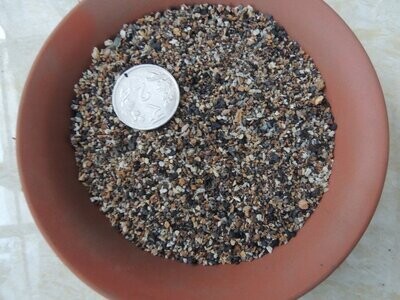
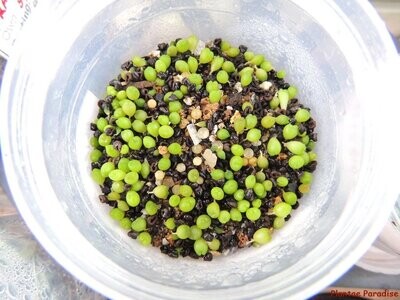
Cactus Seed Planting Mix
Cactus Seed Planting Mix
Sterile, Fine-Grain Media for Cactus & Succulent Seeds
SKU MNS005
₹74.85
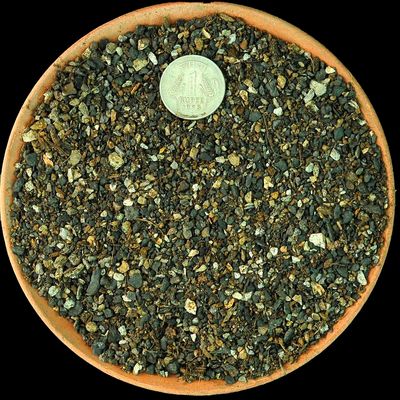

Cactus & Succulent Planting Mix COARSE (aka Cactus Soil Mix or Succulent Soil Mix)
Cactus & Succulent Planting Mix COARSE (aka Cactus Soil Mix or Succulent Soil Mix)
Washed, Free-Draining Mineral Mix for Cactus & Succulents
SKU MNS003
₹44.85