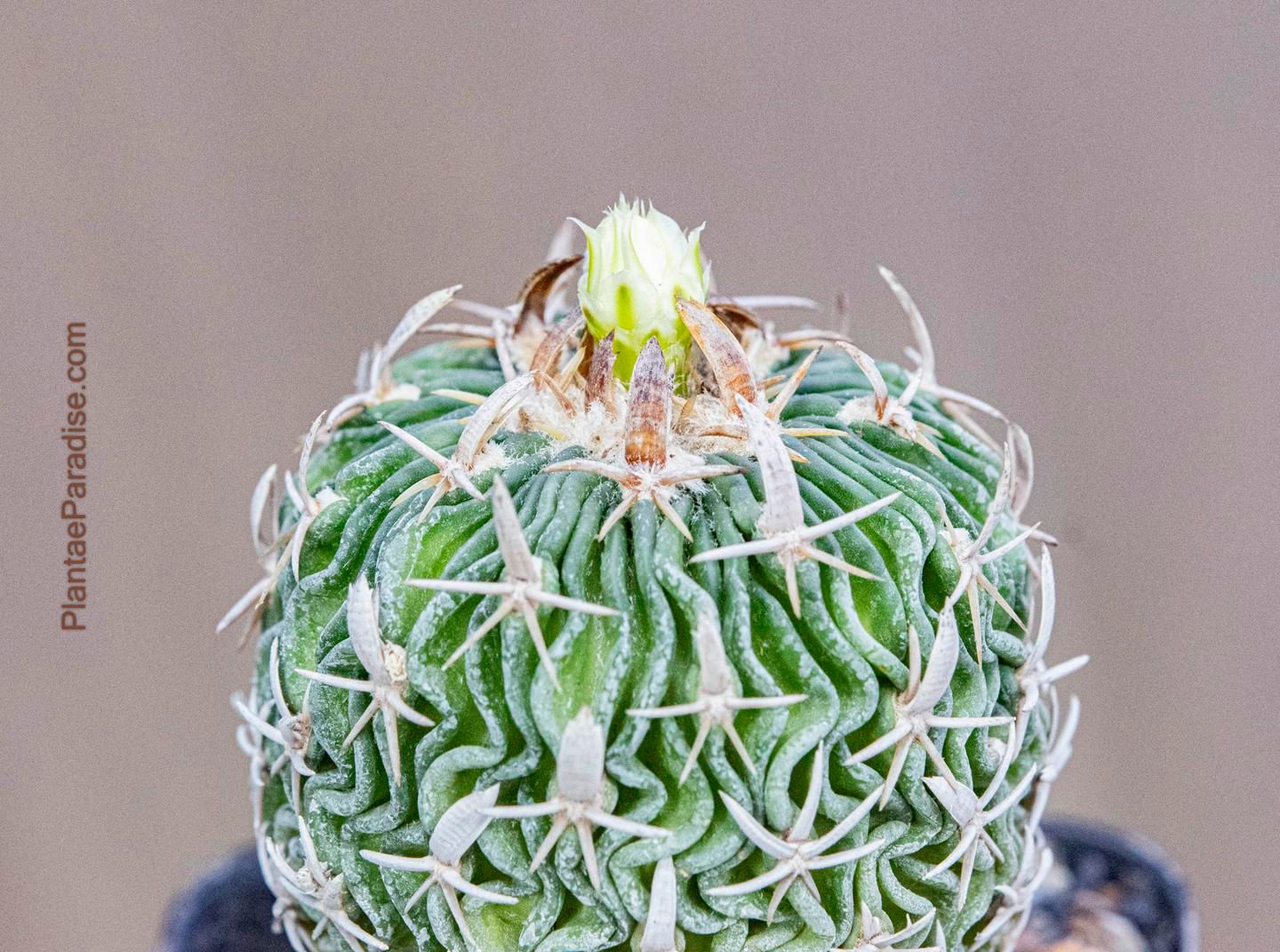
A very select cultivar. Seed grown. New in trade - white flowers - densely packed ribs and prominant flat white spine.
Stenocactus phyllacanthus CH228 ex Stenocactus tricuspidatus: The Elegant and Unique Thorned Cactus
1. Origin of Name:
The genus "Stenocactus" comes from Greek—"steno," meaning "narrow" or "slender," and "cactus," indicating its plant family, highlighting its typically slender, elongated shapes. The species "phyllacanthus" combines Greek roots—"phyllo," meaning "leaf," and "acanthus," meaning "thorn"—referring to the characteristic leaf-like or flattened spines of certain varieties. The synonym or related species "Stenocactus tricuspidatus" derives from Latin—"tri," meaning "three," and "cuspidatus," meaning "pointed" or "spined," referencing its three-pronged or tricuspid spines. The "CH228" refers to a specific collection or cultivar designation, used by horticulturists or botanical collections.
2. Origin of Plant:
This species originates from arid regions of Mexico and the southwestern United States, particularly in rocky sun-exposed habitats. Its natural environment includes steep slopes and desert plains with well-drained, gravelly soils. It was initially classified as Stenocactus tricuspidatus and later refined as a subspecies or variety within Stenocactus phyllacanthus, emphasizing its distinctive spine arrangement and form.
3. Description:
This small to medium-sized cactus typically grows as a rounded or elongated globe, usually reaching 3-6 inches across but sometimes larger with maturity. Its surface is decorated with slender, ribbed, and spiny tubercles, often featuring leaf-like or flattened spines that give it a delicate, elegant appearance. The spines are typically three-pronged or sometimes tricuspid, forming a symmetrical pattern that adds texture and visual interest. During spring or early summer, it produces small, bright yellow - white flowers at the top, often contrasting beautifully with its spiny surface.
4. Conservation Status:
While not critically endangered, wild populations of this species are vulnerable to habitat destruction and illegal collection. Cultivation through responsible propagation helps conserve genetic diversity and reduces pressure on wild populations, making it widely appreciated in horticulture.
5. Care:
To successfully grow Stenocactus phyllacanthus CH228 ex Stenocactus tricuspidatus:
- Watering: Water sparingly, allowing the soil to dry out fully between waterings. Avoid overwatering, especially in winter.
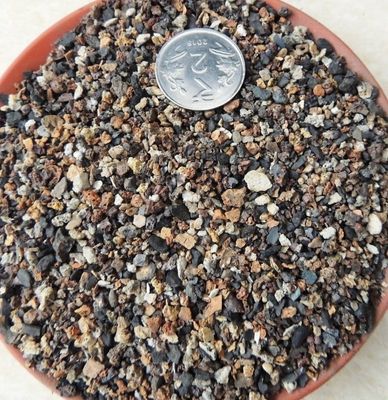
- Soil: Use a well-draining cactus or mineral-based soil with coarse sand, pumice, or gravel.
- Light: Needs bright, direct sunlight for at least 4-6 hours daily to maintain its shape and encourage flowering.
- Temperature: Prefers warm temperatures between 60°F (15°C) and 85°F (29°C). Protect from frost—bring indoors or insulate during colder seasons.
- Tips: Fertilize lightly during the active growing season with a cactus fertilizer. Monitor regularly for pests such as scale and mealybugs.
Stenocactus phyllacanthus CH228 ex Stenocactus tricuspidatus embodies elegance in its slender, spiny form and beautiful floral displays. Its unique tricuspid spines and delicate appearance make it a desirable addition for collectors seeking an aesthetically refined, low-maintenance desert cactus—a true testament to nature’s intricate artistry.