

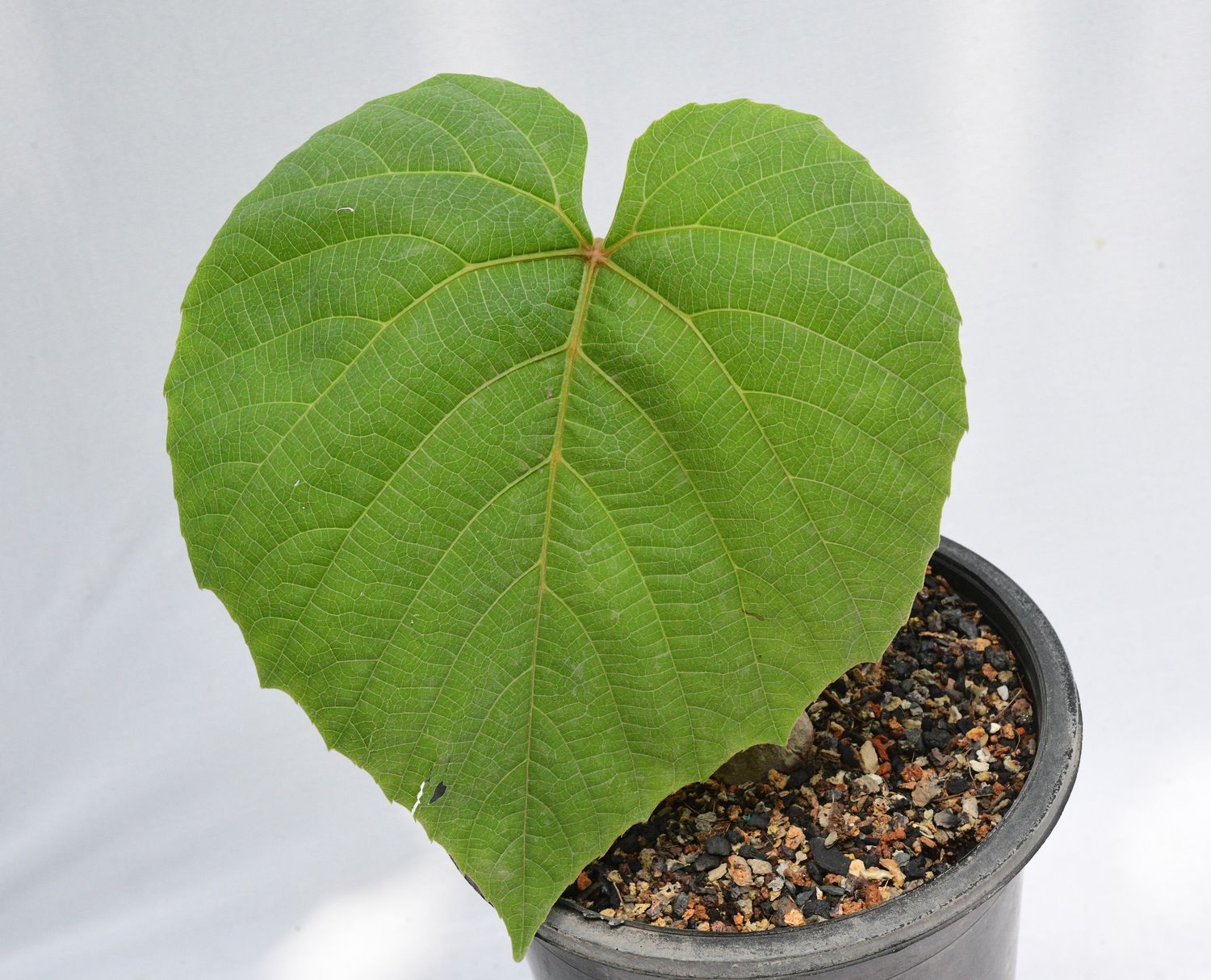
Stephania nova syn Stephania Kaweesakii
Product Details
The Emerald Shield: Stephania nova (syn. S. kaweesakii)
A rare, sought-after caudiciform prized for its massive, waxy peltate leaves and distinctive fissured 'turtle-shell' caudex.
- Origin & History of Name The genus name Stephania derives from the Greek stephanos ("crown"), referring to the crown-like arrangement of the flower’s anthers.
- Morphology Unlike the smoother potato-like tubers of S. erecta, this species features a suberose (corky), deeply fissured caudex that resembles a rugged turtle shell. The foliage is the true showstopper: large, peltate (shield-shaped) leaves that are coriaceous (leathery) and glabrous (smooth). Mature leaves often display a striking bluish-green or turquoise hue with prominent, light-colored venation radiating from the center.
- Habitat & Origin This is a lithophyte found clinging to limestone cliffs in the Kanchanaburi Province of Thailand. While it is a distinct wild species, the commercial market is heavily plagued by poached tubers dug from the wild. Ethically, buyers should seek seed-grown specimens, which are more adaptable to captivity and support sustainable preservation efforts.
- Cultivation Profile
- Substrate: Requires rapid drainage to prevent rot.
- Light: Thrives in bright, indirect light.
- Water/Dormancy: Water moderately only when the substrate is bone dry.
- Scientific/Historical Anecdote Before its formal classification in 2020, S. kaweesakii was the subject of intense taxonomic confusion, frequently mislabeled as Stephania suberosa due to similar corky barks. However, its leaf size—capable of reaching dinner-plate proportions (up to 20 cm)—biologically separates it from its smaller-leaved cousins, making it a "giant" among the genus.