

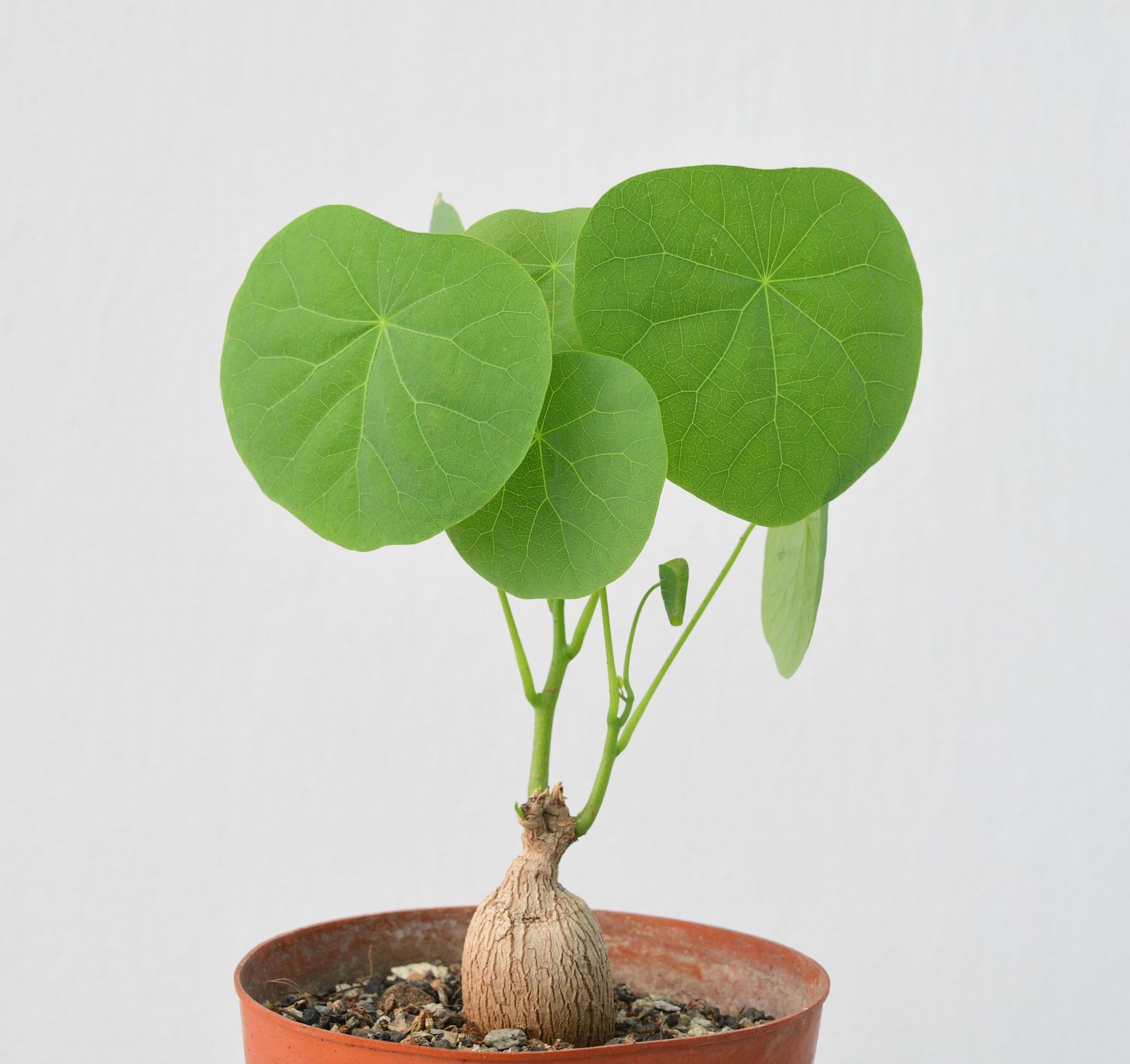
Stephania suberosa

SKU PA065Sm
₹850.00
In stock: 1 available
1
Save this product for later
Customer reviews
Reviews only from verified customers
No reviews yet. You can buy this product and be the first to leave a review.
Share this product with your friends
Stephania suberosa
Product Details

Architectural Elegance: Stephania suberosa

A sculptural masterpiece for the discerning collector, defined by its rugged cork-like base and delicate climbing foliage.

  1. Origin & History of Name: The genus name Stephania is derived from the Greek word stephanos, meaning "crown," referring to the crown-like arrangement of the anthers. The specific epithet suberosa comes from the Latin suber, meaning "cork," a direct reference to the thick, fissured bark that develops on the caudex. It was formally described in the early 20th century, notably appearing in botanical records as part of the diverse Menispermaceae family found across Southeast Asia.
  2. Morphology: This deciduous climber is characterized by its massive, woody caudex (swollen stem base), which features a deeply fissured, corky epidermis. From this rugged base, it produces slender, twining vines bearing peltate leaves—shield-shaped foliage where the petiole attaches to the center of the leaf blade rather than the margin. The contrast between the prehistoric-looking, textured base and the soft, glaucous green leaves is its primary aesthetic appeal.
  3. Habitat & Origin: Stephania suberosa is a wild species native to the tropical and subtropical deciduous forests of Thailand and surrounding Southeast Asian regions. It typically grows in limestone crevices or well-drained forest floors. Our specimens are ethically sourced through nursery propagation to ensure the protection of wild populations from over-harvesting.
  4. Cultivation Profile:
    • Substrate: Use a strictly mineral-based, gritty mix. A composition of 60% inorganic material (pumice, perlite, or crushed brick) and 40% organic matter (cocopeat or compost) is ideal for the Indian climate to prevent root rot.
    • Light: Prefers bright, indirect light. In the Indian subcontinent, it should be protected from harsh afternoon sun (above 35°C), which can scorch the delicate vines.
    • Water/Dormancy: Water thoroughly only when the substrate is completely dry during the growing season. This plant undergoes a distinct winter dormancy in India (November to February); during this period, the vines will yellow and die back. Cease watering entirely until new growth points emerge in spring to avoid caudex rot.
  5. Scientific/Historical Anecdote: Members of the genus Stephania are pharmacologically significant; S. suberosa specifically contains various isoquinoline alkaloids. Historically, these plants have been studied for their "curariform" activity—compounds that can cause muscle relaxation. In certain Southeast Asian traditions, the starch-rich caudexes of related species were used medicinally, though the high alkaloid content makes them toxic if not processed correctly.