

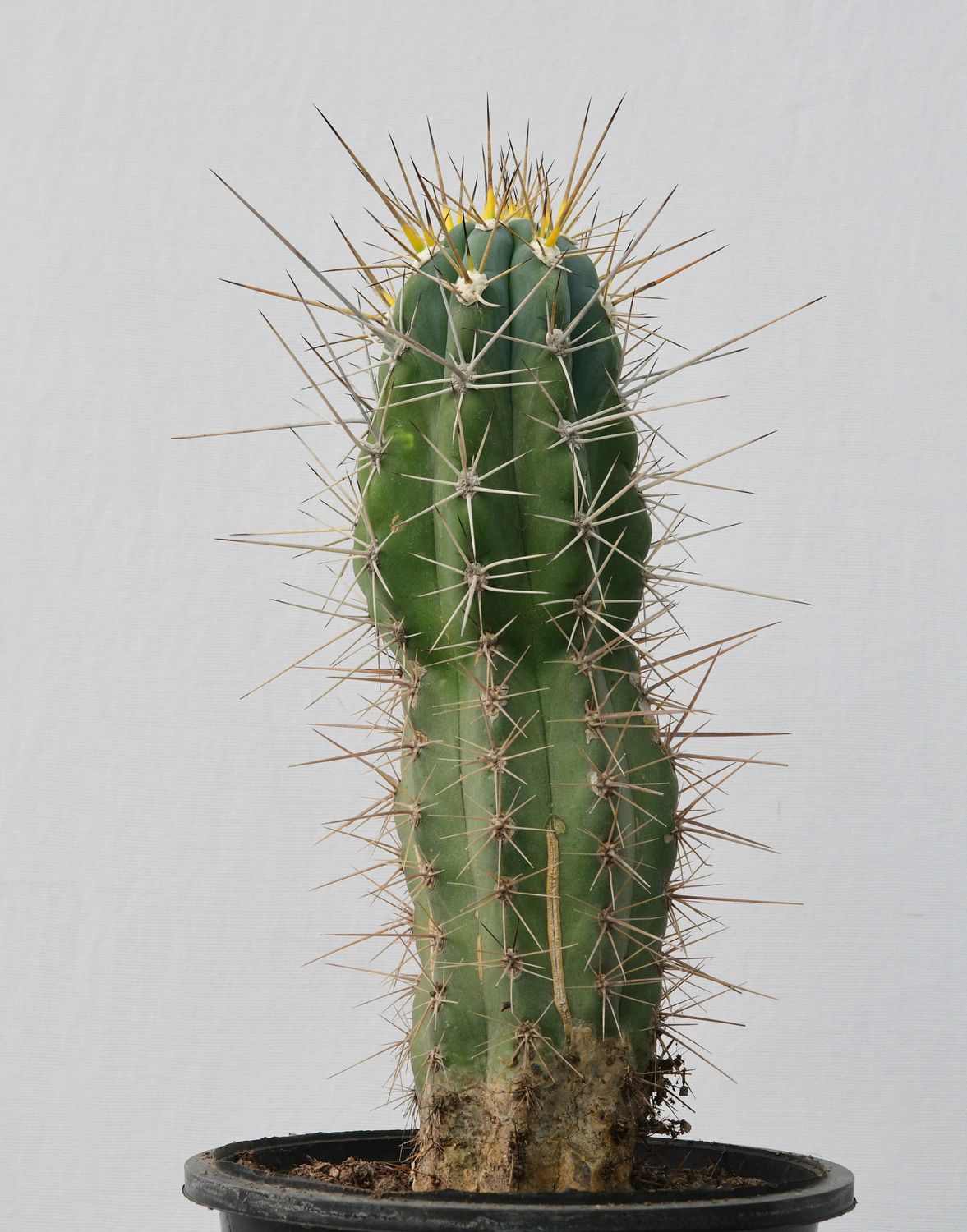
Stetsonia coryne (Toothpick Cactus)
Product Details
Sculptural Resilience: Stetsonia coryne (Toothpick Cactus)
An architectural marvel for the modern collector, defined by its striking ivory spines and towering presence.
- Origin & History of Name The genus name Stetsonia honors Francis Lynde Stetson, a prominent New York attorney and plant enthusiast of the early 20th century.
The specific epithet coryne is derived from the Greek word for "club," referencing the plant’s distinctive club-like growth habit. It was formally described by Britton and Rose in 1920, solidifying its place in botanical records as a monotypic genus (containing only one species). - Morphology Stetsonia coryne is a treelike cactus characterized by a thick, glaucous (blue-green) epidermis.
It features 8 to 9 prominent costae (ribs) that are deeply notched. The most striking feature is its areoles, which produce formidable, needle-like central spines that can reach 10 cm in length. These spines emerge black or dark brown, eventually maturing to a chalky white or grey, providing a high-contrast aesthetic. - Habitat & Origin This is a wild species native to the high-altitude deserts and Gran Chaco regions of Argentina, Bolivia, and Paraguay.
It is not a cultivar but a naturally occurring giant of the South American dry forests. Our specimens are sustainably sourced through controlled propagation, ensuring no disruption to wild populations or their native ecosystems. - Cultivation Profile
- Substrate: Requires a gritty, mineral-based mix.
A composition of 50% coarse sand/perlite, 25% volcanic rock (pumice), and 25% organic matter is ideal to prevent root rot. - Light: Thrives in full sun. In the Indian subcontinent, it benefits from direct outdoor light but should be acclimated slowly to prevent epidermis scorching during peak May/June heatwaves.
- Water/Dormancy: Deeply water only when the substrate is completely dry.
During the Indian monsoon and winter months, the plant enters a semi-dormancy; water should be strictly withheld to avoid fungal pathogens in high humidity.
5. Scientific/Historical Anecdote Despite its slow growth in containers, Stetsonia coryne is known in its native habitat as a "forest maker." In the Argentine Chaco, it can reach heights of 10 meters, developing a massive woody trunk.
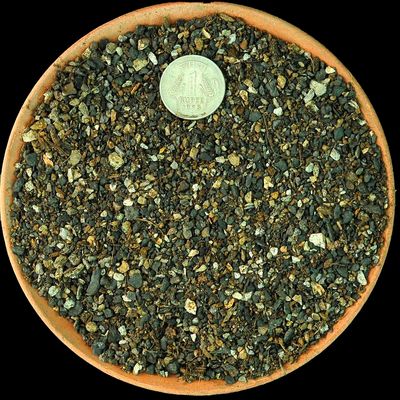
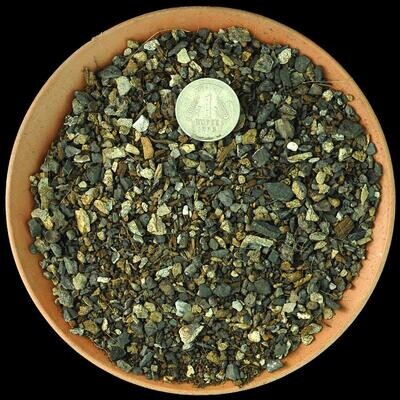

Cactus & Succulent Planting Mix FINE (aka Cactus Soil Mix or Succulent Soil Mix)
Cactus & Succulent Planting Mix FINE (aka Cactus Soil Mix or Succulent Soil Mix)
Fine-Grain Potting Mix for Cactus & Succulent Roots
SKU MNS001
₹39.85
New


Monsoon Guardian Kit (5 in 1)
Monsoon Guardian Kit (5 in 1)
Complete 5-in-1 biological protection kit for cacti & succulents
SKU MNS024
₹850.00