

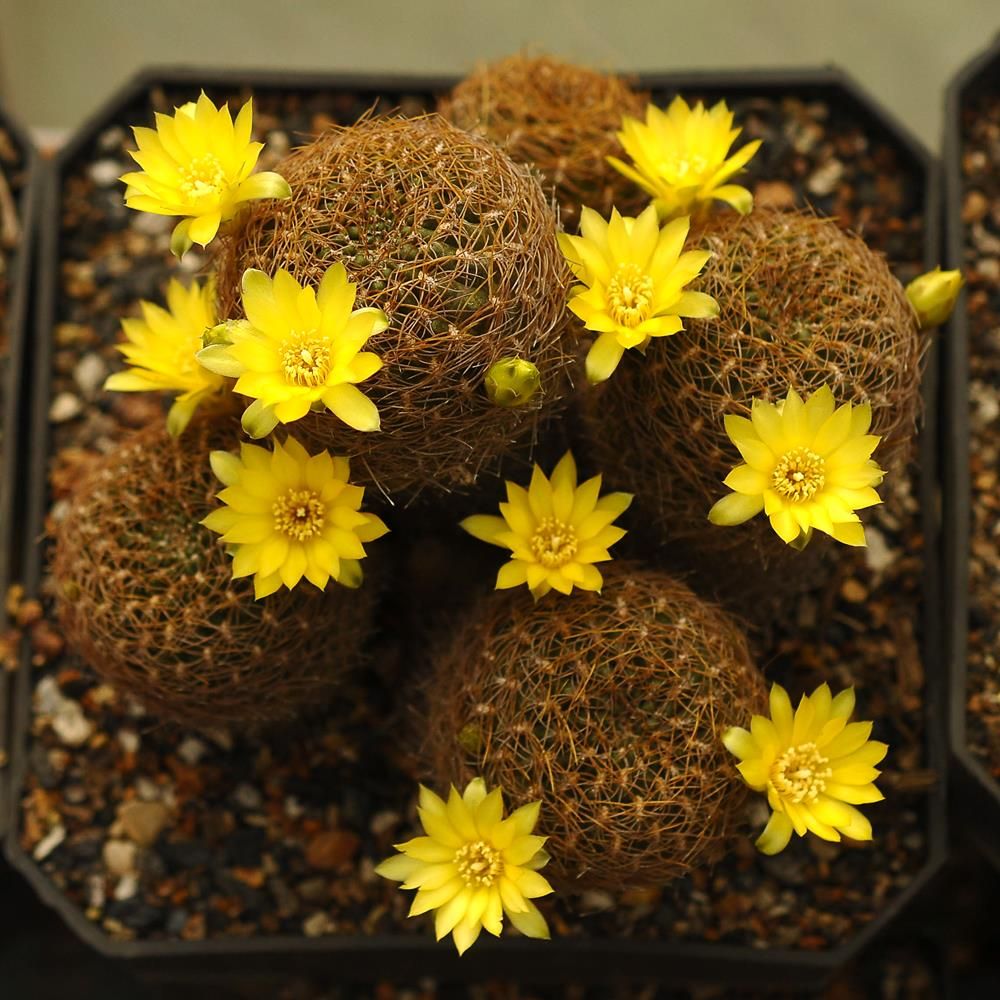
Sulcorebutia candiae syn arenacea long spine
Product Details
Golden Crown of the Andes: Sulcorebutia candiae syn. arenacea (Long Spine) A rare, high-altitude treasure featuring intricate geometric ribbing and an exceptional display of elongated, golden-amber spines.
- Origin & History of Name The genus name Sulcorebutia is derived from the Latin sulcus (groove), referring to the characteristic furrow above the areoles.
The specific epithet candiae honors Bolivian botanist Daniel Candia, who assisted in the plant's documentation. The synonym arenacea stems from the Latin arena (sand), describing the sand-colored, grainy appearance of the epidermis. This "Long Spine" variant is a selected form prized by collectors for its exaggerated radial armature compared to the standard species. - Morphology This specimen exhibits a globose to slightly depressed epidermis in shades of olive-green to brownish-tan. It features distinct costae (ribs) that are spirally arranged and broken into small tubercles. The areoles are elongated and woolly, giving rise to pectinate (comb-like) spines that, in this form, are significantly elongated and curve toward the body.
When in bloom, it produces vibrant, funnel-shaped orange flowers from the lower base of the plant. - Habitat & Origin This is a wild species native to the Cochabamba region of Bolivia, specifically found in rocky crevices at elevations between 2,000 and 2,800 meters.
These plants are sourced from nursery-grown stock propagated via seed or offsets to ensure the protection of wild populations and adhere to CITES sustainability standards. - Cultivation Profile
- Substrate: Requires a strictly mineral-based mix (60–70% coarse sand, pumice, or perlite) with minimal organic matter to prevent root rot.
- Light: High-intensity light or filtered morning sun is essential. In the Indian summer, provide 30–50% shade cloth to prevent epidermal scorching during peak afternoon heat.
- Water/Dormancy: Follow a "soak and dry" cycle during the growing season (March–September). Maintain absolute dryness during the winter dormancy period. Given India's monsoon, ensure the plant is shielded from high humidity and excessive rain.
5. Scientific/Historical Anecdote Sulcorebutia was traditionally distinguished from Rebutia because its flowers emerge from the side or base of the plant rather than the crown. Modern DNA sequencing has sparked ongoing debate among taxonomists, with many now folding the genus into Weingartia. Despite the shifting nomenclature, collectors maintain the Sulcorebutia designation to identify these distinct, high-altitude specialists.

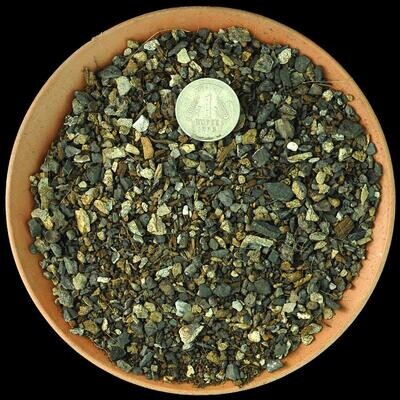
Cactus & Succulent Planting Mix COARSE (aka Cactus Soil Mix or Succulent Soil Mix)
Cactus & Succulent Planting Mix COARSE (aka Cactus Soil Mix or Succulent Soil Mix)
Washed, Free-Draining Mineral Mix for Cactus & Succulents
SKU MNS003
₹44.85


Cactus Seed Planting Mix
Cactus Seed Planting Mix
Sterile, Fine-Grain Media for Cactus & Succulent Seeds
SKU MNS005
₹74.85
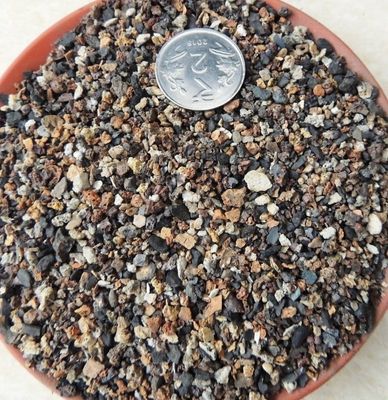
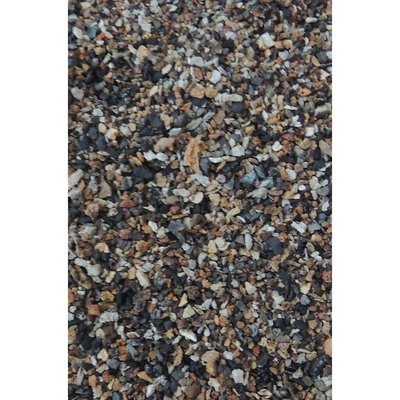
Cactus & Succulent Planting Mix FINE (aka Cactus Soil Mix or Succulent Soil Mix)
Cactus & Succulent Planting Mix FINE (aka Cactus Soil Mix or Succulent Soil Mix)
Fine-Grain Potting Mix for Cactus & Succulent Roots
SKU MNS001
₹39.85