

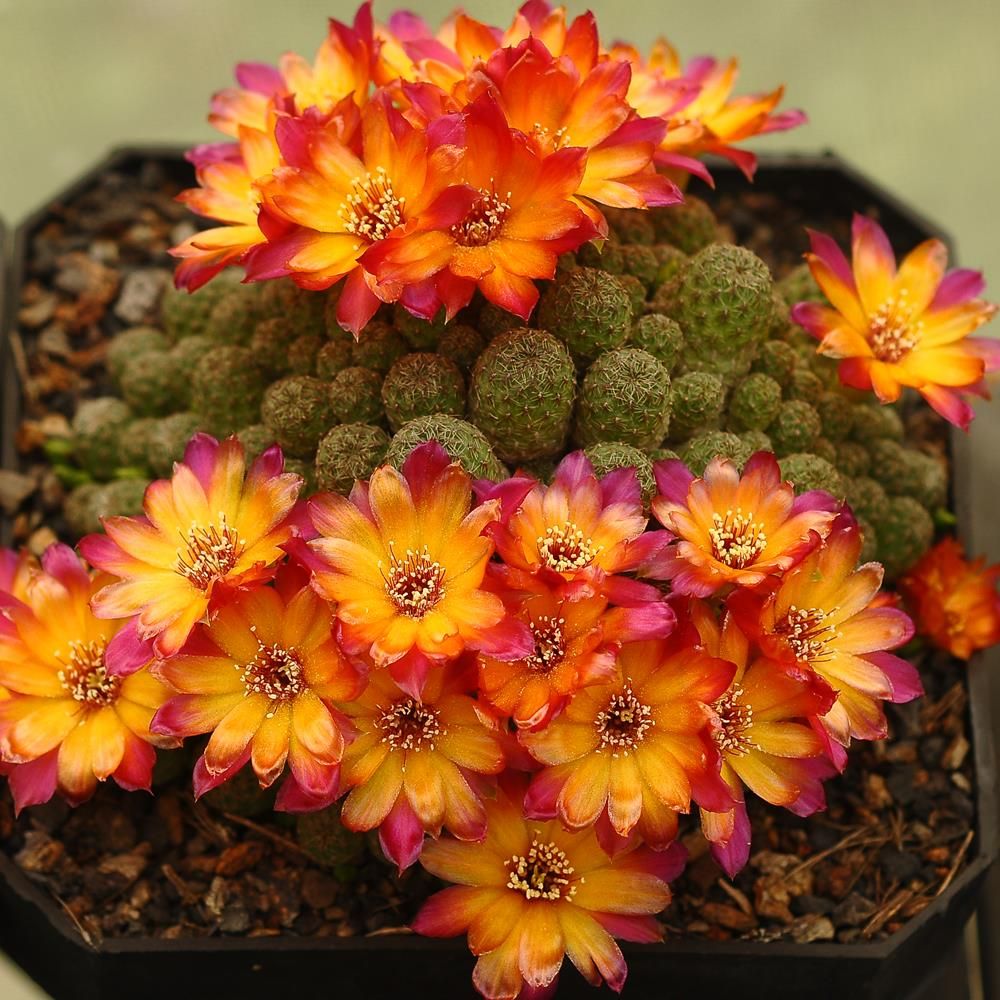
Sulcorebutia canigueralii cultivar
Product Details
Radiant Bi-Color Bloom: Sulcorebutia canigueralii
A high-contrast masterpiece featuring rare lanceolate petals that transition from a sun-drenched yellow to a vivid magenta fire.
- Origin & History of Name: The genus name Sulcorebutia is derived from the Latin sulcus (furrow), referring to the unique groove above the areoles.
The species name canigueralii honors Father Juan Cañigueral, a Spanish priest and botanist who spent decades studying the flora of Bolivia. It was formally described in the mid-20th century, becoming a cornerstone of Andean cactus collections. - Morphology: This plant forms a low-growing, clustering epidermis often tinged with dark purple or bronze when exposed to bright light.
It features small, pectinate spines that lay flat against the tubercles (bumps), rather than distinct continuous costae. Its most striking feature is the flower: lanceolate petals (spear-shaped) that display a dramatic bi-color gradient, starting with a bright yellow throat and ending in deep magenta-pink tips. - Habitat & Origin: This specific plant is a cultivar of a species originally native to the high-altitude regions of Sucre, Bolivia. This bi-color variant has been selectively bred in cultivation to intensify the floral contrast and petal shape. All our specimens are nursery-raised from seed or offsets, ensuring no wild populations are disturbed.
- Cultivation Profile:
- Substrate: Use an exceptionally gritty, mineral-based mix (80% pumice, lava rock, or coarse sand and 20% organic matter). The taproot is sensitive; avoid any moisture-retentive peat.
- Light: In the Indian context, provide full morning sun but protect from the scorching afternoon heat (12 PM – 4 PM), especially during the dry heat of April and May. High light is essential for the dark skin pigmentation and floral intensity.
- Water/Dormancy: Follow a strict "soak and dry" method. During the Indian monsoon, keep the plant completely dry to prevent humidity-induced rot. In winter, maintain absolute dryness to trigger the spring flowering cycle.
- Scientific/Historical Anecdote: Sulcorebutia is often a subject of botanical debate; many taxonomists now group them under the genus Weingartia. Interestingly, these plants are "high-altitude specialists," originally found at elevations up to 3,500 meters. This makes them naturally resilient to cold nights but highly susceptible to stagnant, humid air, which is why airflow is the most critical factor for their survival in tropical climates.
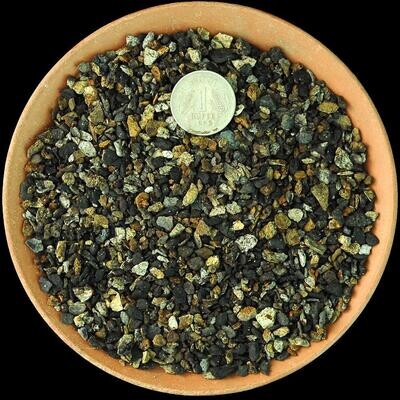
Cactus & Succulent Planting Mix COARSE (aka Cactus Soil Mix or Succulent Soil Mix)
Cactus & Succulent Planting Mix COARSE (aka Cactus Soil Mix or Succulent Soil Mix)
Washed, Free-Draining Mineral Mix for Cactus & Succulents
SKU MNS003
₹44.85


Cactus Seed Planting Mix
Cactus Seed Planting Mix
Sterile, Fine-Grain Media for Cactus & Succulent Seeds
SKU MNS005
₹74.85

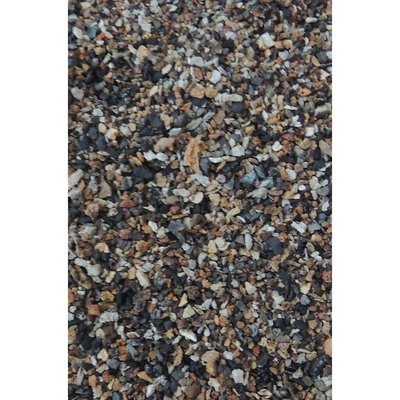
Cactus & Succulent Planting Mix FINE (aka Cactus Soil Mix or Succulent Soil Mix)
Cactus & Succulent Planting Mix FINE (aka Cactus Soil Mix or Succulent Soil Mix)
Fine-Grain Potting Mix for Cactus & Succulent Roots
SKU MNS001
₹39.85
New
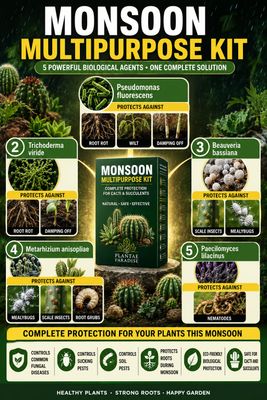
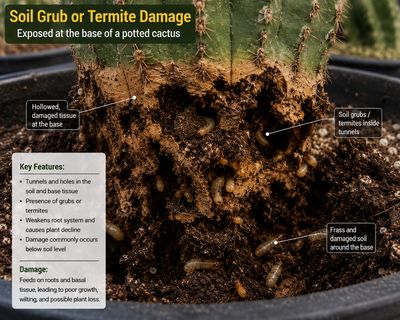
Monsoon Guardian Kit (5 in 1)
Monsoon Guardian Kit (5 in 1)
Complete 5-in-1 biological protection kit for cacti & succulents
SKU MNS024
₹850.00