

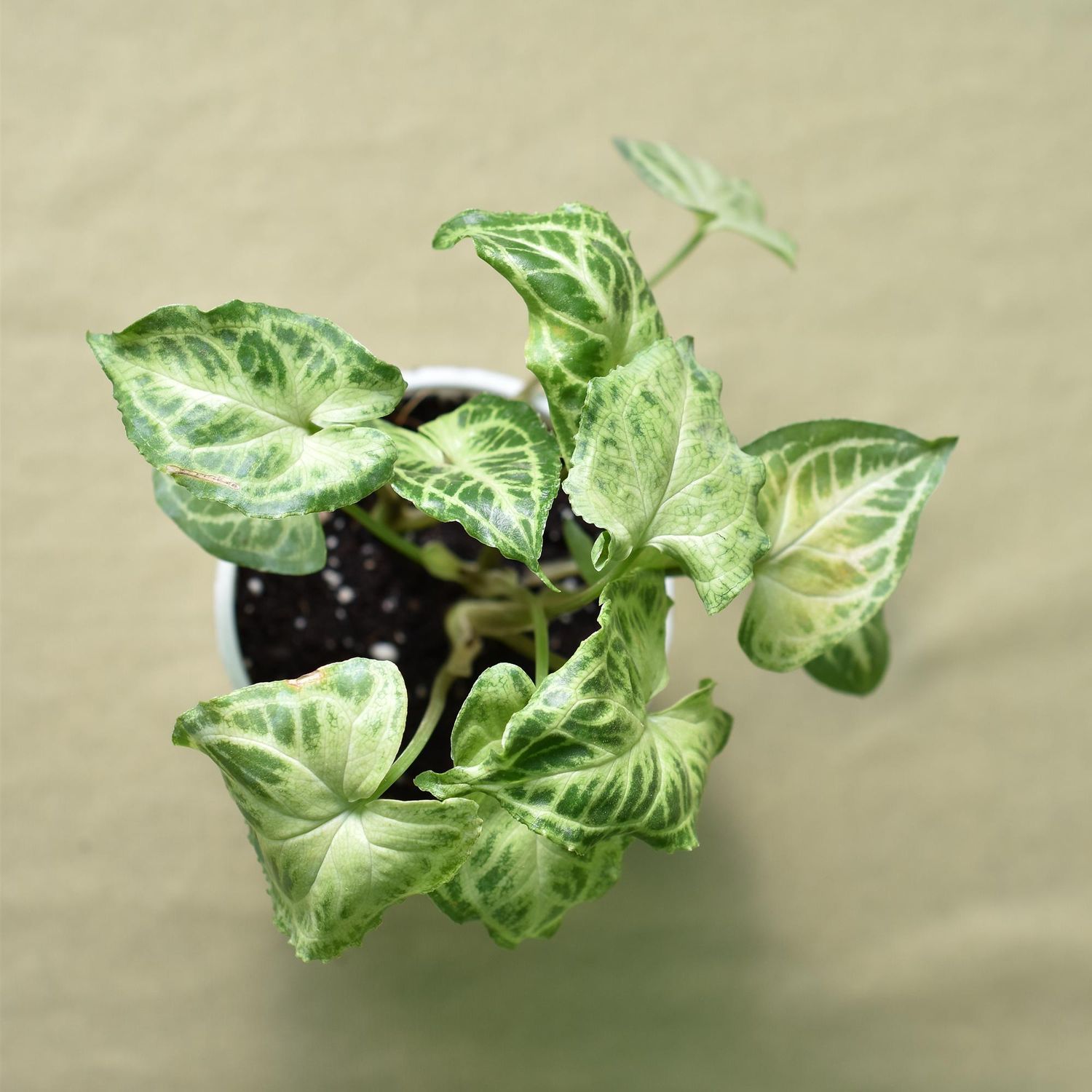
Syngonium pixie
Product Details
Miniature Elegance: Syngonium podophyllum 'Pixie'
A compact, silver-centered marvel perfect for small spaces and high-detail terrarium displays.
- Origin & History of Name: The genus name Syngonium is derived from the Greek words syn (together) and gone (womb), referring to the fused ovaries of the flowers.
- Morphology: This cultivar is characterized by its hastate (arrow-shaped) juvenile leaves that remain significantly smaller than the species type.
- Habitat & Origin: Syngonium podophyllum is native to tropical rainforests from Mexico to Brazil. However, 'Pixie' is a horticultural cultivar specifically bred for the indoor plant trade to emphasize dwarfism.
- Cultivation Profile:
- Substrate: Use a highly porous, aerated mix consisting of coco-peat, perlite, and pine bark to ensure rapid drainage.
- Light: Thrives in bright, indirect light; in the Indian context, keep away from direct midday sun to prevent leaf scorch, especially during summer.
- Water/Dormancy: Maintain consistent moisture in the substrate; reduce watering frequency during the cooler winter months in North India when growth slows.
- Scientific/Historical Anecdote: Syngonium species exhibit a biological phenomenon called heteroblastic development. This means the plant’s leaf shape changes dramatically as it ages—moving from the simple "arrowhead" juvenile form seen in 'Pixie' to a multi-lobed adult leaf that looks almost like a completely different species.
New


Monsoon Guardian Kit (5 in 1)
Monsoon Guardian Kit (5 in 1)
Complete 5-in-1 biological protection kit for cacti & succulents
SKU MNS024
₹850.00


Cactus Seed Planting Mix
Cactus Seed Planting Mix
Sterile, Fine-Grain Media for Cactus & Succulent Seeds
SKU MNS005
₹74.85
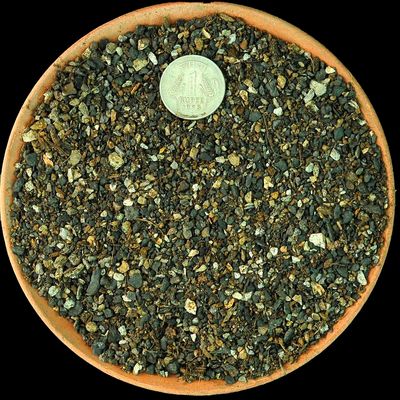
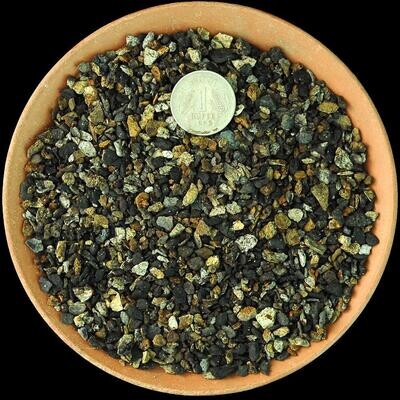
Cactus & Succulent Planting Mix COARSE (aka Cactus Soil Mix or Succulent Soil Mix)
Cactus & Succulent Planting Mix COARSE (aka Cactus Soil Mix or Succulent Soil Mix)
Washed, Free-Draining Mineral Mix for Cactus & Succulents
SKU MNS003
₹44.85