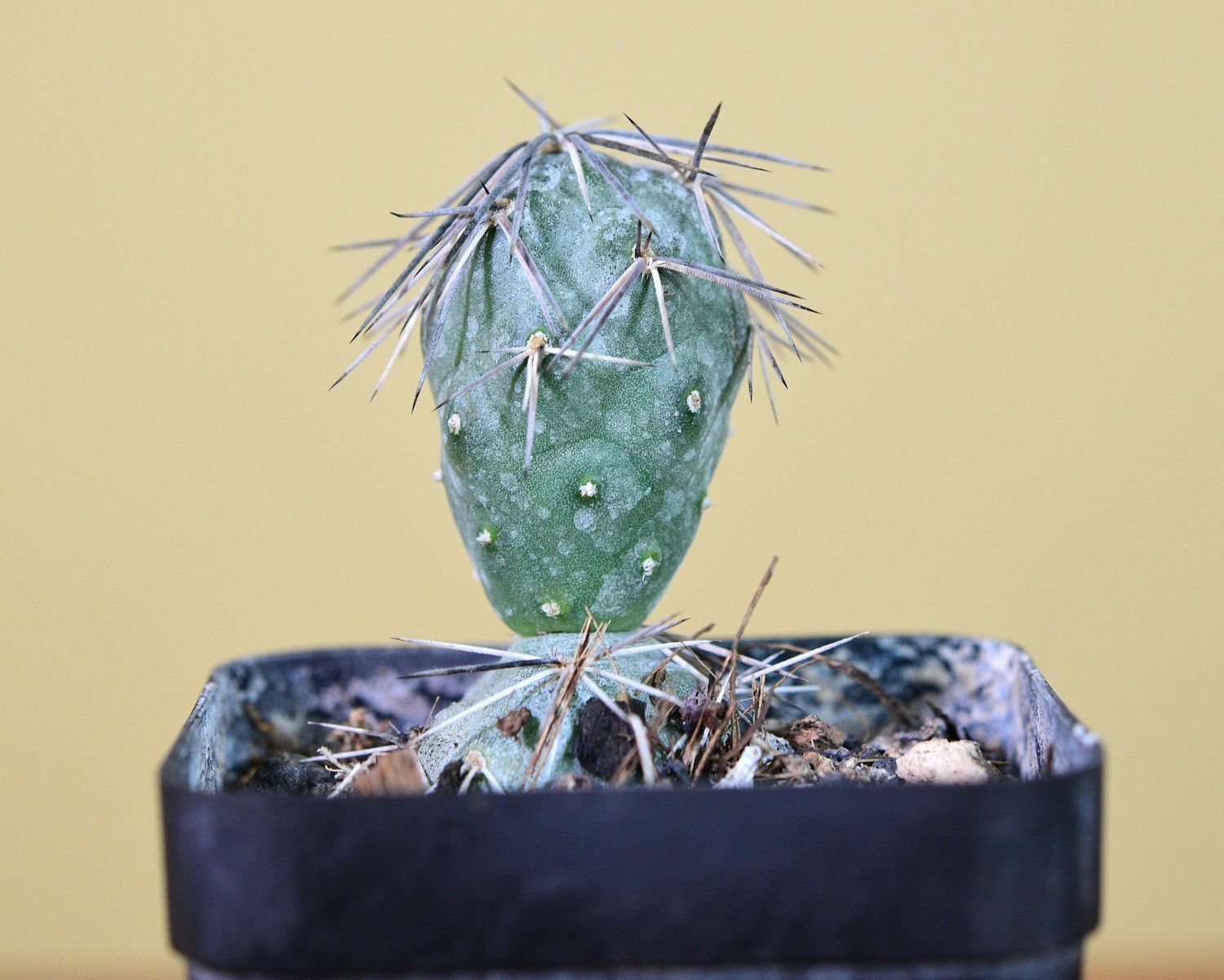
Tephrocactus alexanderi f. minimus -silver brown dense - flexible interconnected spines) KPCL 3311 Viejo San Roque RN 40 San Juan Argentina
Some cacti announce themselves with size; this one does the opposite. A tight little cluster of pea-sized segments, dusted in silvery-blue bloom and crowned in a tangle of fine, flexible, interlocking spines the color of old silver and rust — this is a dwarf form of Tephrocactus alexanderi, collected wild along Ruta 40 in San Juan, and prized by collectors for staying small while everything about its spination goes big.
Origin of Name
The genus Tephrocactus comes from the Greek tephra, "ash," describing the pale, ash-grey epidermis common across the group. The species epithet alexanderi honors Edward J. Alexander (1901–1985), an American botanist who served as curator of the herbarium at the New York Botanical Garden. The species was first described as Opuntia alexanderi by Nathaniel Britton and Joseph Nelson Rose in the final volume of their landmark 1923 work The Cactaceae, and was later transferred into the genus Tephrocactus by Curt Backeberg in 1953.
Few species in the genus have accumulated as many names as this one. Over the following decades, botanists working across Argentina's stony northwest kept encountering plants that looked different enough to warrant their own names — bruchii, geometricus, riojanus, flexuosus, subsphaericus, halophilus — before molecular and morphological work eventually folded most of them back into a single, extraordinarily variable Tephrocactus alexanderi. This particular plant carries the further designation forma minimus, Latin for "smallest," a horticultural form name applied to dwarf, small-segmented populations found in habitat — a fitting complement to its dense, flexible, silvery-brown spination, since so many of this species' famous forms (like the popular spineless geometricus) are prized for having almost no spines at all.
Origin of Plant
Tephrocactus alexanderi is native to the arid, rocky slopes of northwestern Argentina, occurring across the provinces of Catamarca, La Rioja, San Juan, and San Luis, where it grows in some of the driest, most exposed desert and shrubland terrain in the region. This particular clone traces to a wild population near Viejo San Roque, along Ruta Nacional 40 in San Juan province, documented under the field collection code KPCL 3311 — part of the long-running tradition among Tephrocactus specialists of tracking exactly which hillside a given form of this notoriously variable species came from.
Description
The stem segments are small, ovoid to nearly spherical, and covered in an ashy green to blue-grey skin dusted with a fine waxy bloom, marked by spirally arranged, rhomboid tubercles. True to its minimus designation, this form keeps its segments notably compact, forming tight little clusters rather than the larger, looser branching typical of the species. The crown is densely packed with fine, flexible spines in silvery-brown to near-black tones, long enough to interlock across neighboring areoles into a loose, webbed tangle over the growing tip — a striking contrast to the bare, "golf ball" look of the nearly spineless forms more commonly seen in cultivation. Given the right seasonal cues, mature plants can produce funnel-shaped, pale pink to white flowers with a darker central stripe, emerging from the crown.
Conservation Status
As a member of the family Cactaceae, this species falls under CITES Appendix II, regulating international trade to protect wild populations from over-collection. At the species level, Tephrocactus alexanderi is currently assessed as Least Concern, though the striking, named field forms favoured by collectors keep pressure on wild populations a live concern within the trade. This specimen, propagated in cultivation, sits outside those wild-collection concerns entirely.
Care
- Light: Full sun brings out the tightest growth and richest spine colour; in very intense climates, a touch of afternoon shade helps prevent scorching.
- Watering: Extremely drought tolerant — water sparingly through the growing season and allow the soil to dry out completely between waterings; reduce to almost nothing over winter.
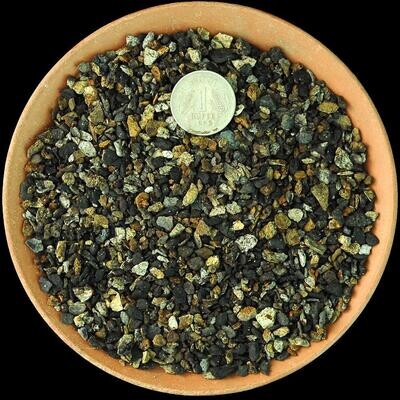
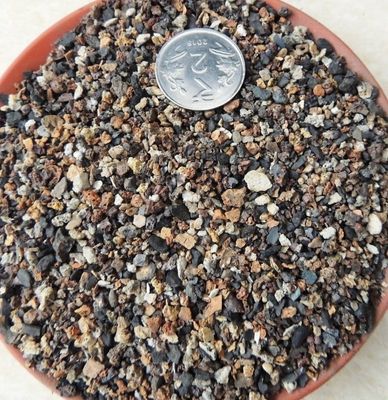
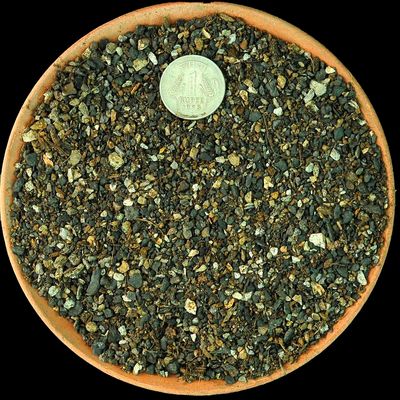
- Soil: A fast-draining, mineral-heavy cactus mix is essential, as this species is very sensitive to overwatering.
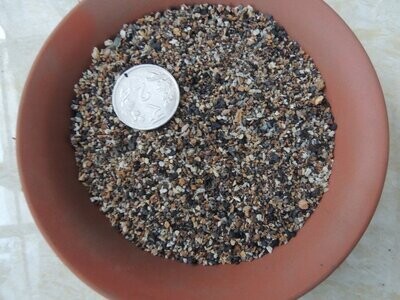
- Pot: Terracotta is preferred over plastic, helping excess moisture evaporate rather than sit around the roots.
- Temperature: Heat tolerant and accustomed to extreme daily temperature swings in habitat; prefers a cool, dry winter rest and should be protected from prolonged cold combined with damp soil.
- Feeding: Feed sparingly with a low-nitrogen, high-potassium cactus fertiliser during the active growing season.
A Story Worth Telling
Few cacti have tested the patience of taxonomists quite like Tephrocactus alexanderi. Across just a handful of Argentine provinces, this one species has produced populations so different from each other — spineless golf balls in one valley, densely armored dwarf clusters like this one in another — that botanists spent most of the twentieth century convinced they were looking at half a dozen separate species. It took decades of fieldwork and, eventually, molecular study to confirm they were all one remarkably plastic plant, adapting its form population by population to the particular patch of desert it called home. Collecting named field forms like this minimus clone is, in effect, collecting a small piece of that unresolved argument — one specific, documented answer to the question of just how far a single species can stretch.