

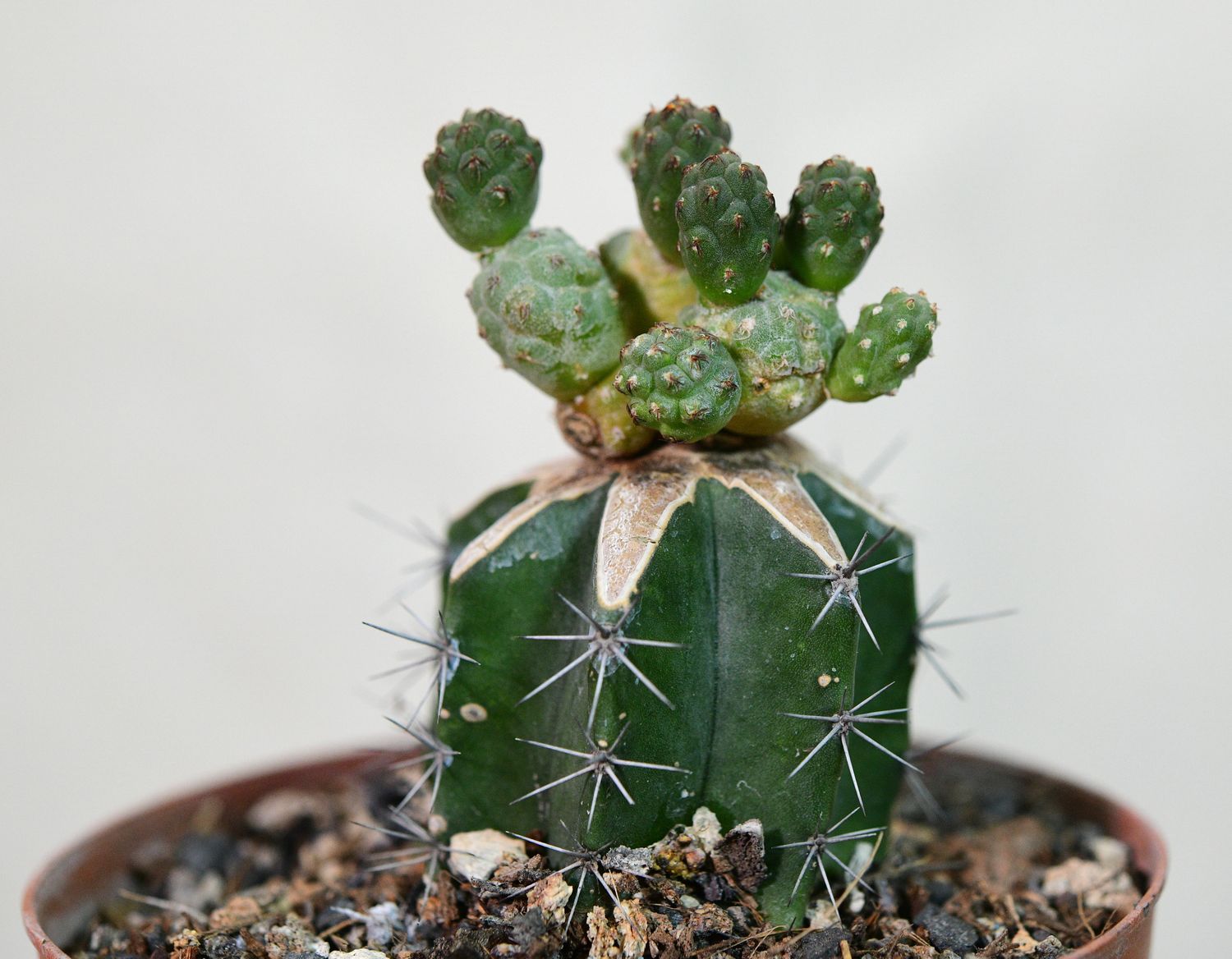
Tephrocactus bonnieae
Product Details
Surreal Geometry: Tephrocactus bonnieae
A coveted gem for serious collectors, this rare Argentine miniature is prized for its prehistoric, pine-cone aesthetic.
- Origin & History of Name: The genus name Tephrocactus is derived from the Greek tephra (ash), referring to the grayish-ash color of the epidermis common to many species.
The specific epithet bonnieae honors Bonnie Brunkow, who co-discovered the plant in the 1990s alongside her husband, DJ Ferguson. It was officially described in 1996, making it a relatively modern and exciting addition to the botanical record. - Morphology: This geophytic cactus features globose to obconical segments that resemble small, textured stones or pine cones. The epidermis is a distinct blue-gray to olive green, lacking traditional ribs (costae) and instead presenting a tuberculate surface. Its areoles are recessed and produce minimal, flattened spines that hug the body, ensuring the plant’s unique geometric silhouette remains the focal point.
- Habitat & Origin: Tephrocactus bonnieae is a wild species endemic to a very specific, high-altitude micro-habitat in the Catamarca Province of Argentina.
It grows in rocky, arid soils at elevations around 2,000 meters. Due to its extremely limited range in the wild, purchasing nursery-propagated specimens is essential for environmental sustainability and the protection of wild populations. - Cultivation Profile (Indian Context):
- Substrate: Use a strictly mineral-based mix (70% grit/pumice/lava rock and 30% organic matter). In the humid Indian climate, avoid clay-heavy garden soil which retains lethal levels of moisture.
- Light: Requires bright, indirect sunlight or filtered morning sun. In peak Indian summers (April–June), provide 50% shade cloth protection to prevent the epidermis from scorching.
- Water/Dormancy: Water deeply only when the substrate is bone-dry. During the monsoon, keep the plant strictly dry to prevent rot. Observe a winter dormancy (November–February) by withholding water entirely to mimic its natural high-altitude environment.
- Scientific/Historical Anecdote: Interestingly, Tephrocactus bonnieae was initially thought to be a member of the genus Puna due to its tuberous root system and growth habit. However, DNA sequencing later confirmed its placement within Tephrocactus. In the wild, it is a "cryptic" plant; during extreme droughts, the body shrinks and retracts almost entirely underground, leaving only the very tips visible to protect itself from the elements.
New

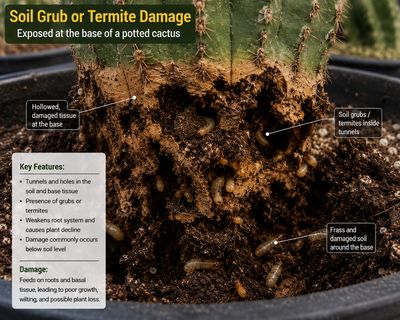
Monsoon Guardian Kit (5 in 1)
Monsoon Guardian Kit (5 in 1)
Complete 5-in-1 biological protection kit for cacti & succulents
SKU MNS024
₹850.00

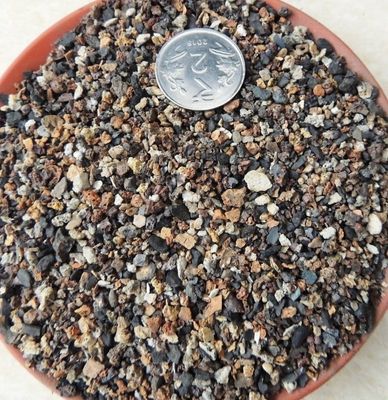
Cactus & Succulent Planting Mix COARSE (aka Cactus Soil Mix or Succulent Soil Mix)
Cactus & Succulent Planting Mix COARSE (aka Cactus Soil Mix or Succulent Soil Mix)
Washed, Free-Draining Mineral Mix for Cactus & Succulents
SKU MNS003
₹44.85

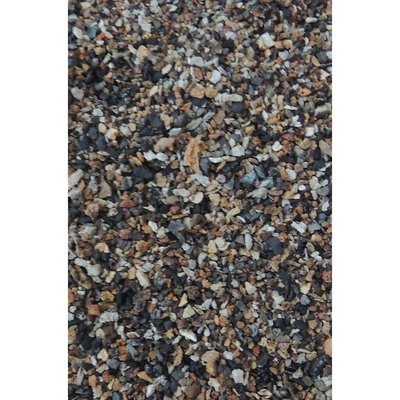
Cactus & Succulent Planting Mix FINE (aka Cactus Soil Mix or Succulent Soil Mix)
Cactus & Succulent Planting Mix FINE (aka Cactus Soil Mix or Succulent Soil Mix)
Fine-Grain Potting Mix for Cactus & Succulent Roots
SKU MNS001
₹39.85