The Astrophytum Eight — A Star Cactus Collector's Set
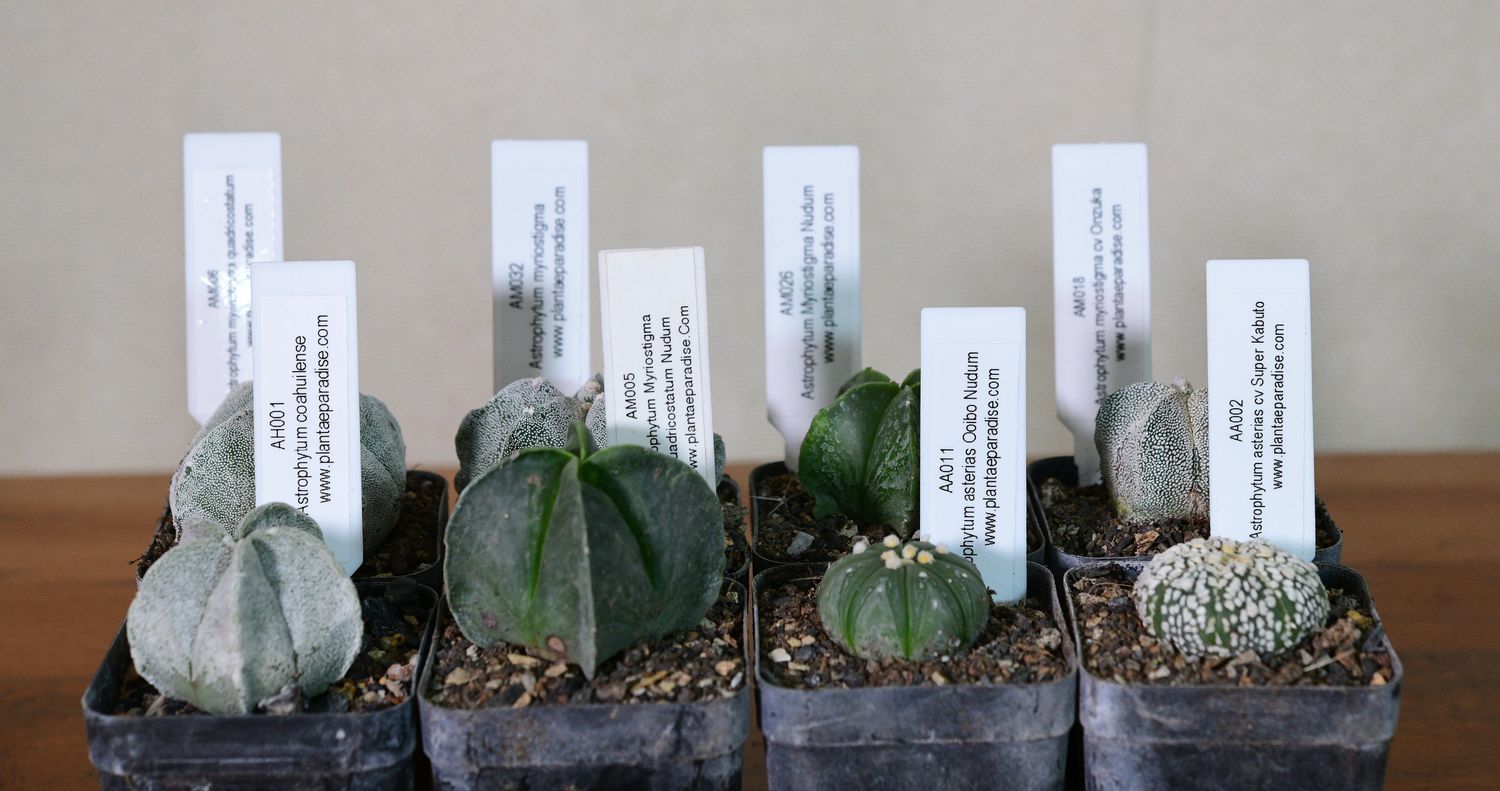
*Eight pots, one genus, and more variation than most collectors see in years of hunting. This set gathers the "star cacti" of Mexico and Texas — the ribbed, spineless, geometrically perfect Astrophytum — across their two most collected species and six of their most sought-after forms: dense silver flocking, four-ribbed oddities, glossy "naked" green skins, oversized woolly warts, and the famous Japanese-bred, samurai-helmet-patterned Super Kabuto. Every pot in this tray is instantly recognizable as an Astrophytum, and no two look alike.
Origin of the Name — Astrophytum
The genus name comes from the Greek astron ("star") and phyton ("plant") — literally "star plant" — for the way the ribbed, angular bodies of young plants form a near-perfect star outline when viewed from above, a shape every pot in this set shares. The genus was formally established by the French botanist Charles Antoine Lemaire in 1839, built around a spineless Mexican cactus that had been described a few years earlier as Echinocactus myriostigma. Lemaire's new genus name proved so apt that it stuck permanently, and Astrophytum has remained one of the most collected genera in the entire cactus family ever since — prized less for size or ferocity than for pure geometric elegance.
What's in the Set
1. Astrophytum coahuilense (AH001) — Named for Coahuila, the Mexican state where it grows on limestone slopes alongside Durango, this species was first described in 1932 by K. Kayser and spent decades classified as a mere variety of A. myriostigma before molecular and morphological studies confirmed it as its own species. It is the "big sibling" of the bishop's cap: a five-ribbed star body densely wrapped in soft, silvery-white trichomes, eventually reaching up to 20 cm, with yellow, red-throated flowers. In the wild it is assessed as Vulnerable on the IUCN Red List — its entire range covers less than 6,000 km², fragmented by overgrazing and illegal collection, with no populations inside a protected area — which makes a nursery-propagated specimen like this one a genuinely responsible way to own the species.
2. Astrophytum myriostigma subsp. quadricostatum (AM006) — "Quadricostatum" is simply Latin for "four-ribbed" (quadri-, four + costa, rib), describing the plant's one obvious quirk: where a typical bishop's cap carries five ribs, this naturally occurring form settles on four, giving it a noticeably squarer, more angular silhouette. Native to the same rocky, calcareous highlands of northern and central Mexico as the species proper, it carries the same dense white flocking and produces the same pale yellow, days-long blooms.
3. Astrophytum myriostigma cv. Quadricostatum Nudum (AM005) — A double rarity that stacks two mutations into one plant: the reduced four-rib count of quadricostatum above, combined with nudum ("naked" in Latin), the absence of the white felted trichomes that normally coat the epidermis. The result is a smooth, matte grey-green, sharply four-angled star that looks almost sculpted rather than grown — a genuine collector's-shelf plant rather than something found casually in habitat.
4. Astrophytum myriostigma (AM032) — The species that started it all, and still the most widely grown Astrophytum in the world. The epithet myriostigma comes from the Greek myrios ("countless," "ten thousand") and stigma ("mark" or "spot"), describing the multitude of tiny white felted dots that stipple its skin — the same dots that, en masse, give the plant its common name, "bishop's cap" or "bishop's miter," for its passing resemblance to the pointed ceremonial hat. Native to the highlands of northeastern and central Mexico, it typically grows five ribs, matures into a column up to a metre tall over many years, and produces bright yellow flowers from the crown.
5. Astrophytum asterias cv. Ooibo Nudum (AA011) — This one combines two Japanese-cultivar traits on the rarer of the two species in this set. "Ooibo" (大疣) is Japanese for "big wart," referring to unusually large, plush, woolly areoles that swell as the plant matures — a deliberate selection trait distinct from the white-speckling trait bred into Super Kabuto below. Paired here with nudum — an absence of the fine white speckling that normally patterns the skin — it yields a smooth green, disc-like "sand dollar" body studded with oversized fuzzy tufts. Its parent species, Astrophytum asterias, is one of North America's most endangered cacti in the wild: federally listed as Endangered in the United States, Vulnerable on the IUCN Red List, and protected under CITES Appendix I, which bans all international trade in wild-collected specimens. Every asterias sold here is nursery-grown from cultivated stock, never wild-collected.
6. Astrophytum myriostigma cv. Nudum (AM026) — The "naked" form of the classic bishop's cap: genetically lacking the white trichome flocking that gives the species its silvery look, leaving a smooth, glossy, deep-green five-ribbed star. Though occasionally found in the wild, nudum forms are far more common in cultivation and are often the very first Astrophytum a new collector picks up, thanks to their clean, almost architectural green-on-green appearance.
7. Astrophytum asterias cv. Super Kabuto (AA002) — Perhaps the most famous Astrophytum cultivar in existence. It traces back to 1981, when Japanese collector Masaomi Takeo spotted an unusually heavily marked asterias seedling in an American garden centre and passed it on to fellow collector Tony Sato, whose selective breeding fixed the trait. The name borrows kabuto, the Japanese word for a samurai's helmet, for the way the plant's dense, mosaic-like white speckling — far more extensive than on a wild asterias — studs its round, spineless, apically flattened body like the rivets on a piece of armour. Decades of further selection since 1981 have produced dozens of named Super Kabuto sub-strains; this is the foundational, most classic form.
8. Astrophytum myriostigma cv. Onzuka (AM018) — Selected in Hiroshima, Japan, around 1974–1977 and named for the grower credited with raising it, Tsutomu Onzuka, this cultivar flips the usual bishop's cap look on its head: instead of white flocking dominating the surface, Onzuka plants keep a glossy, deep-green base skin scattered with bold, clearly defined white spots, giving a striking bicolour contrast that the plain species lacks. It keeps the typical five-ribbed, globular-to-columnar habit and the same funnel-shaped yellow blooms, but the two-tone skin has made it one of the most requested myriostigma selections among collectors worldwide.
Conservation Note
This set is a study in contrasts: six of the eight pots are forms of Astrophytum myriostigma and its close relative A. coahuilense — species that, while facing real pressure from habitat loss and over-collection in parts of their range (coahuilense is IUCN Vulnerable), remain widely propagated from seed and are not considered acutely threatened in cultivation. The remaining two are cultivars of Astrophytum asterias, one of the rarest cacti left in the wild — reduced to an estimated low thousands of individuals across a sliver of South Texas and northeastern Mexico, and protected under CITES Appendix I. Every plant in this set, without exception, is nursery-propagated; owning one supports the hobby's demand for cultivated stock rather than wild-collected material.
Care (General Guide for the Set)
All eight share the same core needs, being drawn from just two closely related desert species.
Light: Bright, direct sun for most of the day — a south- or west-facing window indoors, or full sun outdoors once acclimated gradually. Strong light keeps the ribs tight and compact and, in the flocked/spotted forms, keeps the white markings crisp; low light causes soft, stretched, uncharacteristically green growth.
Watering: Soak thoroughly, then let the soil dry out completely before watering again — test with a finger or wooden skewer if unsure. Cut back sharply in winter, watering only enough to prevent shrivelling. Overwatering, not underwatering, is what kills Astrophytum.
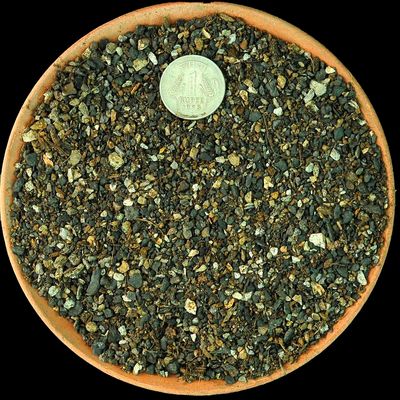
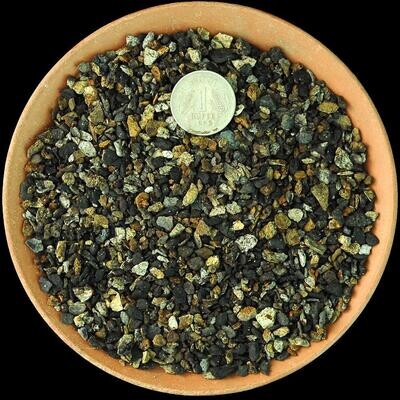
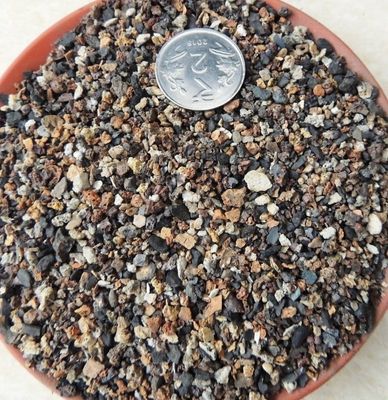
Soil: A gritty, mineral, fast-draining cactus mix — ordinary potting soil cut with 40–50% coarse sand, pumice, or perlite. All eight are limestone-country natives and appreciate a slightly alkaline mix.
Temperature: Warm, bright conditions through the growing season; a cool, dry winter rest (down to around 5–10°C is tolerated if kept dry) encourages the best spring flowering the following year.
Handling note: These are spineless cacti — pleasant to handle compared to most of the cactus family — but the areoles (especially the oversized woolly ones on the Ooibo Nudum) are delicate and bruise easily, so lift by the pot rather than the plant.
General tip: Because the "naked" (nudum) and heavily marked (Onzuka, Super Kabuto, Ooibo) forms are visual mutations rather than different care requirements, every pot in this set can be grown side by side, on the same watering schedule, under the same light — making this an easy set to display and maintain as a single collection.
An Anecdote Worth Knowing
The most collectible traits in this entire set — the four-ribbed quadricostatum body, the naked nudum skin, the oversized Ooibo warts, and the armour-plated Super Kabuto speckling — are almost all the product of the 20th-century Japanese cactus-collecting boom, where growers selected and named individual seedling mutations with the same rigor the West once reserved for orchids or tulips. Super Kabuto in particular has an almost folkloric origin story: a single unusually marked seedling, spotted by chance in an American nursery in 1981, became — through one collector recognizing it and handing it to another who knew how to breed it true — the parent of what is now the single most widely grown Astrophytum cultivar on Earth. It's a reminder that in the succulent world, an entire collectible lineage can trace back to one lucky glance at one ordinary-looking pot.