

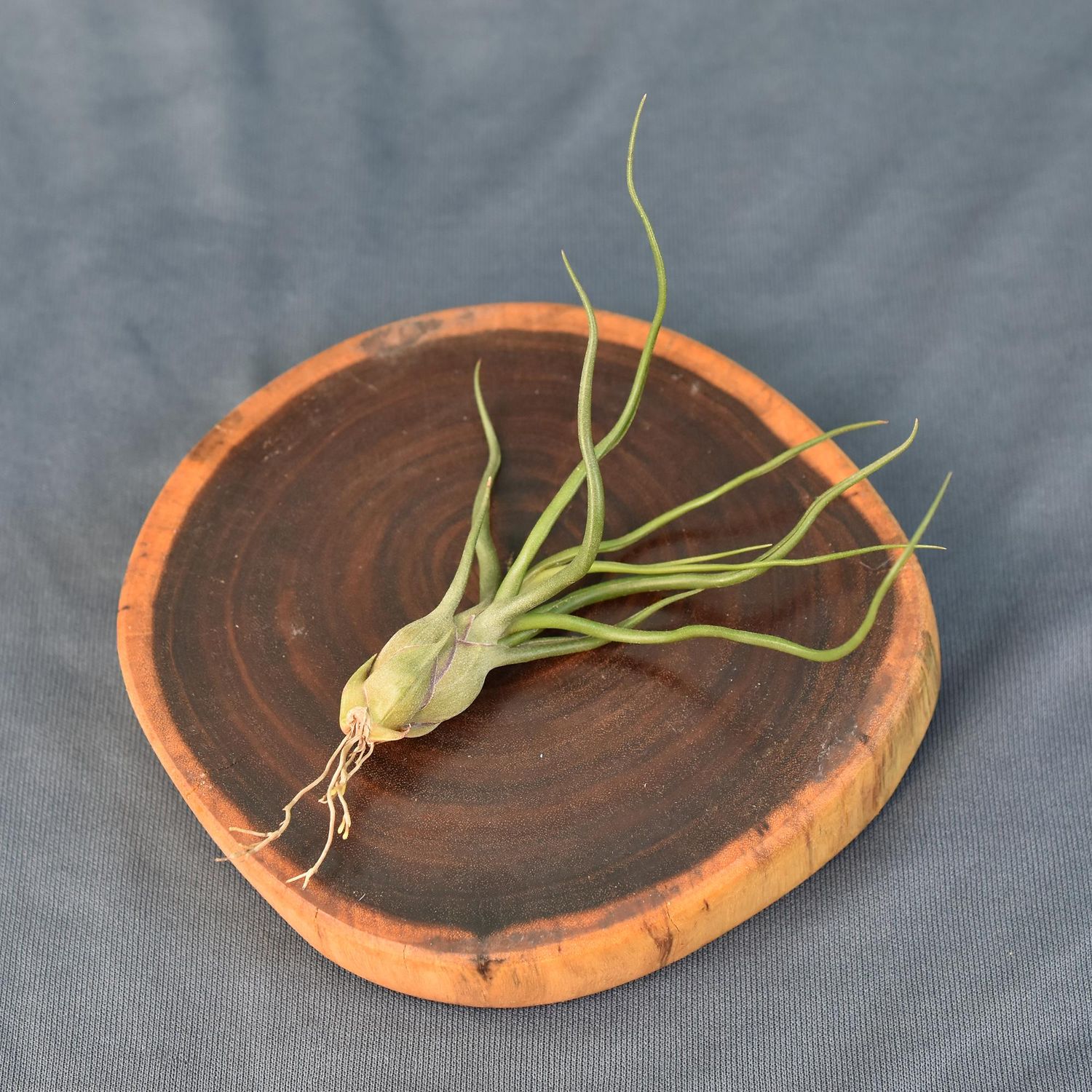
Tillandsia bulbosa (Air Plant)
Product Details
Otherworldly Architecture: Tillandsia bulbosa
An evocative, myrmecophilous epiphyte featuring twisting, tentacle-like foliage and a distinctive pseudobulbous base.
- Origin & History of Name: The genus Tillandsia was established by Carl Linnaeus in 1738 to honor the Swedish botanist Elias Tillandz.
- Morphology: Tillandsia bulbosa is an atmospheric epiphyte characterized by a pseudobulb—a hollow, swollen base formed by tightly overlapping leaf bases.
- Habitat & Origin: This is a wild species native to a broad range spanning from Southern Mexico and the West Indies to Northern South America.
- Cultivation Profile:
- Substrate: None required. As an obligate epiphyte, it should be mounted on cork bark, driftwood, or suspended via wire. Avoid placing the base in soil, which causes immediate rot.
- Light: Prefers bright, filtered light.
- Water/Dormancy: Requires high humidity. Mist 3–4 times weekly or perform a 20-minute soak once a week. In India’s humid monsoon, reduce watering; during dry winters, increase misting. Crucial: Always shake the plant upside down after watering to prevent water from pooling in the bulbous base.
- Scientific/Historical Anecdote: In its natural habitat, Tillandsia bulbosa is a myrmecophyte, meaning it has a symbiotic relationship with ants.
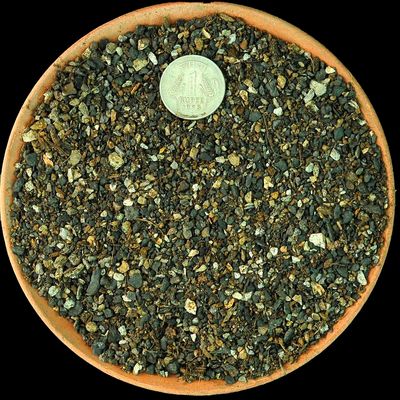
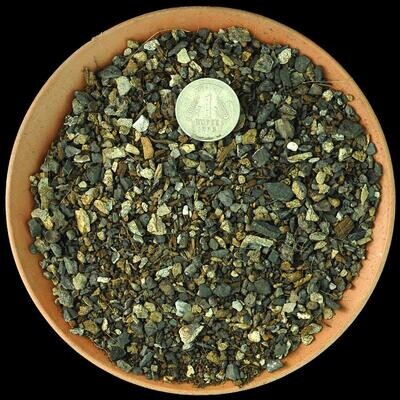
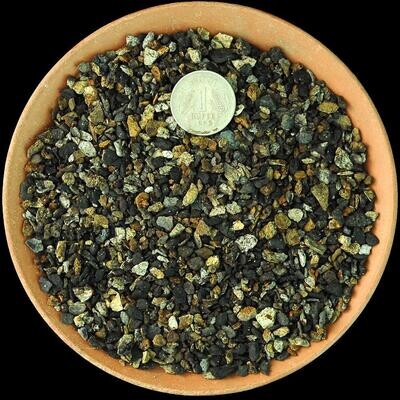
Cactus & Succulent Planting Mix COARSE (aka Cactus Soil Mix or Succulent Soil Mix)
Cactus & Succulent Planting Mix COARSE (aka Cactus Soil Mix or Succulent Soil Mix)
Washed, Free-Draining Mineral Mix for Cactus & Succulents
SKU MNS003
₹40.51

Cactus & Succulent Planting Mix FINE (aka Cactus Soil Mix or Succulent Soil Mix)
Cactus & Succulent Planting Mix FINE (aka Cactus Soil Mix or Succulent Soil Mix)
Fine-Grain Potting Mix for Cactus & Succulent Roots
SKU MNS001
₹35.51