

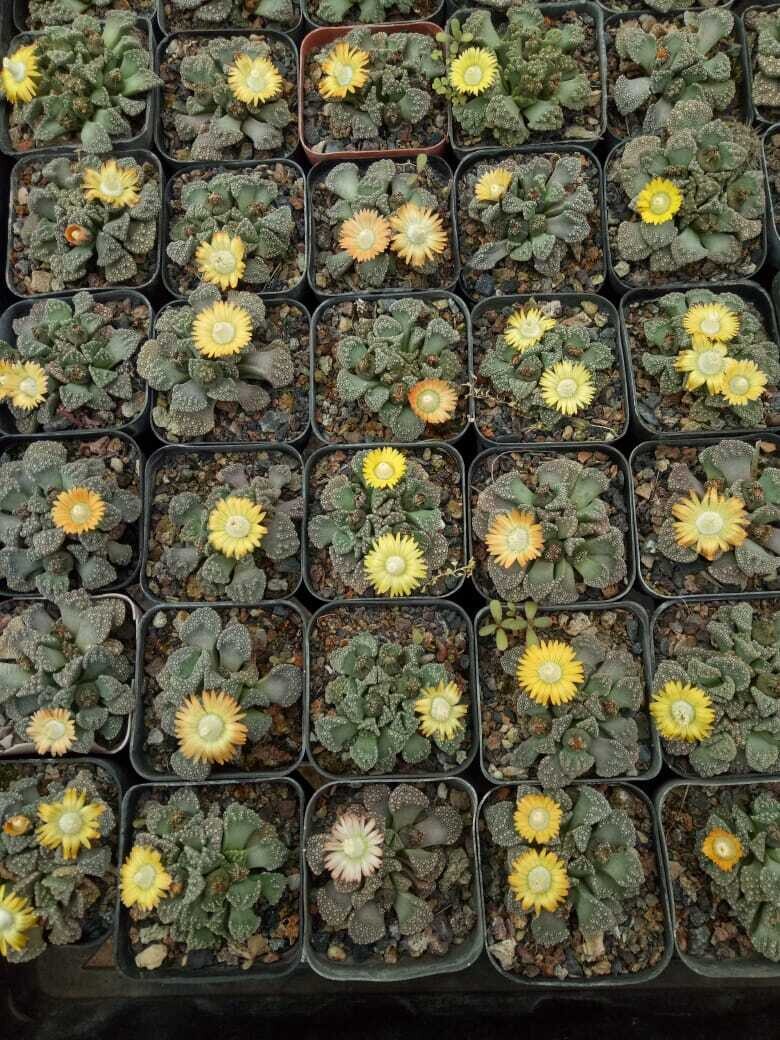
Titanopsis calcarea
Product Details
Living Limestone: Titanopsis calcarea
A master of prehistoric mimicry, this 'Jewel of the Karoo' features stunning turquoise leaves encrusted with concrete-like tubercles.
- Origin & History of Name: The genus name Titanopsis is derived from the Greek titanos (limestone) and opsis (resembling), aptly describing its stone-like appearance.
- Morphology: This succulent forms a low-growing rosette of paddle-shaped leaves.
- Habitat & Origin: This is a wild species native to the Upper Karoo region of South Africa.
- Cultivation Profile:
- Substrate: Requires an ultra-mineral-based mix (80% pumice, lava rock, or coarse sand and 20% loamy soil). High drainage is critical to survive the Indian monsoon.
- Light: Thrives in full sun to bright indirect light.
- Water/Dormancy: This is a winter-grower.
- Scientific/Historical Anecdote: The discovery of Titanopsis calcarea is a classic tale of botanical mimicry. Legend has it that Rudolf Marloth first discovered the plant when he leaned against a limestone rock to rest, only to realize he had accidentally crushed a succulent that was indistinguishable from the surrounding stones. This "window" into the world of leaf-mimicry helped scientists understand how plants adapt to evade herbivores in barren landscapes.
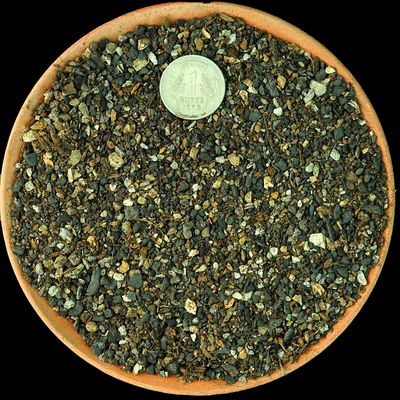
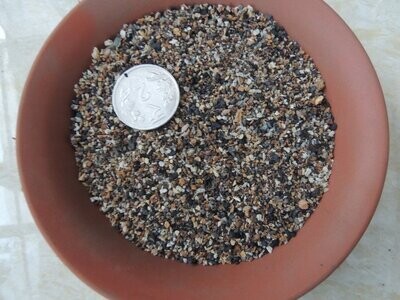
Cactus Seed Planting Mix
Cactus Seed Planting Mix
Sterile, Fine-Grain Media for Cactus & Succulent Seeds
SKU MNS005
₹66.35
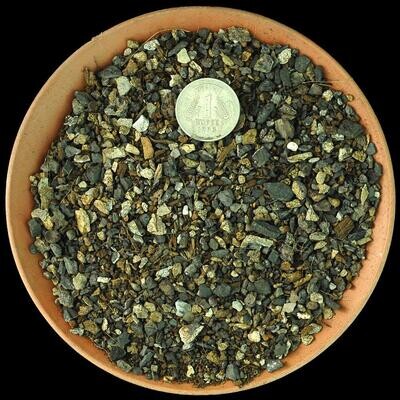
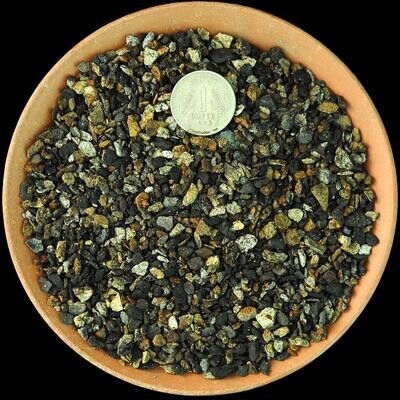
Cactus & Succulent Planting Mix COARSE (aka Cactus Soil Mix or Succulent Soil Mix)
Cactus & Succulent Planting Mix COARSE (aka Cactus Soil Mix or Succulent Soil Mix)
Washed, Free-Draining Mineral Mix for Cactus & Succulents
SKU MNS003
₹38.74