

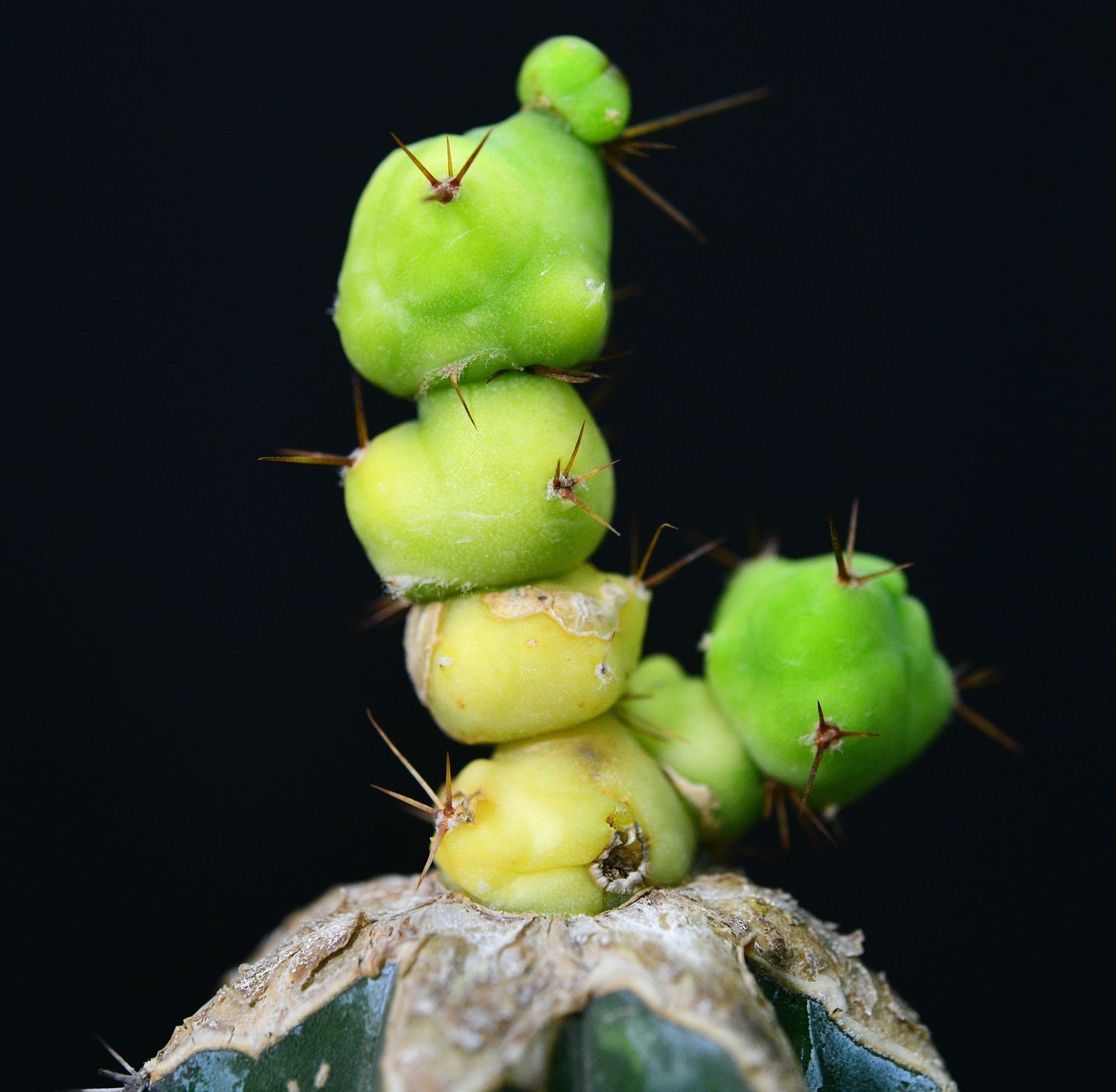
Trichocerous bridgesii monstrose variegated stacker
Product Details
Melted Wax Sculpture: Trichocereus bridgesii f. monstrose 'Stacker' variegated
A rare, architectural cultivar prized for its surreal, stacking growth habit and electric yellow variegation that transforms a standard cactus into a piece of living modern art.
- Origin & History of Name The genus Trichocereus derives from the Greek thrix (hair) and Latin cereus (candle), referring to the hairy floral tubes of the wild type.
The specific epithet bridgesii honors Thomas Bridges, the 19th-century British botanist who cataloged extensive flora in Bolivia. The terms "monstrose" and "variegated" denote specific genetic mutations: the former indicates a loss of apical dominance resulting in irregular growth, while the latter refers to the lack of chlorophyll that creates the distinct yellow marbling. - Morphology This "stacker" variety is defined by its segmented, totem-pole growth habit.
Unlike the columnar parent, it grows in short, clumping segments that appear almost melted or wax-like. The epidermis is a glaucous blue-green, heavily splashed with creamy-yellow or gold variegation. Spines are sparse, honey-colored, and typically restricted to the basal areoles, leaving the upper sections smooth and tactile. - Habitat & Origin This plant is a nursery-produced cultivar and does not exist in the wild.
It is a vegetative clone, likely a mutation of the Bolivian species Echinopsis lageniformis (syn. T. bridgesii), which is native to the high-altitude deserts of La Paz. Because it is propagated exclusively through cuttings, its trade is sustainable and does not impact wild populations. - Cultivation Profile
- Substrate: Use a highly inorganic, mineral-based mix (70% pumice/perlite/lava rock, 30% quality potting soil) to ensure rapid drainage.
- Light: Needs bright, indirect light. In the harsh Indian summer, provide 30-50% shade cloth to prevent the variegated (chlorophyll-lacking) patches from scorching.
- Water/Dormancy: Follow the "soak and dry" method strictly. Water deeply only when the substrate is bone dry.
During the Indian monsoon, shelter completely from rain to prevent root rot. Withhold water during winter to induce dormancy.
5. Scientific/Historical Anecdote The "monstrose" mutation is biologically fascinating because it is caused by a malfunction in the plant's apical meristem (the growing tip).
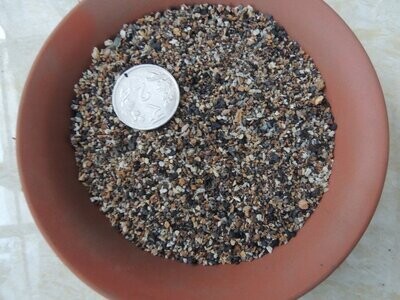
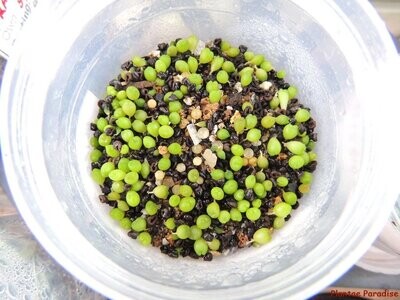
Cactus Seed Planting Mix
Cactus Seed Planting Mix
Sterile, Fine-Grain Media for Cactus & Succulent Seeds
SKU MNS005
₹74.85
New
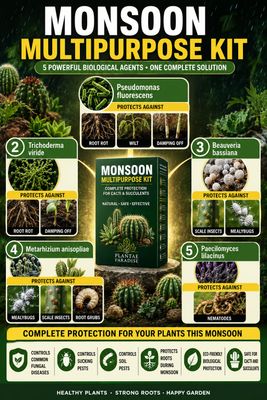
Monsoon Guardian Kit (5 in 1)
Monsoon Guardian Kit (5 in 1)
Complete 5-in-1 biological protection kit for cacti & succulents
SKU MNS024
₹850.00

