

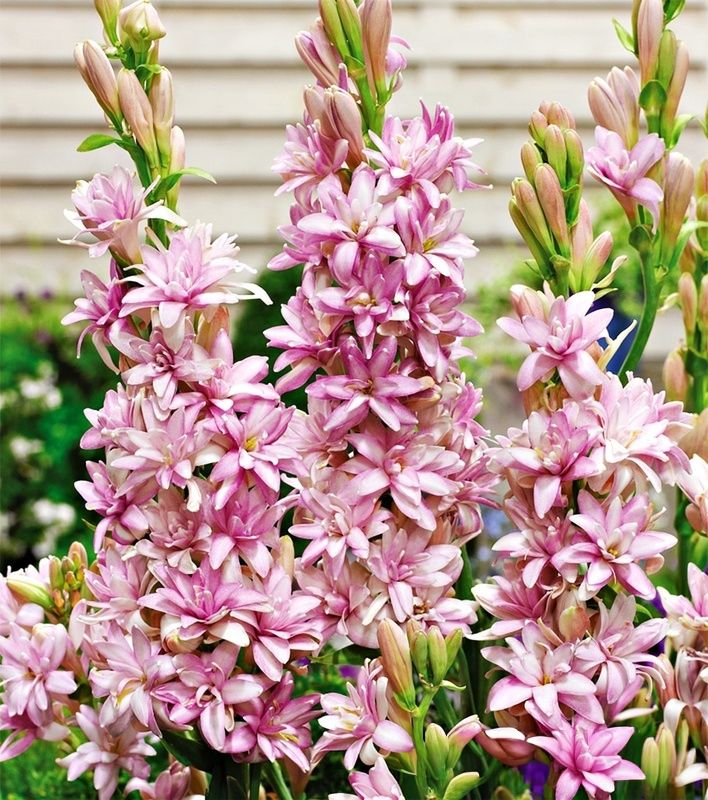
Tuberose Pink Sapphire (Polianthes tuberosa) (Rajnigandha Pink)
Product Details
Blush Radiance: Polianthes tuberosa 'Pink Sapphire'
A rare, double-petaled evolution of the classic Rajnigandha, featuring stunning rose-pink gradients and an intoxicating evening fragrance.
- Origin & History of Name: The genus name Polianthes combines the Greek polios (whitish) and anthos (flower), while the species name tuberosa refers to its tuberous root system.
Historically known in India as 'Rajnigandha' (fragrance of the night), this specific cultivar, 'Pink Sapphire', was named for the rare pink anthocyanin pigmentation found in its petals, departing from the traditional pure white species. - Morphology: This cultivar is characterized by its spicate inflorescence (flower spike) bearing multiple double-petaled florets.
Unlike the single-row petals of wild types, 'Pink Sapphire' features dense, imbricated layers. The perianth tubes emerge in a deep pink bud form, opening into a soft gradient of blush and rose. The plant grows from a starchy tuber, producing narrow, grass-like basal leaves with a waxy cuticle. - Habitat & Origin: This is a specialized cultivar derived from Polianthes tuberosa, a species originally native to central and southern Mexico.
The pink-tinted varieties are the result of modern selective breeding programs, primarily in India and Taiwan, aimed at diversifying the ornamental floral market. Our bulbs are ethically sourced from sustainable floriculture nurseries in West Bengal. - Cultivation Profile:
- Substrate: Requires a well-draining, loamy mix enriched with aged manure or leaf mold.
Avoid heavy clay; a mix of 50% garden soil, 30% compost, and 20% coarse sand is ideal for the Indian subcontinent. - Light: Thrives in full direct sunlight (at least 6–8 hours).
In extreme heat zones like Northern India or Rajasthan, morning sun with light afternoon dappled shade prevents petal burn. - Water/Dormancy: Maintain consistent moisture during the growing season (March–October). Reduce watering significantly after flowering when the foliage yellows to allow the tuber to enter its natural dormant phase during the winter months.
- Substrate: Requires a well-draining, loamy mix enriched with aged manure or leaf mold.
- Scientific/Historical Anecdote: Though deeply embedded in Indian and Hawaiian culture today, the Tuberose was so highly prized by the Aztecs (who called it Omixochitl or "bone flower") that it was one of the first plants brought back to Europe by Spanish explorers in the 1500s.
It later became a staple of "moonlight gardens" in the Victorian era because its scent intensity peaks at night to attract nocturnal pollinators.
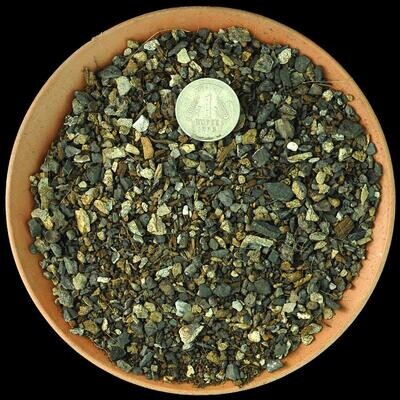
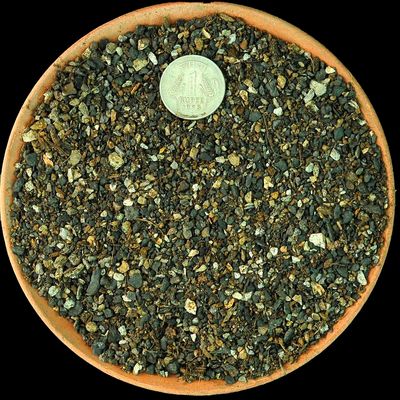
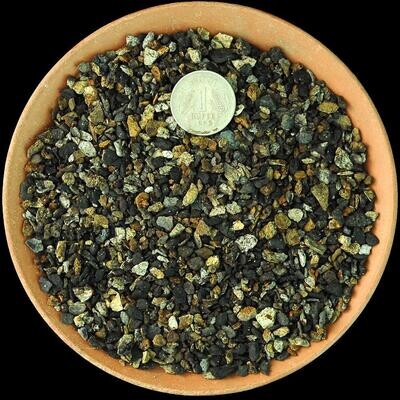
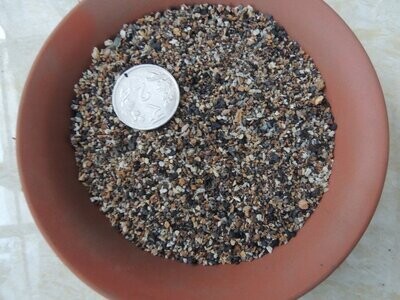
Cactus & Succulent Planting Mix COARSE (aka Cactus Soil Mix or Succulent Soil Mix)
Cactus & Succulent Planting Mix COARSE (aka Cactus Soil Mix or Succulent Soil Mix)
Washed, Free-Draining Mineral Mix for Cactus & Succulents
SKU MNS003
₹44.85
Cactus Seed Planting Mix
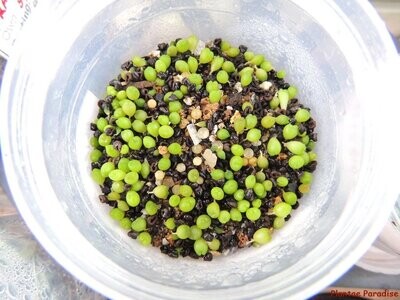
Cactus Seed Planting Mix
Sterile, Fine-Grain Media for Cactus & Succulent Seeds
SKU MNS005
₹74.85