

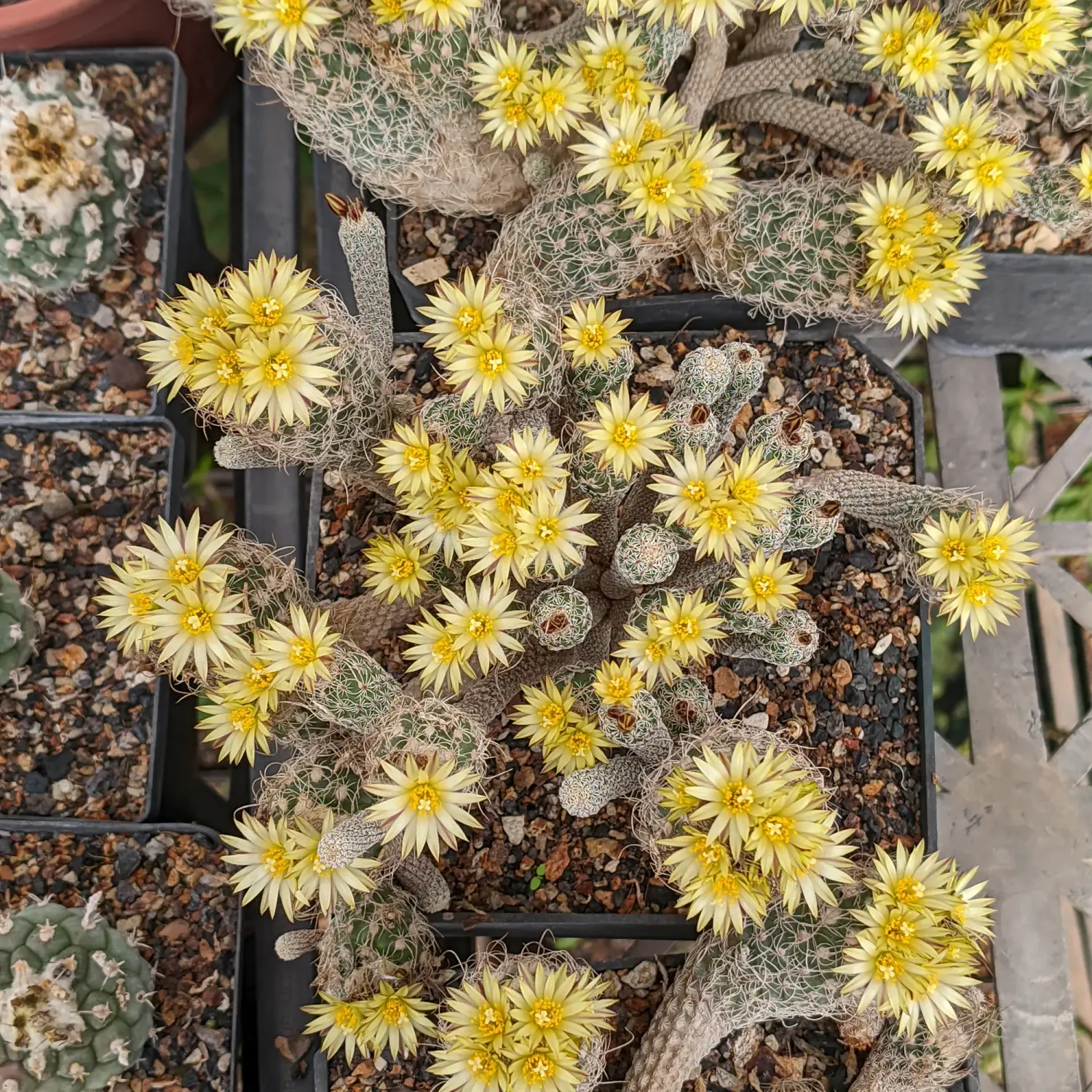
Product Description: Turbinicarpus krainzianus
Origin of Name: The genus name Turbinicarpus is derived from Latin words "turbo," meaning "top" or "spiral," and "carpus," meaning "fruit," referring to the globular shape and the characteristic fruit of the genus. The species name krainzianus honors the Austrian botanist and cactus collector Hermann Krainz, who studied and collected plants from Mexico and southwestern Texas, where this species is native.
Origin of Plant: Turbinicarpus krainzianus is native to the semi-desert regions of northeastern Mexico, particularly in the states of Coahuila and Nuevo León. It thrives in rocky, well-drained limestone soils under full sun, adapting to the harsh, arid climate of its native habitat.
Description: This small, fascinating cactus features a rounded, tuberculate body that often appears as a miniature sculpture. Its surface is typically pale green or grayish-green, with fine, white or brownish spines that may be sparse or dense depending on the specimen. In optimal conditions, krainzianus produces attractive, funnel-shaped, pale yellow to white flowers that bloom during the warm months, adding a delicate touch of color to its compact form.
Care:
- Watering: Water sparingly, allowing the soil to dry out completely between watering. Overwatering can cause root rot.
- Light: Prefers full sun for healthy growth and vibrant coloration.
- Soil: Well-draining cactus or succulent mix with coarse sand, grit, or limestone fragments to prevent water retention.
- Temperature: Appreciates warm temperatures, but must be protected from frost to avoid damage.
Conservation Status: Turbinicarpus krainzianus is considered a rare and delicate species; it is listed under CITES Appendix I, advocating for conservation and sustainable cultivation. Sourcing from responsible nurseries supports its preservation in both cultivation and the wild.




