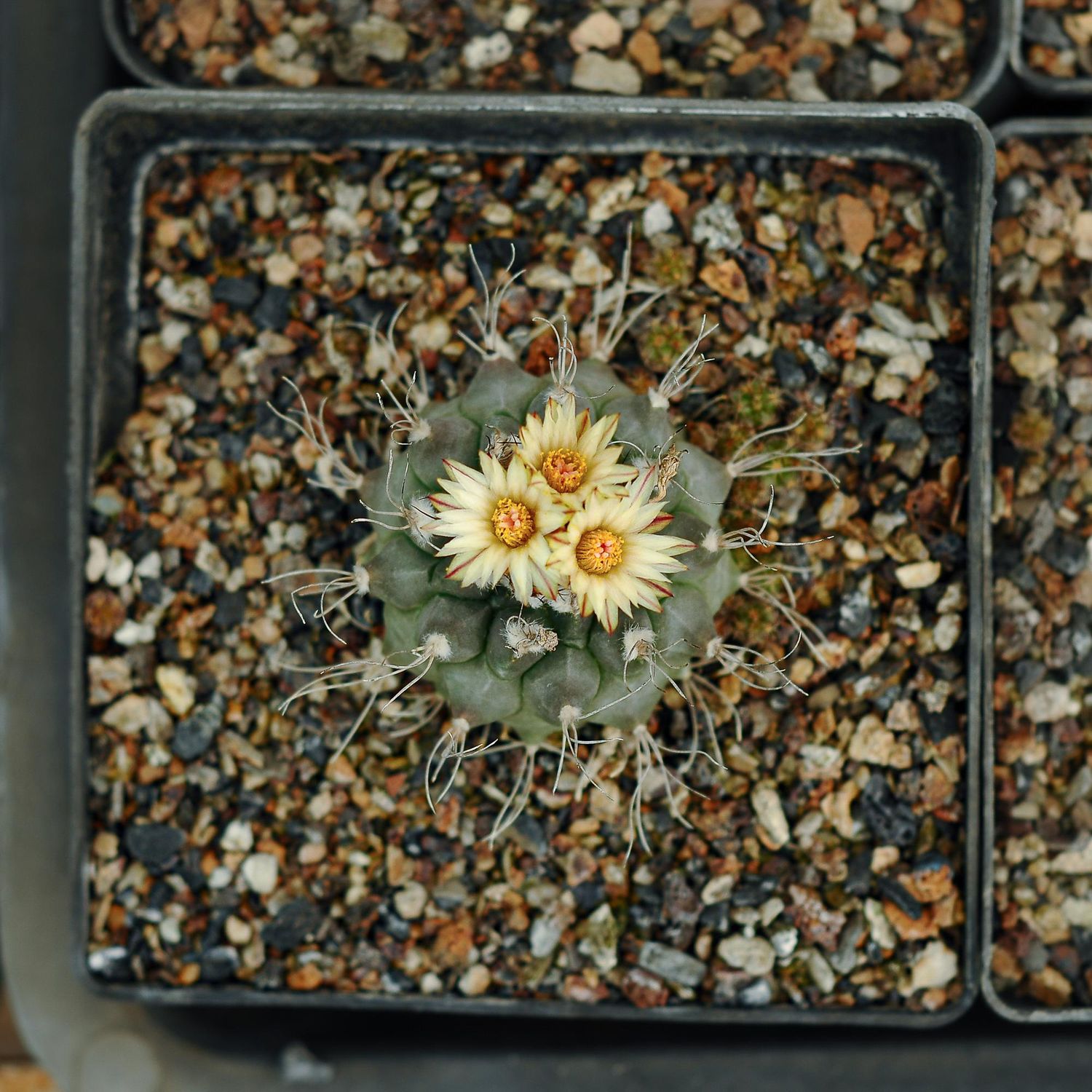
Seed grown plants .
Origin of Name
Turbinicarpus swobodae is named after its genus 'Turbinicarpus', which is derived from the Latin words 'turbo', meaning top or whirl, and 'carpus', meaning fruit, alluding to the shape of the fruit it produces.
Technical Description of Plant
Turbinicarpus swobodae is a small, globular cactus noted for its compact and slow-growing nature. It typically forms solitary, spherical to slightly elongated stems, which can reach up to 5 cm in height. The plant's surface is characterized by small, conical tubercles topped with areoles from which emerge small, white or yellowish spines. These spines are typically sparse, allowing the green body of the cactus to be prominently visible. Turbinicarpus swobodae blooms with small, delicate flowers that can range in color from white to pink, adding an elegant contrast to the spiny body.
Origin of Plant
This species is native to a limited area in Mexico and South West Texas, where it grows in arid and semi-arid environments. Its natural habitat, characterized by rocky soils, has influenced its adaptations for water conservation and sun exposure.
Conservation Status
Turbinicarpus swobodae is considered vulnerable in its natural habitat, primarily due to habitat loss and over-collection for the ornamental plant trade. Conservation efforts are crucial to protect this species in the wild.
Care instructions
Turbinicarpus swobodae should be planted in well-draining soil, ideally a mix formulated for cacti. It prefers bright, indirect sunlight but can tolerate some direct sun, especially in cooler climates. Water moderately during the growing season, allowing the soil to dry completely between waterings. In winter, reduce watering significantly to prevent root rot. This cactus is not frost-tolerant and should be protected from freezing temperatures. Regular inspection for pests, proper watering, and occasional fertilization during the growing season will help maintain its health and